The South Aegean islands of Kos, Santorini and Rhodes recorded the highest tourism saturation of any region in the European Union in 2024, with visitors spending more nights per resident than anywhere else in the bloc, according to Eurostat. Tourists logged 127.2 nights for every resident last year, the widest gap between visitors and residents found anywhere in the EU. The figures underline the challenge islanders face in managing their popularity while preserving what makes the islands desirable.
Rhodes: Overcrowding and its impact
When a journalist visited Rhodes in 2023 to see how the island was recovering from wildfires that forced thousands of holidaymakers to evacuate, several independent hoteliers and restaurateurs said how hard times had been in the past decade. They cited numerous factors, but the biggest one in their minds was the arrival of several large all-inclusive hotels. TUI is a big force on the island, running two of its flagship TUI Blue hotels and offering package stays at dozens of others.
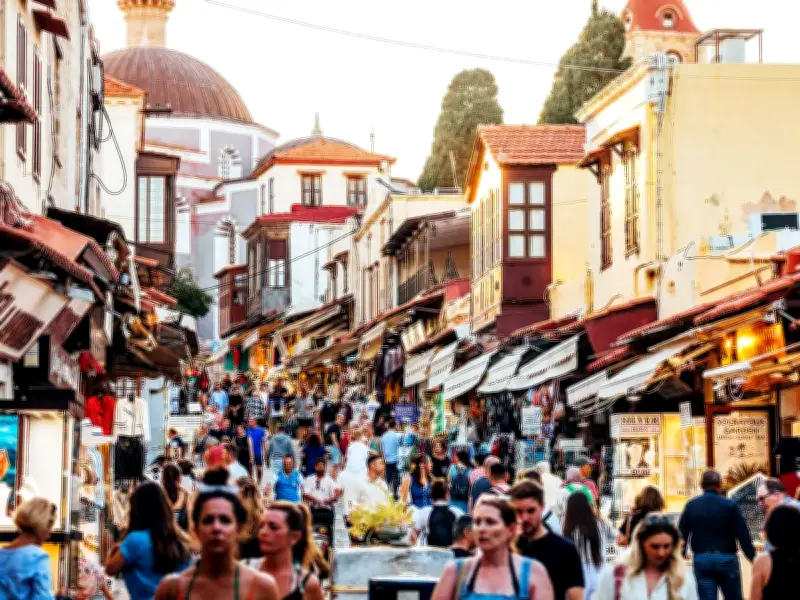
The island is home to 115,000 permanent residents and welcomed 3.5 million tourists between January and September 2024, giving a local-to-tourist ratio of roughly 1:30. Such demand has led to large-scale hotel construction projects, rapidly rising rents that are making it harder for locals to find a place to live, and damage to Rhodes' natural assets, including by increasing the risk of wildfires.

Santorini: A different scale of pressure
Action is being taken on Rhodes. The national government has placed dozens of the island's beaches under protected status, while some areas are to become 'red zones' where new hotels cannot be built. While Rhodes is struggling with high tourism numbers, Santorini's problems are on a different scale altogether.
For many months of the year, the postcard-worthy town is taken over by battalions of tourists armed with selfie sticks and phones, jumping off massive cruise ships and making land via dinghies, riding up the steep hills on coaches and donkeys willing to haul them up cobbled streets. They are mostly there for the sunset. Residents are increasingly worried that the island of 20,000 is being overwhelmed by the nearly four million tourists who visit it each year.
Measures and economic stakes
"Our standards of living have gone down. It's as simple as that," said hotel owner Georgios Damigos, who warned the "wonder of nature" he lives on risks being turned into "a monster". As on Rhodes, work is being done, including a daily 8,000-cruise-passenger limit and a per-passenger €20 fee during the summer, with some parts of the coast now given "Untrodden Beaches" protection, meaning no sunbeds, no commercial activities and no structures.
Whether the South Aegean, along with the rest of Greece, successfully grapples with the challenges that come with its popularity remains to be seen. If it does not, it risks jeopardising a huge part of its economy. Between January and June, travel receipts across Greece increased by 14.8%, reaching €8.80 billion, while inbound travel traffic rose by 15.4% to 13.49 million travellers.