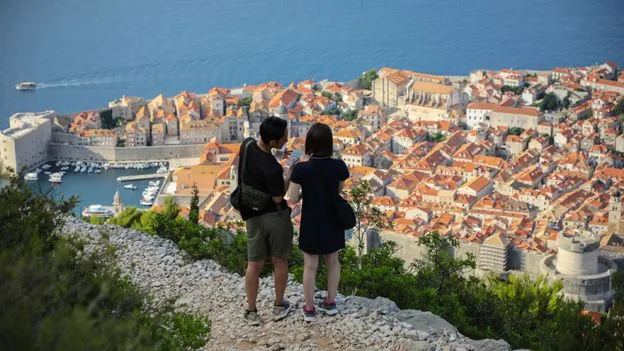
Dubrovnik, one of Europe's most over-touristed destinations, is hoping a new Camino footpath will encourage visitors to venture beyond its medieval walls. The Camino Dubrovnik – Međugorje, which opened in March, is a seven-stage route stretching 145km from the Church of St James in Dubrovnik to the Church of St James in Međugorje, a major pilgrimage site in Bosnia and Herzegovina.
The trail follows centuries-old paths once used by traders and pilgrims travelling from the southern Adriatic coast into the Herzegovinian hinterland. Approximately 61km of the route lies in Croatia's Dubrovnik-Neretva County, passing through Dubrovnik's suburb of Mokošica and the villages of Orašac, Slano, Ravno and Hutovo before crossing the border. The entire hike takes around seven days to complete.
The route was devised three years ago as part of the city's "Respect the City" initiative, which aims to ease pressure on the overcrowded Old Town and promote sustainable tourism. "We also saw it as a great opportunity that tourists, [local residents] – all those that are going to walk – would see for the first time some areas that are completely hidden," Mayor Mato Franković told the BBC.
Local tour guide Ivan Vuković, who grew up in Dubrovnik, said the Old Town's permanent population has fallen dramatically, from 4,000 to 5,000 in the 1980s to a maximum of 700 now, largely because of short-term holiday rentals. In 2019, UNESCO warned that the city's World Heritage status was under threat due to record visitor numbers. The city has since installed directional ropes at the Pile Gate, the main entrance for visitors.
Walking part of the first stage, from the Church of St James to the Strinčjera plateau on Mount Srđ, hikers quickly escape the bustle. Along the way, the route follows a little-known 15th-century limestone aqueduct, built in 1438, which delivered fresh water to the Old Town. Vuković described it as "a marvel of engineering", noting that its gravity-fed system channels water through limestone, purifying it and making it drinkable.