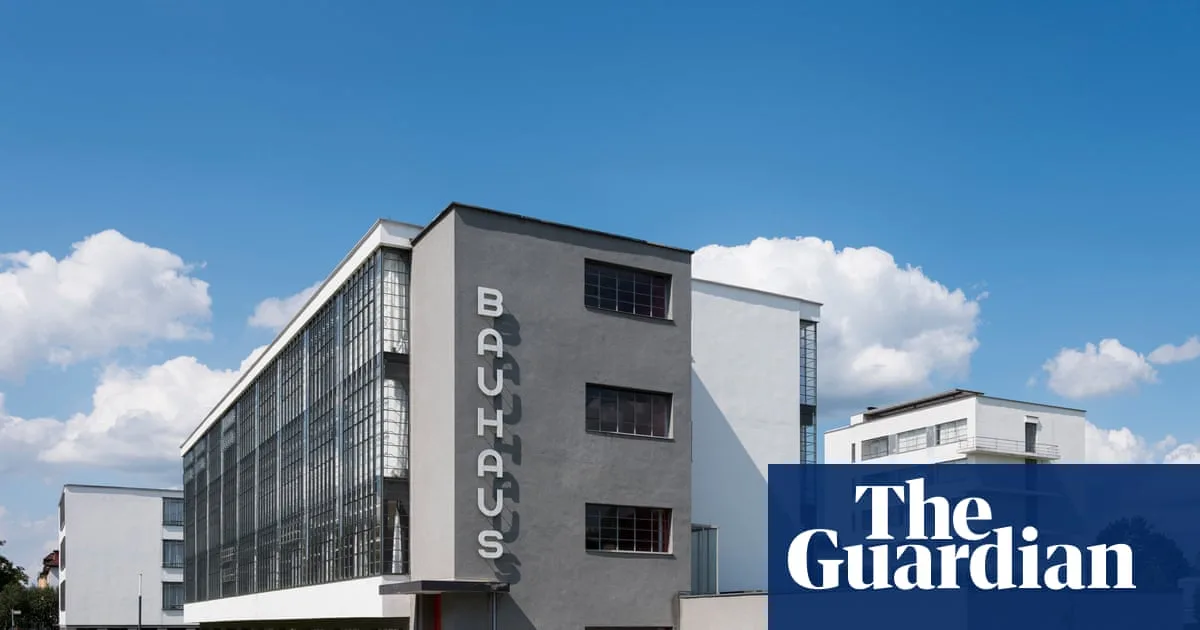
Dessau, Germany, is marking the centenary of the Bauhaus school's arrival in the city with exhibitions, digital tours, and new bike and bus routes connecting its landmark buildings. The iconic Bauhaus Building, designed by founder Walter Gropius and completed in 1926, remains a symbol of European modernism. 'It landed here like an alien spaceship,' said Oliver Klimpel, head of the curatorial workshop at the Bauhaus Dessau Foundation.
The school, founded in Weimar in 1919, rejected traditional architecture and design in favour of simple, rational, and functional principles. Forced to leave Weimar after six years due to financial and political pressure, it relocated to Dessau in 1925, then a rising industrial hub. There, the school focused on developing prototypes for mass production, merging art with industry. Notable designs include Marcel Breuer's Wassily Chair.
The Bauhaus Building's glass curtain wall created greenhouse-like conditions in summer, part of the school's practical research. 'You learned with the building and lived within the experiment,' Klimpel said. The structure has undergone restorations, including repairs after wartime bomb damage and a 2006 restoration based on original plans. Today, it houses a shop, cafe, exhibition spaces, and the Bauhaus Dessau Foundation's offices.
Visitors can stay overnight in the former student studios, now furnished with Bauhaus-inspired pieces. The Prellerhaus accommodation block offers a unique experience, though rooms can be warm and noisy. Other Bauhaus sites across town are accessible via a signposted cycle route, the number 10 bus, or guided tours.