

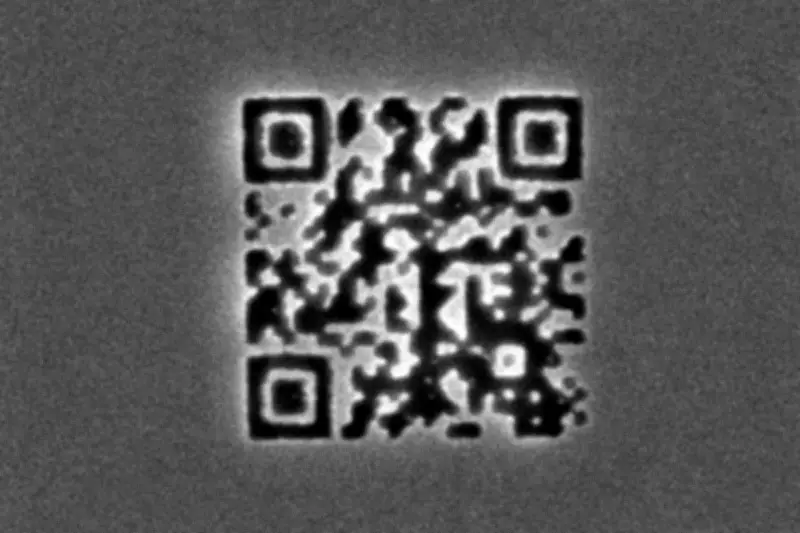
In a groundbreaking scientific achievement, researchers at Vienna University of Technology have engineered the world's smallest QR code, a development that could revolutionise long-term data storage. This minuscule code, officially recognised by Guinness World Records, measures a mere 1.98 square micrometres, making it smaller than most bacteria and only visible under an electron microscope.
Innovative Creation Process
The QR code was meticulously engraved onto a specialised ceramic material using beams of charged particles. This method ensures precision at an atomic level, allowing for the encoding of data in an incredibly compact form. The ceramic-based storage medium offers exceptional durability, capable of retaining information for hundreds of years without the need for power or maintenance, unlike conventional digital storage systems that degrade over time.
Potential Applications and Future Scaling
Researchers are now focused on scaling up this technology for industrial applications. They envision that this could enable over two terabytes of data to be stored on an area the size of an A4 sheet, providing a robust solution for archiving critical information in fields such as healthcare, finance, and historical preservation.

The breakthrough highlights the potential for ceramic materials in data storage, offering a sustainable and reliable alternative to current methods that often require constant energy input and are susceptible to obsolescence.






