FIFA World Cup Ball's Rough Design May Reduce Long Kick Range
World Cup Ball Rough Design May Reduce Long Kick Range

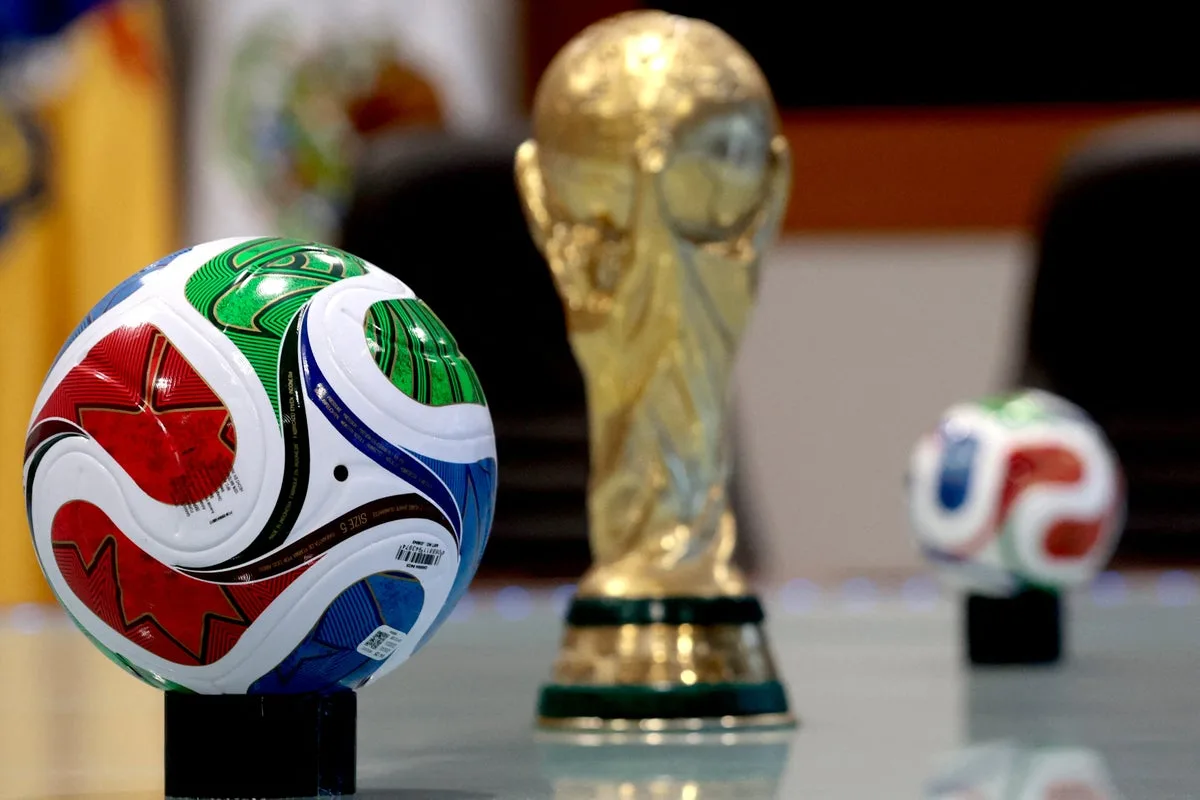
Scientists have raised concerns over the FIFA World Cup ball, as simulations show that its rough design might make long kicks come up short. This year's ball, the Trionda, features a unique design and is the first ball in World Cup history to be made from just four panels. That smooth profile had sparked concerns that the Trionda might dip and dive like the infamous Jabulani ball, which caused chaos at the 2010 World Cup in South Africa. However, researchers now say that the upcoming FIFA World Cup offering might have the opposite problem.

To make up for the short seam length, which would make the ball smoother, Adidas included deep grooves on each panel and added a rough outer texture. Dr John Eric Goff, a physicist at the University of Puget Sound, says that this has created changes to the 'drag crisis' which could cause problems for powerful kickers. Writing in The Conversation, Dr Goff explained: 'In plain language, that suggests a hard–hit long ball may lose a little range. In our simulations, the difference is not huge. But it is large enough that players may notice long kicks coming up a few meters short.'

Testing the Trionda

Every year since 1970, Adidas has provided a new ball for the FIFA World Cup tournament. However, small changes in the ball's design can have a significant impact on the experience for players on the pitch. Dr Goff and his co–authors placed the new Trionda ball in a wind chamber to measure something called the drag coefficient. This is a way of describing how air moves around the ball and how much drag the ball experiences in flight. They then put these measurements into a computer simulation to show how it would perform in a real–life game.

Wide Pickt banner — collaborative shopping lists app for Telegram, phone mockup with grocery list

Understanding the Drag Crisis

The critical detail which separates a good, consistent ball from an unpredictable one is something called the drag crisis. As the ball flies, a thin layer of air gets trapped next to the surface, reducing the overall drag and helping it fly further. But once the ball hits a certain speed, this layer starts to become turbulent, which drastically alters the amount of drag. If the ball is too smooth, it will reach its 'drag crisis' at higher speeds that are right in the middle range of those achieved in a game. When this happens, very small differences at the point of contact with the player's boot result in wild changes in range, trajectory, and speed. This is why the South African Jabulani was so difficult to predict, since it tended to suddenly slow down after hitting its critical speed range.

The good news is that the Trionda's rough surface ensures this won't be a problem. The Trionda reaches its drag crisis at around 27 miles per hour (43 km/h), far below the 49 to 60 miles per hour (79–97 km/h) threshold for the Jabulani. That is even lower than the 31 to 40 miles per hour (50 to 65 km/h) crisis points of the 2022 Al Rihla, 2018 Telstar 18, or 2014 Brazuka balls. Dr Goff says: 'The evidence from our tests suggests that the ball won’t be behaving in a way that leads to baffling and erratic flight. It has a more steady and consistent drag coefficient in the range of speeds associated with corner kicks and free kicks.'

Trade-off for Consistency

But Dr Goff suggests that there is a 'trade off' for this added consistency. Once the Trionda does reach the point where its layer of air becomes turbulent, it experiences a lot more drag than any ball from the last 20 years. Essentially, this means that balls that are hit hard and far will tend to slow down faster than players are accustomed to. At a launch speed of 35 metres per second, the Trionda is expected to fall about 10 metres short of either the Al Rihla or the Brazuka. Dr Goff points out that there are other factors which might make the Trionda more unpredictable. The deep grooves and rough surface could help players generate more spin in flight. This factor could help kickers propel the ball even further than before, or make goalkeepers' jobs that much harder.

Pickt after-article banner — collaborative shopping lists app with family illustration