

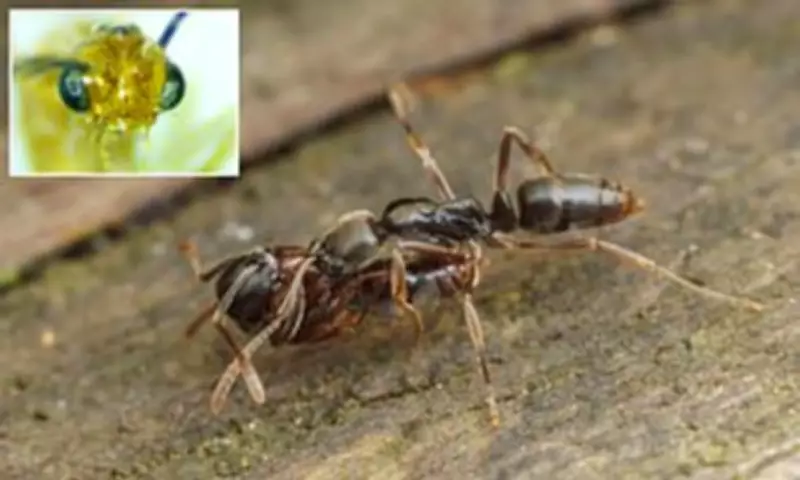
Officials are raising alarms as venomous Asian needle ants, native to China, continue to invade more parts of the United States. These insects possess a sting capable of triggering severe allergic reactions, and in extreme cases, death.
Spread Across the US
First detected in the US over 90 years ago, the population of this invasive species has recently surged, now present in at least 20 states. These include Florida, Georgia, Alabama, Mississippi, Arkansas, Tennessee, the Carolinas, Kentucky, Virginia, Ohio, Pennsylvania, Maryland, Connecticut, Rhode Island, Massachusetts, New York, Wisconsin, Washington state, and Texas.
Physical Characteristics and Sting
The Asian needle ant is small to medium-sized, with workers and queens measuring up to one-fifth of an inch. They are shiny, dark brown to black, with lighter orange-brown antennae tips and legs. According to the US Department of Agriculture (USDA), their stings cause 'intense pain' at the site that 'comes and goes over several hours,' with some individuals reporting pain away from the sting site. Some people may experience anaphylaxis, a potentially life-threatening allergic reaction.

Habitat and Behavior
These ants prefer damp areas under stones or rotting logs but are also found in parks, lawns, potted plants, wood piles, and construction materials like logs, bricks, and pavers. They are not aggressive but will sting in self-defense, and their stingers can penetrate clothing.
Recent Detection in Texas
The ant was recently detected in Texas. Scott Egan, an associate professor of biosciences at Rice University, told Click2Houston: 'It's important to be aware of this new invader, but we need to learn more. It is reported that it can be painful, and some people may have an allergic reaction, including anaphylaxis. That's something that should be addressed by a medical or veterinary professional.' While sightings in Texas remain limited, Egan urges residents to document unusual ant activity. 'Folks in places like North Carolina have dealt with this species for almost a century. Here in Texas, we're just starting to understand how it fits into our local ecosystems.'
Comparison with Other Ants
Scott Baker, a Bedford extension agent with the Virginia Cooperative Extension, told ABC 13 News that these ants pose less of a widespread threat than fire ants but still require vigilance. 'The good news is, they're not terribly aggressive like the fire ant, so we don't have quite the health concern, but I understand they do enact a very painful sting if people do interact with them.'
Swarming Season
Asian needle ants are most likely to enter homes during swarming season, which begins in spring and lasts through August, when insects emerge from hibernation to mate.
Environmental Impact
This highly adaptable species thrives in both warm and cool climates, urban and rural areas. It has established a vast US population and is expected to continue spreading, posing threats to human health and the environment. Studies show it displaces native ant species, reducing their abundance and diversity. Some native ants are critical seed dispersers; the USDA states: 'Researchers have demonstrated substantial decreases in seed dispersal where Asian needle ants have invaded forest areas. Thus, this invasive species could have dramatic, long-term negative effects on the forest understory.'
Control Efforts
Researchers are developing strategies to control the population, but as the USDA notes, 'unfortunately, as with many invasive species, it appears Asian needle ants are here to stay.'






