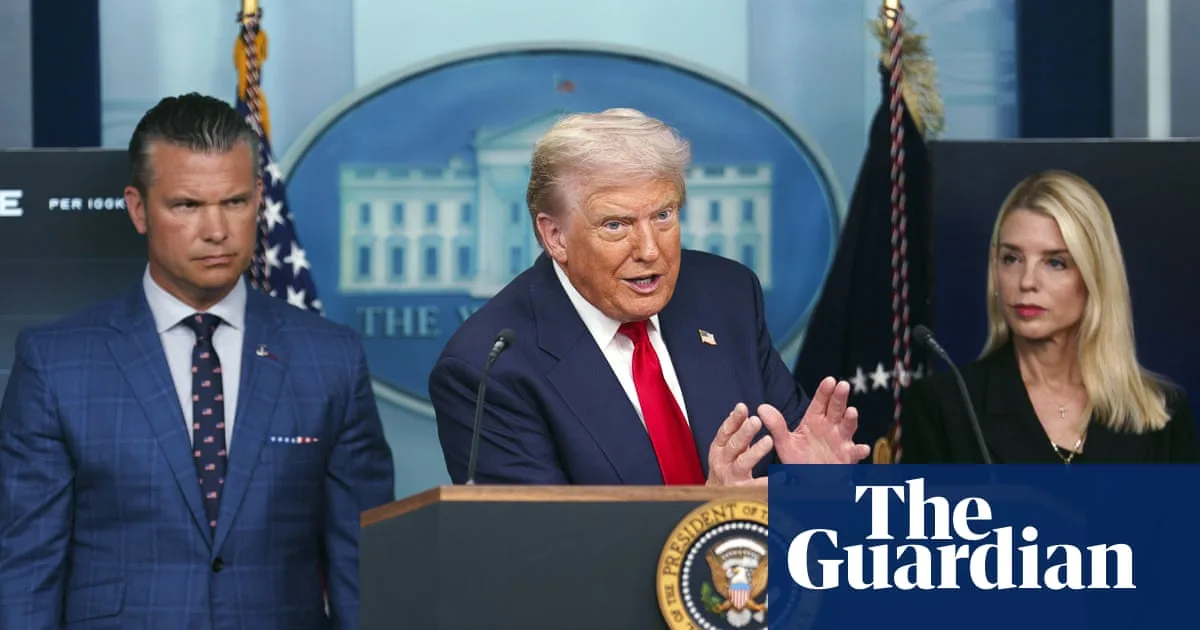
Donald Trump has suggested he might allow Nvidia to sell more advanced chips in China than currently permitted, as part of a deal that would loosen export restrictions despite US national security concerns. The president made the remarks at a briefing on Monday, defending an earlier agreement that granted Nvidia and AMD export licenses for previously banned chips in exchange for 15% of sales revenue to the US government.
Trump indicated he would not allow sales of Nvidia's 'super-duper advanced' Blackwell chip, but hinted at a possible deal for a downgraded version, which he described as 'somewhat enhanced – in a negative way – Blackwell'. He suggested the chip could be downgraded by 30-50%, and noted that Nvidia CEO Jensen Huang was expected to meet him again to discuss the matter.
The earlier deal, covering Nvidia's H20 chips and AMD's MI308 chips, sparked alarm among analysts and China hawks in Washington. Republican Representative John Moolenaar, head of the House China committee, expressed concern about the US government taking a cut of proceeds from sales of advanced chips to China. Trump defended the agreement, stating he had demanded 20% but accepted Huang's offer of 15%.
Despite Trump describing the H20 as 'obsolete', experts warned that lifting restrictions could equip Beijing with tools to compete in AI. Harry Krejsa of the Carnegie Mellon Institute for Strategy and Technology said the H20s are 'very capable at inference' and that 'lifting export restrictions on H20s means we are directly equipping Beijing with the tools it needs to compete on the AI frontier'.
The US has sought to limit technology exports to China for years, citing national security risks. China's foreign ministry reiterated its opposition to US chip export controls, accusing Washington of using trade measures to 'maliciously contain and suppress China'. Trump has also proposed a 100% tariff on global semiconductors, with exemptions for companies investing in US manufacturing.