

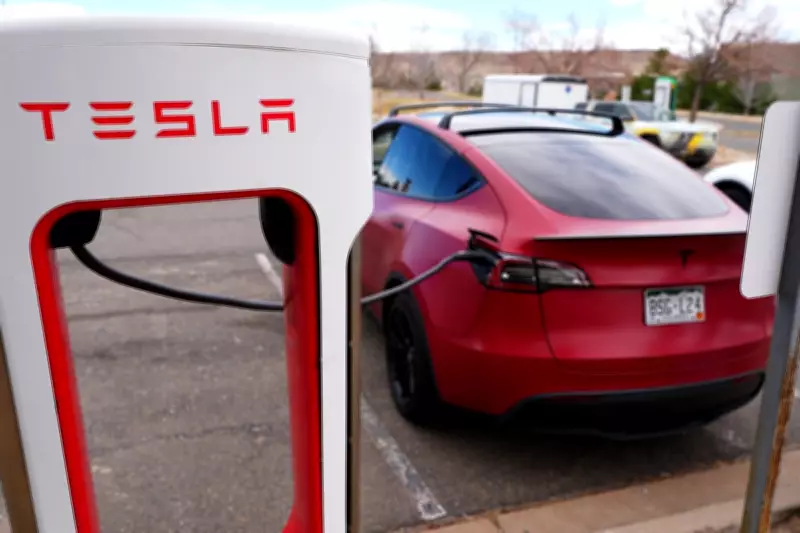
Federal auto regulators have significantly escalated a probe into Tesla's self-driving technology following a series of crashes that occurred while the feature was engaged. This heightened scrutiny coincides with CEO Elon Musk's plans to introduce a new vehicle model that lacks a traditional steering wheel or pedals.
Regulatory Investigation Intensifies
The National Highway Traffic Safety Administration (NHTSA) disclosed in a recent memo that it is examining nine specific crashes where Tesla's self-driving software allegedly failed to promptly alert drivers to assume control. These incidents took place under challenging conditions such as fog, where the vehicle's camera-based system struggled to detect road hazards effectively.
This memo indicates that a regulatory investigation initiated in 2024, focusing on crashes in poor visibility scenarios, may now progress toward enforcement actions. Potential outcomes could include a recall affecting approximately 3.2 million Tesla vehicles. In response to this news, Tesla's stock price declined by 3.1%, settling at $380.75 during early afternoon trading on Thursday.

Broader Context for Tesla
The increased regulatory pressure arrives at a critical juncture for Tesla, as the company seeks to pivot its business strategy. With car sales experiencing a downturn, Tesla is emphasizing the widespread adoption of its self-driving software as a core component of its future growth. Musk has articulated ambitious plans to transform millions of existing Tesla vehicles into autonomous taxis, enabling owners to rent them out when not in personal use.
As part of this strategic shift, Musk announced that Tesla will deploy its robotaxi service without a human driver in several U.S. cities this year. Additionally, the company intends to commence production of its innovative Cybercab model, which features no steering wheel or pedals, with sales to customers scheduled to begin next month.
Technical and Regulatory Challenges
Tesla's autonomous driving system relies exclusively on cameras to identify road obstacles, a design choice that distinguishes it from competitors who often incorporate supplementary technologies like radar or lidar. Musk has historically dismissed these more expensive methods as unnecessary. The NHTSA's investigation into crashes involving factors such as sun glare, dust, or excessive fog will now advance to an "engineering analysis," representing a more serious phase of regulatory examination.
Previously, Tesla marketed its driver assistance software under the name "Full Self-Driving" (FSD), a term criticized by auto experts and regulators for being potentially misleading. In response, the company has rebranded the feature to "Full Self-Driving (Supervised)" to underscore the necessity for driver vigilance.
Additional Regulatory Scrutiny
Among the nine crashes under review, Tesla has informed regulators that three would have been preventable with recent over-the-air software updates to the FSD system. Beyond this probe, Tesla is contending with several other regulatory investigations, including one examining incidents where FSD-equipped vehicles allegedly ran red lights and another addressing reports of door handles malfunctioning during crashes, potentially trapping passengers inside.
Tesla did not provide an immediate response to requests for comment regarding these developments. The unfolding situation highlights the complex interplay between technological innovation, regulatory oversight, and public safety in the rapidly evolving domain of autonomous vehicles.






