

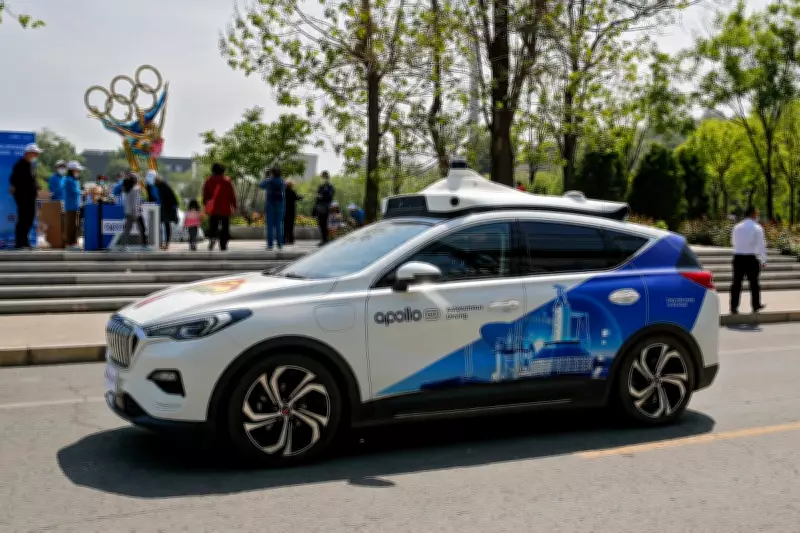
Mass Robotaxi Malfunction Paralyzes Traffic in Chinese Metropolis
A significant technological failure in the central Chinese city of Wuhan resulted in more than 100 autonomous taxis abruptly halting in the middle of roads, trapping passengers inside for extended periods. The incident, described by local police as a "system malfunction", occurred on Tuesday evening, causing widespread disruption and raising urgent questions about the reliability of driverless vehicle systems.
Passengers Stranded for Over 90 Minutes
According to official statements from Wuhan police, the fleet-wide outage began at approximately 8:56 PM, with numerous Apollo Go robotaxis—operated by Chinese tech giant Baidu—coming to an unexpected stop on busy highways and urban streets. Photos and videos circulating on Chinese social media platforms vividly depicted the chaotic scene, showing vehicles immobilized with hazard lights flashing late into the night.
One college student, traveling with two friends, recounted being stuck for about 90 minutes after their taxi malfunctioned multiple times before finally stalling at an intersection in eastern Wuhan. "The screen display asked us to remain in the car and wait for help from the company representative within five minutes," she told Wired magazine. Despite contacting a Baidu representative after 30 minutes, assistance never arrived, with company staff repeatedly stating the issue would be escalated to superiors.

Emergency Response and Passenger Accounts
Police confirmed that passengers were able to exit the vehicles safely, with no injuries reported. Public security and transportation departments quickly mobilized to manage the situation, though the exact cause remains under investigation. Another passenger, identified as Ms. Zhou, described seeing a message on the vehicle's screen at 8:30 PM stating, "There is a problem with the vehicle, please do not open the door." Her journey ended abruptly just ten minutes in on an overpass, with traffic rushing past, and attempts to reach the emergency contact number proved futile.
Ms. Zhou waited over an hour before a passing police officer assisted her. Dashcam footage from a driver captured the scale of the incident, showing at least 16 Apollo Go vehicles frozen on the road over a 90-minute span, with the driver narrowly avoiding collisions through last-minute lane changes and hard braking.
Background and Broader Safety Concerns
Baidu, often referred to as the "Google of China," operates its autonomous ride-hailing service, Apollo Go (also known as Radish Run), across 22 Chinese cities, with over 1,000 vehicles in Wuhan alone. The service has expanded into international markets, including the Middle East. However, this incident is not isolated; it follows other safety-related episodes involving autonomous vehicles in China.
- In August, an Apollo Go robotaxi carrying a passenger fell into a construction pit in Chongqing.
- In May, a vehicle operated by Pony.ai caught fire on a road in Beijing.
- No injuries were reported in either case, but such events have fueled public anxiety.
The Wuhan outage has sparked a wave of concern on social media, with users sharing videos and personal stories, questioning the safety protocols of self-driving cars. This incident echoes a similar event in San Francisco last year, where a power outage caused Waymo robotaxis to stall and disrupt traffic, highlighting global challenges in autonomous vehicle technology.
As investigations continue, the mass failure underscores the pressing need for robust fail-safes and responsive support systems in the rapidly evolving field of autonomous transportation. The Independent has reached out to Baidu for comment on the incident and its implications for future operations.






