

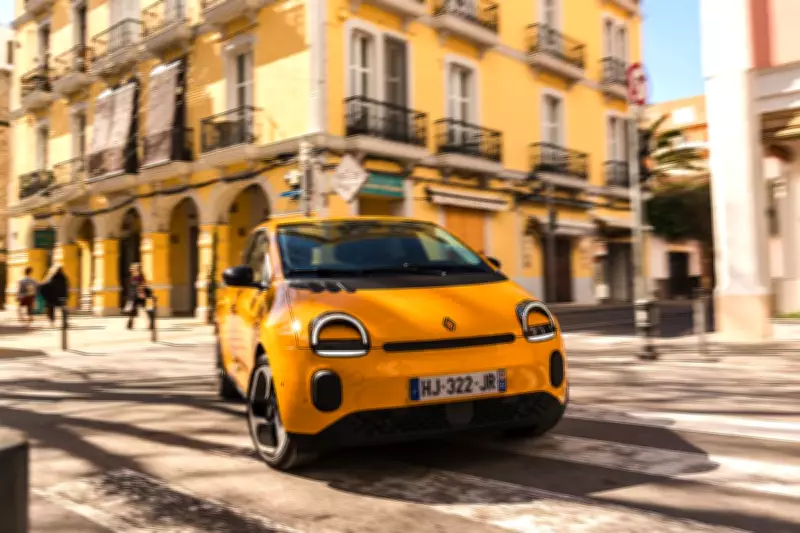
Renault Twingo EV Review: A Budget Electric Marvel for 2026
In a market where electric vehicles have increasingly grown larger, heavier, and more expensive, Renault has taken a bold step back to basics with the new Twingo E-Tech Electric. This compact city car not only revives a beloved nameplate but might just have perfected what many urban drivers truly desire. As the electric revolution accelerates, the Twingo emerges as precisely the kind of vehicle that has been conspicuously absent—a cheerful, practical, and affordable option that doesn't compromise on technology or charm.
Reviving an Icon with Electric Power
The original Renault Twingo, launched in 1992, wasn't just another A-segment contender; it completely reimagined the category. With its simple yet clever design and undeniable character, it became one of Renault's greatest success stories, selling over 4.1 million units globally. Even in the UK, where it was never officially marketed, approximately 240 left-hand-drive models continue to navigate roads today. Now, Renault aims to replicate that magic, but this time with a fully electric powertrain—and at a price point that could genuinely transform the market.
Targeting a starting price below £20,000, with potential dips under £17,500 if government incentives apply, the Twingo E-Tech Electric is squarely aimed at buyers previously priced out of EV ownership. What makes this achievement particularly noteworthy is Renault's collaboration with its ACDC development centre in China, which enabled the car's creation in just 100 weeks. The company openly acknowledges learning from the best, resulting in a fascinating fusion of Chinese development efficiency and European design sophistication.

Design and Practicality: Small Car, Big Personality
Measuring just 3.79 metres in length, the Twingo is undeniably compact. However, thanks to a clever 2.49-metre wheelbase, it offers interior space that rivals larger vehicles. The design is intentionally cheerful, featuring a friendly, almost smiling front fascia that nods to the original model, along with numerous thoughtful details that inject real personality. This isn't a stripped-down budget car; it feels purpose-built—a vehicle crafted by individuals determined to create something joyful, useful, and genuinely appealing.
Inside, the Twingo continues to impress with its blend of smart packaging and playful aesthetics. Despite its small exterior, the cabin feels surprisingly spacious, especially in the front, where ample adjustment in the steering wheel enhances comfort. Material quality is a mixed bag, as expected at this price, with hard plastics offset by design touches like speckled dashboard finishes and body-coloured panels on the dash and doors. Storage is a standout strength, featuring a generous glovebox, multiple cubbies, and innovative solutions such as 3D-printed accessories for cable management.
Rear space is better than anticipated for a car of this size, accommodating adults behind a front seat set for a six-foot driver, albeit with tight access. The sliding rear seats, adjustable by up to 17cm, allow prioritisation of either passenger legroom or boot capacity, which ranges from 260 to 360 litres. An additional 50 litres of underfloor storage further boosts practicality.
Performance and Efficiency: Sensible and Effective
Renault has adopted a refreshingly sensible approach to the Twingo's powertrain, focusing on an optimal balance of performance, efficiency, and cost rather than chasing headline figures. The car is equipped with a 27.5kWh LFP battery paired with an 82bhp motor, delivering a claimed maximum range of up to 163 miles. While these numbers might seem modest on paper, they align perfectly with real-world usage. Renault notes that the average daily mileage is around 22 miles, meaning most owners will only need to charge once or twice weekly.
Efficiency is where the Twingo truly excels, with a claimed consumption of 5.1 miles per kWh, placing it among the most efficient EVs available. This figure feels realistic, as range held up well during testing on Ibiza's varied roads. Performance is similarly well-judged: while 0-62mph takes 12.1 seconds, the 0-31mph time of 3.85 seconds provides a lively feel in urban environments, making it quick off the line and easy to navigate traffic.

The driving experience is surprisingly polished, with a composed ride and responsive steering that enhance agility. A turning circle of just 9.87 metres ensures exceptional manoeuvrability in tight spaces. Charging is straightforward, offering 50kW DC fast charging for a 10-80% top-up in approximately 30 minutes, plus 11kW AC capability and bi-directional charging for powering external devices or even homes.
Technology and Infotainment: High-Tech on a Budget
The Twingo's technology package is genuinely impressive for its price point, featuring a dual-screen setup with a 7-inch instrument display and a 10-inch central touchscreen, both adorned with funky Twingo graphics. It comes with Google built-in—a first for this segment—providing native Google Maps, Google Assistant, and seamless app integration. Apple CarPlay also functions flawlessly, and future updates will introduce Google's Gemini AI assistant for more natural voice interactions.
The six-speaker Arkamys audio system delivers strong bass, detailed sound, and impressive separation, enhanced by sound profiles developed with Jean-Michel Jarre. Physical controls, including large air-conditioning dials and a bold hazard button designed like candy, add character and usability. Minor drawbacks include the absence of wireless charging and a volume control stalk behind the steering wheel, but overall, the tech offering is a significant strength.
Pricing and Running Costs: Disruptive Potential
If Renault meets its pricing targets, the Twingo could become one of the most disruptive EVs on the market. The aim is a starting price below £20,000, likely around £19,000, potentially dropping under £17,500 with government grants. Higher-spec models are expected to remain accessible, possibly around £21,000 before incentives. Running costs should be low due to the car's efficiency and LFP battery technology, which reduces expenses and improves durability. Renault claims the Twingo produces 60% less CO2 over its lifecycle compared to its petrol predecessor, with simplified maintenance and longer service intervals.
The primary frustration is timing: UK buyers must wait until late 2026 or early 2027 due to right-hand-drive development delays, though Renault's R-Pass offers early benefits without shortening the wait.
Verdict: A Defining Electric Car
In summary, the new Renault Twingo E-Tech Electric stands out as the best car driven in 2026. It feels genuinely important not for chasing extreme specs but for focusing on what truly matters: compact dimensions, efficiency, usability, and advanced technology at an accessible price. This is a vehicle designed with clear intent—to be useful, affordable, and enjoyable in equal measure. If Renault executes its pricing strategy correctly, the Twingo could well become one of the defining electric cars of the decade, finally making EV ownership attainable for a broader audience.
Key Rivals: BYD Dolphin Surf, Citroen e-C3, Fiat Grande Panda.





