

OpenAI Pauses Major UK AI Investment Citing Labour's Net Zero Energy Policies
In a significant blow to Britain's technological ambitions, the artificial intelligence giant OpenAI has shelved a multi-billion-pound investment in the United Kingdom. The company, renowned for creating the ChatGPT chatbot, has explicitly pointed to soaring energy prices and excessive regulatory burdens as the primary reasons for pausing its Stargate UK project. This decision starkly undermines Labour leader Keir Starmer's vision of transforming the nation into a global artificial intelligence superpower.
Critics Blame Miliband's 'Mad Dash' to Net Zero
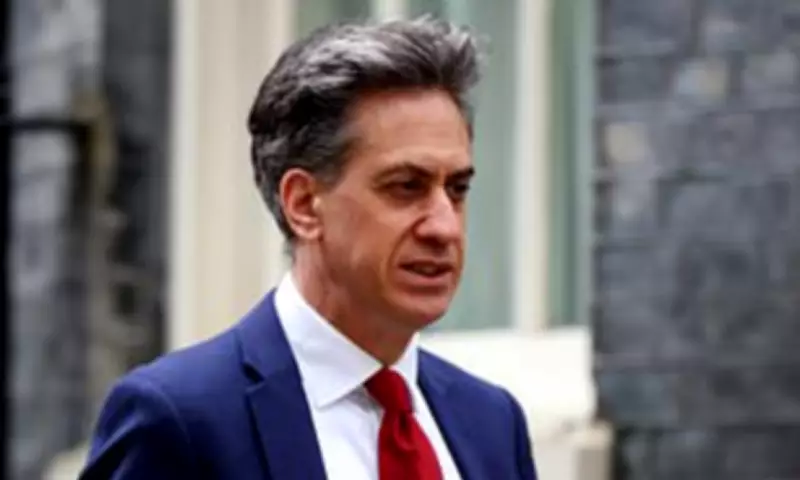
Industry critics and political opponents have swiftly attributed OpenAI's withdrawal to the energy policies championed by Energy Secretary Ed Miliband. They argue that his aggressive drive to abandon North Sea oil and gas exploration in favour of wind and solar power has created an unsustainable environment for energy-intensive industries. The UK now contends with the highest industrial electricity prices in the developed world, more than double those faced by manufacturers in the United States.
Tory business spokesman Andrew Griffith delivered a scathing assessment: 'Ed Miliband's suicidal energy policy has just cost us another huge investment. The UK possesses top AI talent and laboratories, but we are saddled with ruinously high energy costs because of Labour's mad Net Zero agenda. If Labour allows Britain to fall behind in the AI race, we will lose even more jobs for young people.'

The Stargate UK Project and Its Demise
Announced with considerable fanfare during a state visit by former US President Donald Trump last September, the Stargate UK project represented a cornerstone of a broader £150 billion investment package. The initiative, developed in partnership with US chip leader Nvidia and British firm Nscale, aimed to deploy up to 8,000 advanced AI chips across several UK sites, including Cobalt Park near Newcastle upon Tyne, with potential expansion to 31,000 chips.
The project's core concept was to enable UK-based users—including public services, financial institutions, researchers, and national security agencies—to run sophisticated AI models on sovereign British infrastructure. However, the immense energy demands of the required data centres collided with the UK's prohibitive energy cost landscape.
OpenAI issued a statement clarifying its position: 'We continue to see huge potential for the UK's AI future. We are still exploring Stargate UK and will move forward when the right conditions, such as appropriate regulation and manageable energy costs, enable long-term infrastructure investment.'
Internal Labour Divisions and Broader Industry Fallout
The controversy has exposed deepening fissures within the Labour Party regarding energy strategy. In a notable intervention, the Tony Blair Institute—the think tank founded by the former Prime Minister—has urged Labour to reconsider and open up the Jackdaw gas and Rosebank oil fields in the North Sea to mitigate the energy crisis. Sir Keir Starmer himself has signalled a degree of flexibility, telling ITV: 'I'm not fighting the principle. I want oil and gas to be part of the mix for many years to come.'
This incident is not an isolated one. It follows other damaging blows to British industry under the current government, including pharmaceutical giant AstraZeneca axing a vaccine plant in Liverpool and other global drug firms pausing investments amid disputes over medicine pricing. Furthermore, the Daily Mail has reported that Rolls-Royce may build its next generation of aeroplane engines outside the UK without substantial government support.
Julian Jessop, economics fellow at the Institute of Economic Affairs, commented: 'There was always a lot of hype around this particular project, but Ed Miliband's mad dash to decarbonise the grid was the final straw.'

A Damning Verdict on Economic Management
Shadow Chancellor Sir Mel Stride described OpenAI's decision as a 'damning verdict' on Chancellor Rachel Reeves's economic stewardship. 'Britain should be leading the AI revolution,' he stated. 'Instead, Labour are delivering high costs and lost opportunity. The message to investors is clear: under Keir Starmer, Britain isn't open for business.'
Sam Richards, head of the pro-growth campaign group Britain Remade, echoed this sentiment: 'OpenAI halting their flagship British investment is a stark warning: Britain is becoming too expensive to build in. You cannot deliver growth or become an AI superpower with some of the highest industrial electricity prices in the developed world.'
A government spokesman responded, asserting: 'We are continuing to work with OpenAI and other leading AI companies to strengthen UK compute capacity.' However, this assurance does little to mask the profound concerns now gripping the UK's technology and industrial sectors regarding the nation's competitive edge and energy policy direction.





