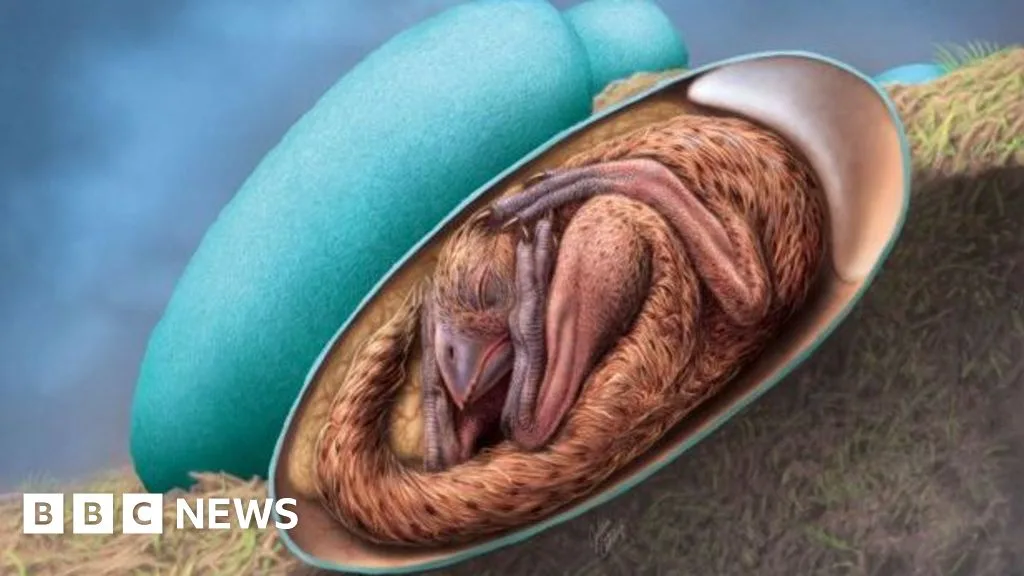
Scientists have announced the discovery of a perfectly preserved dinosaur embryo that was preparing to hatch from its egg, just like a chicken. The embryo was found in Ganzhou in southern China and is estimated to be at least 66 million years old.
Believed to be a toothless theropod dinosaur, or oviraptorosaur, the specimen has been named Baby Yingliang. Researcher Dr Fion Waisum Ma described it as 'the best dinosaur embryo ever found in history'.
The discovery provides a greater understanding of the link between dinosaurs and modern birds. The fossil shows the embryo in a curled position known as 'tucking', a behaviour seen in birds shortly before they hatch. 'This indicates that such behaviour in modern birds first evolved and originated among their dinosaur ancestors,' Dr Ma told the AFP news agency.
Oviraptorosaurs, meaning 'egg thief lizards', were feathered dinosaurs that lived in what is now Asia and North America during the Late Cretaceous period, between 100 million to 66 million years ago. Paleontologist Prof Steve Brusatte, also part of the research team, tweeted that it was 'one of the most stunning dinosaur fossils' he had ever seen.
Baby Yingliang measures 10.6 inches (27 cm) long from head to tail and rests inside a 6.7-inch-long egg at the Yingliang Stone Nature History Museum in China. The egg was first uncovered in 2000 but put into storage for 10 years. It was only when construction work began on the museum and old fossils were being sorted that researchers turned their attention to the egg, suspecting it held an embryo inside.
Part of the dinosaur's body remains covered by rock, and researchers plan to use advanced scanning techniques to create an image of its full skeleton.