

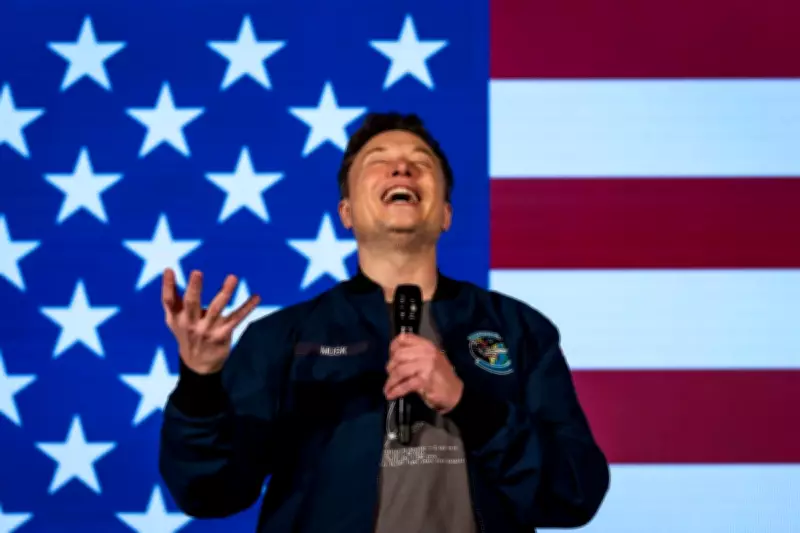
Elon Musk, the visionary founder of Tesla and SpaceX, has announced a groundbreaking joint venture between his two flagship companies. The ambitious project, named TeraFab, is designed to construct the world's largest computer chip manufacturing facility, with the ultimate goal of advancing artificial intelligence robotics and establishing data centres in space.
A Monumental Investment in Semiconductor Production
The TeraFab initiative is projected to require an investment of at least $20 billion. Its primary objective is to manufacture an astonishing volume of AI chips—approximately 50 times the annual output currently produced by all major global companies combined. This massive scale underscores Musk's commitment to accelerating technological progress on an unprecedented level.
Dual-Purpose Chip Design for Earth and Space
Production will commence at Tesla's headquarters in Austin, Texas, where the facility will focus on creating two distinct types of chips. The first variant will be tailored for Tesla's self-driving vehicles, its emerging robotaxi fleet, and the Optimus humanoid robots. The second type will be engineered specifically to endure the extreme conditions of outer space, supporting Musk's vision for orbital infrastructure.

The Drive Towards Space-Based AI Data Centres
Musk has long advocated for the advantages of locating AI data centres in low-Earth orbit, citing potential reductions in operational costs and enhancements in efficiency compared to terrestrial setups. At the World Economic Forum in Davos earlier this year, he predicted, "The lowest-cost place to put AI will be in space, and that will be true within two years, maybe three at the latest."
This vision is already taking shape, with SpaceX recently submitting plans to the US Federal Communications Commission to develop a satellite data centre network. The move aligns with broader industry trends, as Nvidia's CEO Jensen Huang recently revealed initiatives to support space-based AI data centres, and Amazon's Jeff Bezos has highlighted orbital data centres as a solution to Earth's electricity demand constraints.
Motivations and Timelines for Galactic Ambitions
In announcing TeraFab, Musk articulated a profound philosophical drive, stating, "In order to understand the universe, you must explore the universe. And that's the motivation to accelerate humanity's future in understanding the universe and extending the light of consciousness to the stars." This statement reflects his broader ambition to foster a "galactic civilisation."
The project follows an aggressive timeline, with early production slated to begin next year and mass production targeted for 2028. This two-year framework is notably more ambitious than the industry standard, which typically requires three years to establish semiconductor production capabilities, highlighting Musk's characteristic push for rapid innovation.






