

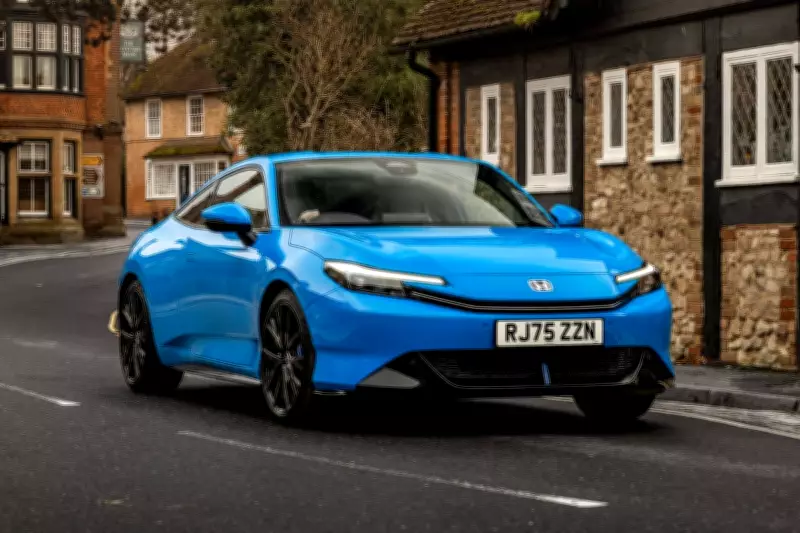
Honda Prelude Review: A Defiant Coupe in an SUV World
In an automotive landscape dominated by SUVs and electric vehicles, the Honda Prelude Advance emerges as a bold and singular statement. This sporty coupe, reviewed by Sean O’Grady, defies contemporary norms with its design and engineering, offering a refreshing alternative for car enthusiasts.
A Prelude or a Postscript?
One might ponder whether this Honda model is a prelude to a new era or a nostalgic postscript. It eschews the battery-electric and plug-in hybrid mandates that are increasingly prevalent today. Moreover, it avoids the ubiquitous SUV and crossover trends, instead reviving the classic coupe form—a two-plus-two seater reminiscent of icons like the Ford Capri and VW Scirocco. Essentially, it can be viewed as a more athletic iteration of the acclaimed Honda Civic Sport, harking back to the era of the warm hatch.
Standing Out in a Niche Market
The Prelude enters a sparse competitive field, with coupes accounting for less than one percent of new car sales. Its rivals include the BMW 2-Series and Mercedes-Benz CLE, which lean towards saloon characteristics, and the Alpine A110, a more engaging but pricier option. Honda anticipates selling only 400 to 500 units annually, targeting individualists who seek a lifestyle accessory. The emphasis here is on style over sheer practicality, a strategy long mastered by brands like BMW, where consumers pay a premium for the exclusivity of a two-door variant.

Design and Premium Appeal
Priced at approximately £40,000, the Prelude commands a £6,000 premium over the Civic Sport. This investment buys a design that, particularly from the rear with its full-width lighting and pronounced boot lip, evokes the elegance of classic Porsches—lighter, smaller, and more refined. In a market saturated with oversized SUVs, the Prelude’s dash and exclusive quality are a welcome departure. Additional features include uprated brakes, handling tweaks from the Civic Type R, and unique leather seats.
Innovative Driving Technology
The Prelude boasts an advanced system called Agile Handling Assist, which enhances stability control and lane assist. This technology acts like an invisible driving instructor, subtly nudging the steering wheel to help drivers navigate bends with precision. While driving feels effortless for the user, the car’s engineering works hard behind the scenes. Honda initially envisioned a 2-litre petrol engine with a six-speed manual gearbox, but modern demands for sustainability led to a hybrid setup with a continuously variable transmission and dual electric motors, cleverly engineered to mimic traditional performance.
Performance and Efficiency
With a power output of 184 PS, a top speed of 117 mph, and a 0-60 mph time of 8.2 seconds, the Prelude is not a raw performance machine. Instead, it offers a range of driving modes, allowing customization for comfort or performance. The S+ mode enhances engine revs and artificial gear shifts for a more dramatic experience. Despite its retro-inspired behavior, the Prelude achieves impressive fuel economy, with tests showing around 50 mpg in mixed driving, thanks to its hybrid system.
Civilised and Comfortable
True to Honda’s reputation, the Prelude is a civilised machine, featuring smooth high-revving, predictable handling, and decent comfort. The interior, while not entirely premium in all materials, offers an attractive and value-appropriate feel, blending touchscreen controls with physical dashboard elements. Minor drawbacks include a lack of lumbar adjustment and a head-up display, which would enhance its grand touring credentials.
Final Thoughts
The Honda Prelude Advance is a testament to innovation and nostalgia, combining sporty aesthetics with hybrid efficiency. It caters to a niche audience willing to embrace its unique charm. As Sean O’Grady concludes, this coupe is a hopeful prelude rather than a postscript, celebrating automotive diversity in an era of conformity.






