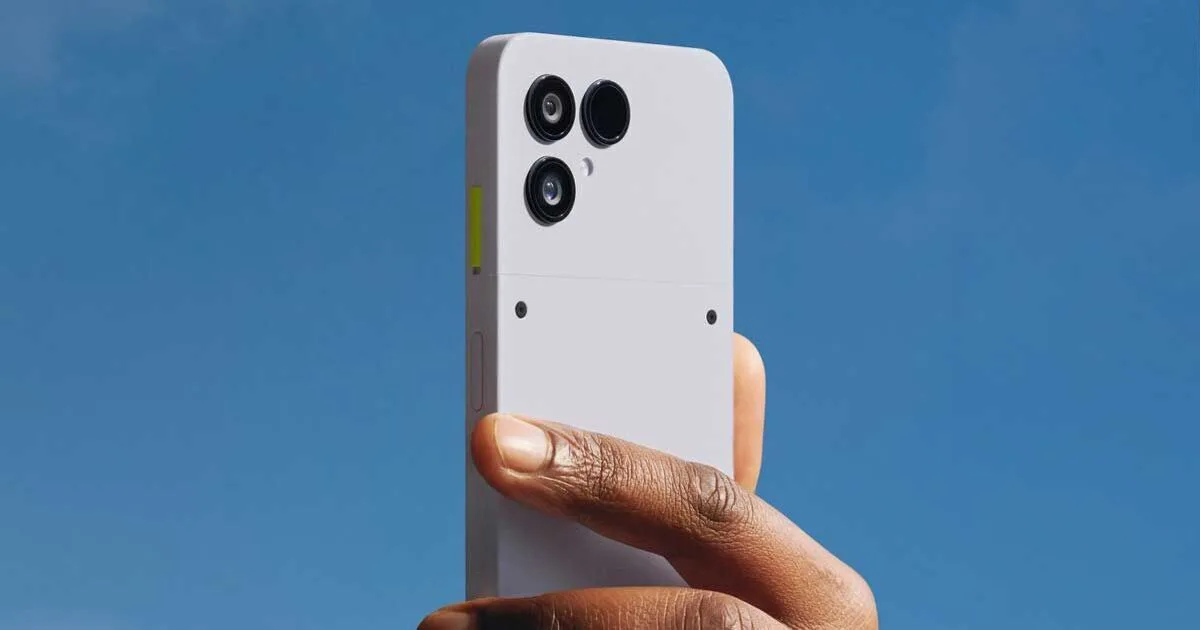
The sixth-generation Fairphone emerges as a compelling ethical alternative to mainstream Android devices, championing repairability, sustainability, and long-term usability. This Dutch brand's latest offering aims to blend modern features with a modular design, making it more accessible and desirable for eco-conscious consumers.
Design and Build Quality
The Fairphone 6 boasts a sleek aesthetic with a 6.3-inch 120Hz OLED screen that delivers vibrant visuals. Its body, crafted from recycled plastic, feels robust and premium, available in off-white, green, or black finishes. While it offers IP55 resistance against rain and splashes, it is not suitable for immersion, so caution is advised around water.
A standout feature is the repairable design, with a back plate secured by two exposed Torx screws. This allows easy access to modular components, including the battery, which users can replace at home with basic tools. The phone supports screw-in accessories like finger loops or card holders, each priced around £25, enhancing its versatility.
Interface and Usability
On the right side, a colourful switch activates "Moments," a minimalist interface that blocks notifications and simplifies the home screen to essential apps, ideal for reducing digital distractions. However, transitioning between apps can feel slightly unpolished, as the regular home screen flashes briefly.
The power button, which doubles as a fingerprint scanner, is flush with the frame, making it tricky to press. Volume buttons opposite it are prone to accidental activation, often triggering screenshots or power menus, a design flaw that can be frustrating during daily use.
Performance and Specifications
Powered by a Qualcomm Snapdragon 7s Gen 3 chip, the Fairphone 6 delivers mid-range performance suitable for everyday tasks and light gaming, though it may struggle with more demanding applications. It includes 8GB of RAM, 256GB of storage, and a rare microSD card slot for expansion, a feature increasingly uncommon in modern smartphones.
Battery life is adequate, lasting approximately 35 hours with moderate use, requiring nightly charging for heavy users. The device supports fast charging via USB-C, reaching 50% in 22 minutes with a 30W adapter, though wireless charging is absent.
Sustainability and Repairability
Fairphone emphasises environmental responsibility, with 50% of materials being recycled or ethically sourced. The battery maintains 80% capacity over 1,000 charge cycles and is user-replaceable, alongside 11 other modular parts. iFixit awarded it a perfect 10/10 for repairability, and replacement components like screens (£78) or batteries (£35) are affordably priced.
The company provides a detailed lifecycle report, reinforcing its commitment to transparency and sustainable practices.
Software and Camera
Running Android 15 with Google services or the privacy-focused /e/OS, the Fairphone 6 lacks the latest Android 16 but promises updates until 2033, exceeding support from many mainstream brands. The software is clean and minimal, though it misses advanced features like AI integrations found in competitors, such as Google's Circle to Search.
Camera performance is serviceable, with a 50MP main sensor capturing decent images in good light but struggling in high-contrast scenarios. A 13MP ultrawide lens and 32MP selfie camera round out the setup, offering value for money without matching rivals in this price range.
Pricing and Verdict
Priced at £499, the Fairphone 6 competes with devices like the Google Pixel 9a (£499) and Nothing Phone 3a Pro (£449). It represents a step forward for ethical tech, balancing repairability with solid mid-range features. While it has drawbacks, such as average camera quality and software quirks, its five-year warranty and long-term support make it a viable choice for sustainability-minded users.
In summary, the Fairphone 6 is the brand's most refined model yet, though increasing repair options and software support in the broader market mean it may not suit everyone over conventional alternatives.