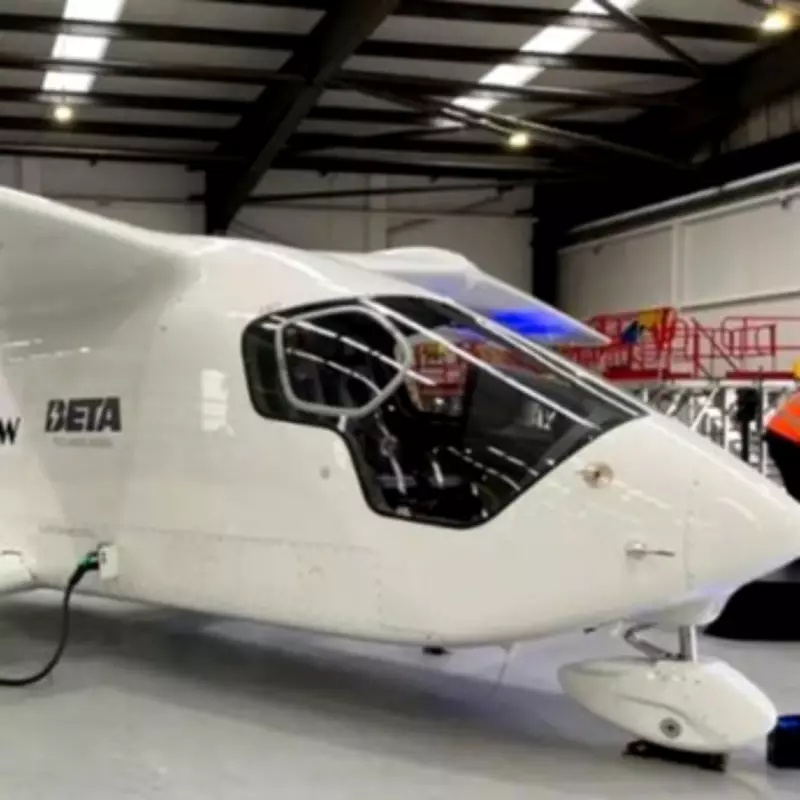
Electric Aviation Set to Revolutionise UK Air Travel with Scottish Pilot Programme
Passengers in the United Kingdom could soon experience the quiet hum of electric aircraft, as a pioneering aerospace initiative aims to bring zero-emission flights to British skies. Bristol Helicopters, collaborating with American firm BETA Technologies, is reportedly targeting the launch of electric plane services within the next couple of years, with a particular focus on serving communities across Scotland.
Strategic Partnerships and Testing Underway
The ambitious project has already gained significant momentum through partnerships with key industry players. Bristol Helicopters has been working closely with Royal Mail and regional airline Loganair to rigorously test the ALIA electric aircraft, which is currently conducting demonstration tours throughout Scotland. This collaborative effort represents a tangible step towards integrating electric aviation into existing transport networks.
Simon Meakins of Bristow Helicopters emphasised to the BBC that this initiative has been in development for approximately five years, predating recent oil market fluctuations. "We have been in this project for five years," Meakins stated. "To be able to use electricity rather than burning fossil fuels has carbon advantages but also there is a significant cost variation."

Economic and Environmental Advantages
The transition to electric aviation offers compelling economic benefits alongside its environmental credentials. Meakins highlighted that "it is more efficient to charge an electric aircraft than it is to burn fossil fuels so there are some really good economic reasons for doing it as well." This efficiency could prove particularly valuable as airlines worldwide contend with jet-fuel shortages and volatile oil prices, with the last known shipment from the Middle East expected in the UK this week.
The ALIA aircraft boasts a practical range of approximately 100 miles and can achieve a full charge within 20 to 40 minutes. With a payload capacity of up to 560 kilograms of letters and parcels, the aircraft demonstrates promising utility for both cargo and potential passenger operations. The implementation strategy is described as "pragmatic and staged," with eventual passenger flights envisioned as a long-term goal.
Scotland as an Ideal Testing Ground
Scotland's unique geographical characteristics make it exceptionally suitable for electric aviation trials. Simon Newitt, head of sales and support at BETA Technologies, explained: "Scotland’s geography makes it one of the most compelling environments for electric aviation anywhere in the world — short routes, existing infrastructure and communities that have depended on reliable air connections for generations."
This sentiment is echoed by Royal Mail, which recently conducted the UK's first real-world fully electric demonstration flight. Chris Paxton, strategic insight and innovation manager at Royal Mail, described this as "an important step towards making electric mail flights a reality for some of the UK’s most remote communities." The postal service aims to achieve net zero emissions by 2040 while maintaining service to all 32 million UK addresses.
Industry Leaders Embrace Electric Transition
Loganair, Scotland's regional airline, has emerged as a key partner in this transformative initiative. Chief Executive Officer Luke Farajallah celebrated the recent electric demonstration as "a landmark day for European aviation, and in particular for Scotland’s airline Loganair." He emphasised the project's practical nature, stating: "We are not talking about concepts, prototypes or distant ambition, this is a real tangible programme of flying across our network which will provide invaluable data on how an electric aircraft could perform in a real commercial environment."
Newitt further elaborated on the collaborative approach: "Flying real postal routes alongside an operator with Loganair’s experience is exactly how you validate this technology. We’re proud to be working with partners like Loganair and Royal Mail, who recognise that keeping these communities connected and doing it sustainably are not competing priorities."

As the aviation industry globally seeks sustainable alternatives to traditional fossil fuel-powered aircraft, this UK-led initiative positions Scotland at the forefront of electric aviation development, promising cleaner, quieter, and potentially more economical air transport for remote communities and beyond.