

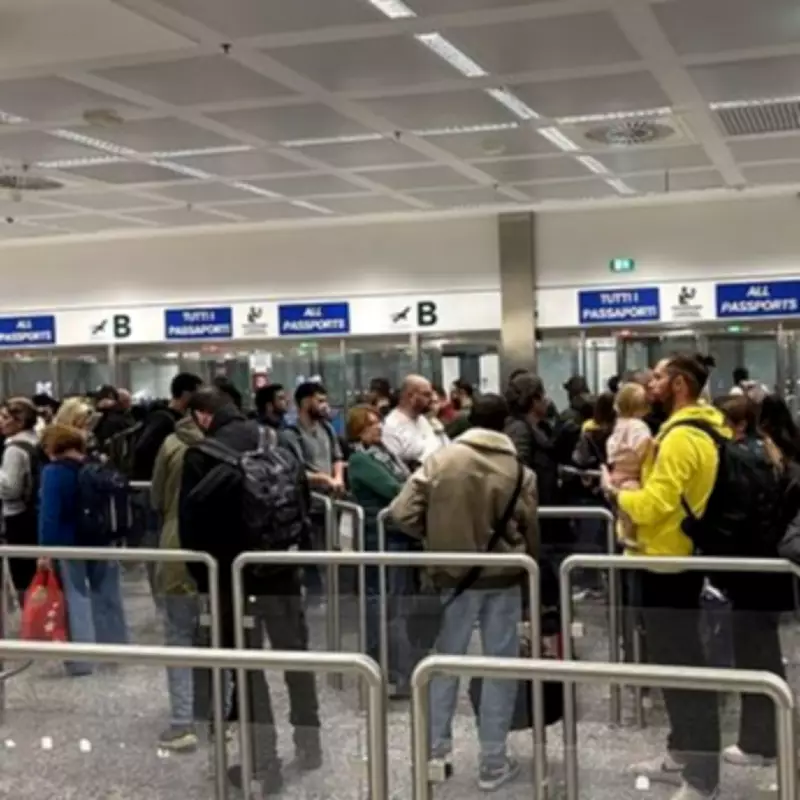
British travellers heading to Europe this Easter are bracing for significant delays at border control, with warnings of queues stretching up to two hours due to the implementation of the EU's new Entry/Exit System (EES). The stringent rules, which came into effect today, mandate that all passengers without EU passports must have their fingerprints registered and photographs taken upon first entry into the Schengen zone, with these biometric checks repeated at every subsequent entry and exit.
Operational Bottlenecks and Peak Travel Pressures
Airports and airlines across Europe are alerting passengers to expect bottlenecks, particularly during the busy Easter holiday period. Previously, only 50 percent of non-EU arrivals were subject to processing at border points, but the EES now requires 100 percent compliance, significantly increasing processing times. Data from Airports Council International (ACI) indicates a continued deterioration in waiting times, with queues regularly reaching up to two hours during peak traffic times, and some airports reporting even longer delays.
Transition Period Ending as Passenger Volumes Surge
The EES was soft-launched in October after multiple delays, with a six-month transition period that allowed EU members to suspend the system under operational pressures. During this time, at least 4,000 holidaymakers were caught out by the new requirements. However, as the transition period concludes, passenger processing times are set to rise sharply, coinciding with a surge in Easter travel. EasyJet, the UK's largest airline, anticipates its busiest Easter on record, handling over a quarter more travellers than last year, with 16,000 flights scheduled from the UK during the school holidays.

Industry Calls for Flexibility Amid Technical Challenges
Industry leaders have voiced concerns over the operational challenges posed by the EES rollout. Olivier Jankovec, Director General of ACI, and Ourania Georgoutsakou, Managing Director of Airlines for Europe, emphasised in a statement to The Times that passengers entering the Schengen area are likely to face even longer waits during Easter due to persisting issues. They have called on the European Commission and member states to extend the option to fully or partially suspend the EES where operationally necessary throughout the 2026 summer season and beyond, warning that without such flexibility, future peak travel periods could see catastrophic disruptions.
Government Advice and Practical Implications
UK ministers have warned that the introduction of the EES represents a significant change for British travellers this Easter. Alex Norris, the Minister for Border Security, advised that extra time may be needed for both return to the UK and travel to the EU, urging passengers to check with their carriers for updates. At larger airports, passengers are directed to kiosks for biometric capture, while smaller airports handle the process manually via officers, adding to variability in wait times. As the system faces technical and operational hurdles, the travel industry remains on high alert, with the Easter weekend serving as a critical test of the EES's efficiency and capacity.






