Cupra Raval Electric Supermini Arrives with Bold Styling and Premium Features
If you believe electric vehicles remain prohibitively expensive, the newly unveiled Cupra Raval is poised to shatter that misconception. This compact all-electric hatchback, set for a summer 2026 launch, is anticipated to start at approximately £23,000, positioning it squarely in the heart of the fiercely competitive small EV segment.
A Competitive Landscape Filling Rapidly
The affordable electric car market is becoming increasingly crowded. Models like the BYD Dolphin Surf, Fiat Grande Panda, and Citroen e-C3 are already lowering the entry barrier. Meanwhile, the Volkswagen Group is preparing its own family of small electric vehicles. The Raval shares its fundamental architecture with Volkswagen's ID. Polo and ID. Cross, as well as the Skoda Epiq. However, Cupra is adopting a distinctly different strategy.
Rather than concentrating solely on affordability and simplicity, Cupra is marketing the Raval as a more expressive proposition. The brand emphasises "challenging convention" and injecting emotion and performance into a segment typically dominated by sensible, pragmatic choices. After spending time examining the car's exterior and interior, this ambitious intent is unmistakably clear.
Design: Small Car, Big Presence
Despite measuring just 4,046mm in length, the Raval possesses a far greater road presence than its dimensions might suggest. Its proportions are low and wide, aided by a chassis that sits 15mm lower than the standard MEB+ platform used by other Volkswagen Group models. The track has also been widened, giving the car a more planted, assertive stance. In essence, the Raval is a small car that doesn't look or feel like one.
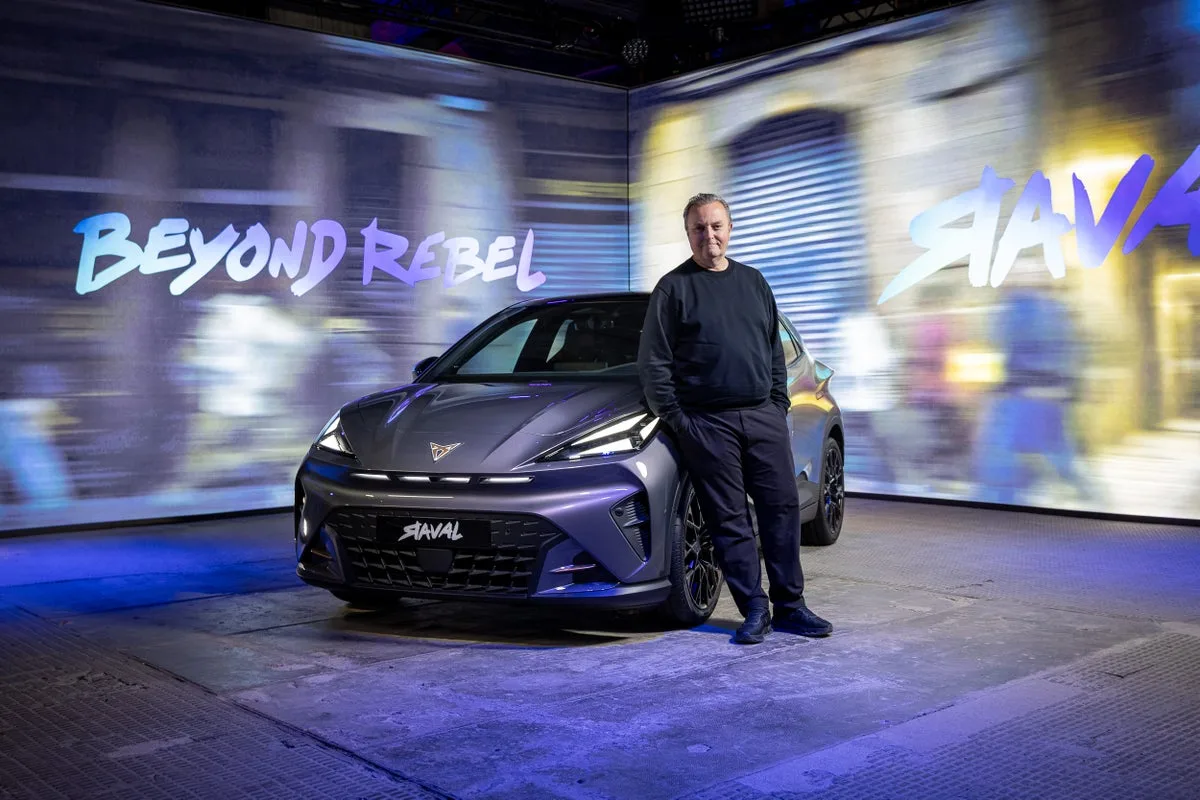
The front end is dominated by a sharp, almost aggressive 'shark nose' design, featuring slim Matrix LED headlights and an illuminated Cupra badge. Lighting is a particular highlight, with a comprehensive welcome ceremony at both the front and rear. The rear light signatures even incorporate 'Raval' script—a subtle but effective detail that reinforces the car's ambition to stand out from the crowd, as if it belongs to a segment above its class.
Rear styling is especially striking, with a full-width light bar, pronounced shoulder lines, and a prominent diffuser on sportier variants. The launch car's Plasma paint, which shifts colour depending on the light, is another standout feature, complemented by copper accents that underline Cupra's established design language.
Substance Behind the Style
Crucially, the Raval is not merely about aesthetics. Cupra makes a significant claim about combining hatchback agility with the interior space of a larger vehicle, and a detailed inspection reveals substantial evidence to support this.
The boot is a prime example. At 430 litres, it is exceptionally generous for a car of this size, offering a deep and practical layout for real-world use. This is facilitated by the battery being packaged flat under the floor, which maximises rear space without compromising headroom.
Interior: Theatre Meets Usability
Inside, the blend of theatrical design and everyday practicality continues. The dashboard is clean yet distinctive, with a strong driver focus and a raised centre console that creates additional storage space. In this top-specification model, the materials and layout feel more premium than the price point might suggest.
The driving position is well-judged, the steering wheel is satisfyingly chunky, and—importantly—there are proper physical buttons instead of an over-reliance on touch-sensitive controls. This seemingly minor detail significantly enhances daily usability.
Lighting once again takes centre stage inside the cabin. Ambient lighting runs across the dashboard and throughout the interior, but the standout feature is a projection system that casts animated graphics onto the door panels. This is pure theatre, yet it genuinely differentiates the Raval in its segment.
Innovative Materials and Technology
Beneath the surface, further innovation is evident. The top-spec seats utilise a 3D-knitting process with 100 per cent recycled materials, while parts of the dashboard are 3D-printed. These details add technical credibility to the premium ambiance.
Technology is another strong suit. A 10.25-inch digital driver display sits ahead of the driver, while a 12.9-inch central touchscreen operates on a new Android-based system—the first such implementation in a Cupra. This provides access to over 130 apps directly through the car, alongside improved connectivity and voice control. An optional 12-speaker Sennheiser sound system promises audio performance uncommon in a small hatchback.
However, it is not without flaws. The infotainment hardware is familiar from other Volkswagen Group models and retains a known frustration: accidentally resting a thumb in the wrong place can inadvertently adjust volume or temperature. It is a small but noticeable issue.
Surprising Rear Space and Practicality
Rear passenger space is another pleasant surprise. There is sufficient legroom for adults behind a typical driving position, and headroom remains decent even with the panoramic roof. The flat floor and ability to slide feet under the front seats further enhance comfort. The only minor drawback is that the chunky front seats slightly restrict the forward view for rear passengers.
Powertrain and Performance Options
Underpinning the Raval is Volkswagen Group's MEB+ platform, albeit with several modifications to impart a more distinctive character. Buyers can choose between two battery sizes: 37kWh and 52kWh. In real-world conditions, this translates to approximately 180 miles of range for the smaller battery and up to around 280 miles for the larger unit.
The larger battery benefits from a cell-to-pack design, improving energy density by about 10 per cent to maximise both range and efficiency. Charging performance is competitive for the class. The 52kWh battery supports DC rapid charging at up to 130kW, enabling a 10 to 80 per cent charge in roughly 23 minutes. The smaller battery can achieve the same in about 27 minutes at up to 90kW.
Power outputs range from 114bhp to 223bhp across different versions. The range-topping VZ model, which was the focus of this inspection, delivers the full 223bhp. It also features a sportier chassis setup, including adaptive dampers with up to 15 levels of adjustment, an electronic differential to enhance handling, and a more focused suspension configuration.
Additional features designed to inject character into the driving experience include one-pedal driving and a bespoke 'e-Launch' function. This combines lighting, sound, and acceleration to create a more dramatic start from a standstill. Even without a test drive, it is evident that Cupra aims to make the Raval the more engaging choice in a class that often prioritises efficiency over enjoyment.
Comprehensive Safety and Driver Assistance
This philosophy extends to technology and safety systems. The Raval comes equipped with a comprehensive suite of driver assistance features, including Intelligent Park Assist, Remote Park Assist, and Emergency Assist, alongside a 360-degree camera system to simplify urban manoeuvring.
Positioning and Market Potential
All these elements help position the Raval as more than just an entry-level EV. With prices expected to range from around £23,000 to approximately £35,000, it spans a broad section of the market—from an affordable first electric car to something approaching a small premium hatchback.
Based on this early examination, Cupra appears to have successfully combined style, substance, and usability in a manner that could make the Raval one of the most intriguing small electric cars upon its UK arrival next year. It looks striking, feels thoughtfully designed inside, and offers the practical day-to-day usability that buyers demand.
The final critical assessment will be its on-road dynamics. However, if the Raval delivers on the promise suggested by its design, engineering, and meticulous attention to detail, it could achieve precisely what Cupra intends: injecting a greater dose of emotion into the affordable end of the electric vehicle market.