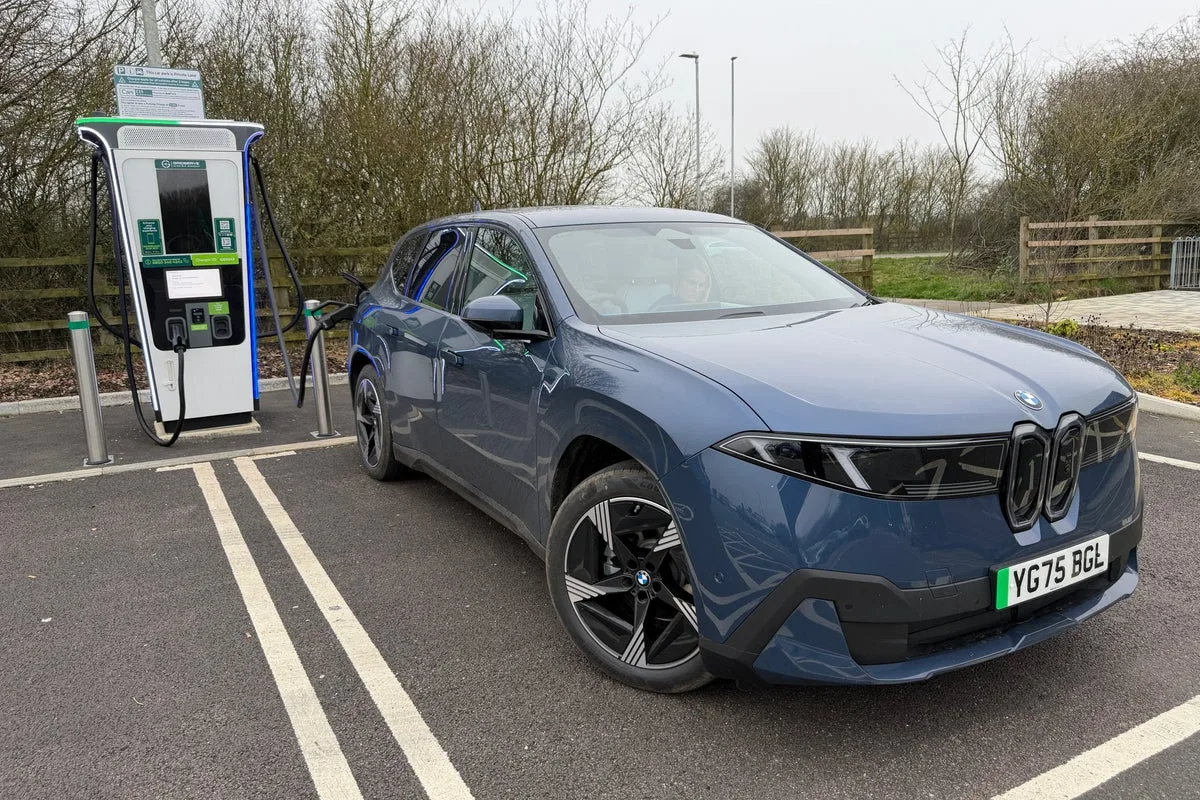
BMW iX3 Range Test: Does It Really Achieve 500 Miles on a Single Charge?
The BMW iX3 is emerging as one of the most anticipated new vehicles of 2026, largely due to its bold promise of a 500-mile range on a single charge. Our EV editor, Steve Fowler, embarked on an extensive real-world test to determine if these claims hold up under practical driving conditions.
Putting Promises to the Test
Over a 10-day period, Steve covered more than 1,000 miles in the iX3, focusing on a personal challenge: a 405-mile round trip from his home in South Buckinghamshire to Liverpool and back without recharging. This journey, often undertaken for football matches, typically discourages the use of electric vehicles due to range anxiety. The iX3's advertised 500-mile range and super-fast charging capabilities, which can add up to 231 miles in just ten minutes, aim to eliminate such concerns.
However, as Steve notes, official figures from car manufacturers often differ from real-world performance. The 500-mile claim is based on the WLTP (Worldwide Harmonised Light Vehicles Test Procedure) test cycle, a standardized laboratory assessment that simulates various driving conditions. While WLTP provides a comparative baseline, it may not accurately reflect everyday efficiency, especially on motorways where EVs are less efficient due to limited regenerative braking.
Real-World Driving Experience
Before tackling the Liverpool trip, Steve tested the iX3 on a 400-mile round journey to Lincolnshire, using a mix of motorway, rural, and urban roads. The vehicle impressed with its spacious interior, high-quality comfort, advanced technology, and intuitive Panoramic iDrive display. Despite a slightly firm ride noted by Steve, the iX3 delivered a dynamic driving experience true to BMW's reputation.
Charging was also evaluated during this leg. At Gridserve's 350kW charger at Sawtry services, the iX3 peaked at 330kW, adding over 100 miles in minutes during a brief stop. This demonstrated the convenience of fast charging for long-distance travel, though costs were significantly higher than home charging rates. After this trip, the car's computer indicated a 33% battery level with 155 miles remaining, suggesting an overall range of approximately 465 miles.
The Liverpool Challenge: A Close Call
For the critical 405-mile Liverpool journey, Steve set the iX3 to Efficiency Mode and used adaptive cruise control at 70mph on motorways. Initially, the BMW app showed 459 miles of range, but real-time conditions proved challenging. Upon arrival in Liverpool, 48% battery remained, making the return trip precarious.
As the journey home progressed, the range estimate dropped unexpectedly, forcing a stop at an InstaVolt charger near Warwick. A 15-minute charge sufficed to complete the trip, but the experience highlighted discrepancies between claimed and actual range. Steve calculated an achievable range of around 385 miles, falling short of the 500-mile claim but still impressive for an EV.
BMW's Response and Final Verdict
BMW clarified that such motorway-heavy journeys qualify as 'ultra-high consumption,' potentially reducing range by up to 28% from the WLTP figure. This adjustment aligns with Steve's observations, suggesting a realistic range of 360-385 miles under similar conditions.
Despite not hitting the full 500 miles, the iX3's performance remains noteworthy. For most drivers, who average under 25 miles daily, the iX3 offers ample range and lower running costs, especially with home charging. Steve recommends the iX3 for its driving dynamics, technology, and overall capability, though he advises potential EV owners to adapt their mindset for longer trips requiring occasional charging stops.
In summary, while the BMW iX3 may not achieve its maximum claimed range in all scenarios, it represents a significant step forward in electric vehicle technology, making long-distance EV travel more feasible and enjoyable.