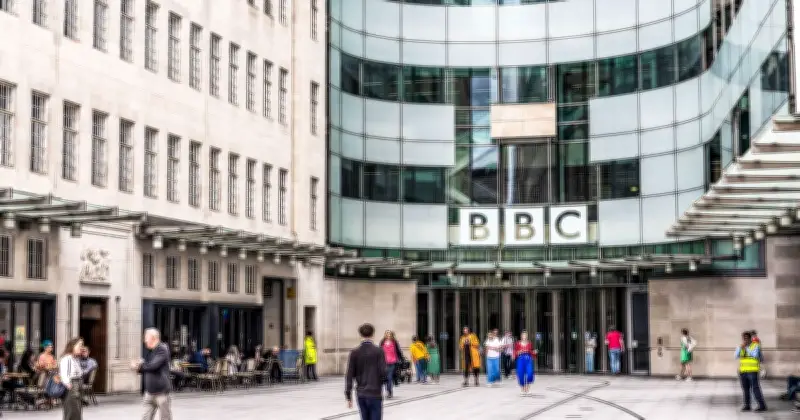
BBC News is set to place greater emphasis on international viewers under plans unveiled by its leadership as the corporation grapples with financial pressures and sweeping job cuts. Jonathan Munro, the interim chief executive of BBC News, told staff that the broadcaster's news channel should increasingly focus on audiences outside the UK, arguing that global viewers represent a growing source of value and revenue for the corporation.
Evolution, Not Revolution
Speaking at an all-staff meeting on Tuesday, Mr Munro said the BBC's 2023 decision to merge its domestic BBC News channel with BBC World News had been the correct response to financial challenges, despite criticism from some viewers and staff. The merger created a single television news service for UK and overseas audiences, with British viewers switched to a dedicated domestic feed when major national stories break. Mr Munro said the strategy now needed to evolve further rather than undergo a wholesale overhaul.
He told staff: "I think we need to go a step further with the news channel but I'm talking about evolution not revolution." He added: "The evolution I've got in mind is that the news channel needs to point increasingly towards our global audiences because that's where the BBC's really delivering value."

Commercial Drivers
The BBC executive acknowledged that commercial considerations were driving the move. While the corporation is funded by the licence fee in the UK and cannot carry advertising domestically, its international news services generate revenue overseas. He said: "Outside the UK, we can drive commercial revenues harder and to do that we need to make the relevant agenda of the news channel applicable to greater audiences." He noted: "Every pound we get in the door from that is a pound we don't need to find in savings."
Mr Munro insisted domestic audiences would continue to be served and said the proposed changes would not have altered coverage of major UK political developments, such as Sir Keir Starmer's resignation on Monday. However, he suggested some stories of primarily domestic interest could receive less prominence on the main news channel in future. As an example, he cited Tuesday's sentencing of former SNP chief Peter Murrell, which he said would likely be delivered through streaming services such as iPlayer rather than feature heavily on the linear channel.
Job Cuts and Restructuring
The comments come amid a wider restructuring programme being led by the BBC's new director-general, Matt Brittin. Mr Brittin, a former Google executive, recently announced plans to cut almost 2,000 jobs, equivalent to around 10 per cent of the corporation's workforce, as part of efforts to reduce costs. The first phase of the programme will see 550 posts eliminated in a bid to save £160 million this year. The cuts will affect a number of BBC programmes, including Radio 4's The World Tonight and Midnight News. Broadcaster Amol Rajan will also not be replaced when he departs the Today programme.
Addressing staff, Mr Brittin acknowledged the uncertainty created by the restructuring. He said: "I'm really sorry that we have to deal with this. It's unavoidable but I know the amount of uncertainty and concern it brings to colleagues and I've heard that loud and clear from people." He added that organisations around the world were facing similar pressures and difficult decisions amid a period of economic and technological changes. The licence fee represents 65 per cent of the BBC's revenue stream.