

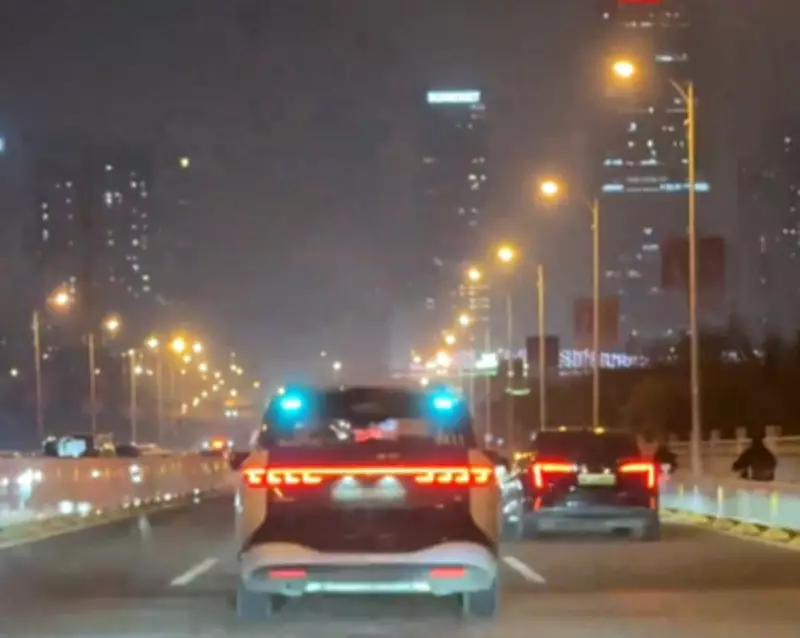
Apollo Go Robotaxis Halted by System Failure in Wuhan
A significant system malfunction has led to several Apollo Go robotaxis stalling in the middle of traffic in Wuhan, China, according to police confirmations. Distressed riders were left stranded for hours, with many reporting that customer service agents offered what they described as useless platitudes instead of effective solutions.
Police Confirm Multiple Vehicle Stalls
Local authorities in the central Chinese city of Wuhan stated that they began receiving numerous calls on Tuesday night from riders reporting that autonomous vehicles operated by Baidu, China's equivalent to Google, had frozen. In an official statement released on Wednesday, police said, "Multiple Apollo Go cars stopped in the middle of the road, unable to move. After investigation, preliminary findings suggest the cause was system malfunction." Baidu operates a fleet of over 500 driverless cars in Wuhan, though the exact number involved in this incident was not specified.
Riders' Ordeals and Social Media Backlash
One rider shared their harrowing experience on the Chinese social media platform RedNote, detailing a 90-minute ordeal that began at 9pm local time when their vehicle broke down on an elevated highway. "I called robotaxi's customer service, but couldn't get through at first. After calling repeatedly, everyone I said they had dispatched a specialist," the user recounted. "After 10.30pm, my order was cancelled, and I was stuck on the overpass with dump trucks all around me." Although eventually rescued, the rider criticised Apollo Go for providing inadequate emergency handling.

Footage of the incident quickly spread across social media platforms, with one user posting a video captioned "Apollo Go, are you paralysed?" showing unsuccessful attempts to contact the company via an in-car tablet. This backlash highlights growing concerns over the reliability and customer support of autonomous vehicle services.
Historical Context and Expansion Plans
This is not the first incident involving Baidu's robotaxis. In December of last year, authorities in Zhuzhou suspended robotaxi operations after a Baidu-produced autonomous vehicle ran over two pedestrians, leaving them in intensive care. Despite such setbacks, Baidu has been aggressively expanding its Apollo Go service, which opened to the public in Beijing in late 2020 and now operates in designated areas across several Chinese cities.
According to company filings, Baidu provided 3.4 million driverless rides in the fourth quarter of 2025, representing an increase of more than 200% compared to the same period in 2024. More recently, Baidu has announced deals with rideshare apps Lyft and Uber to deploy its autonomous vehicles on their platforms, aiming to expand its presence outside China. However, the company did not immediately respond to requests for comment regarding the recent system malfunction in Wuhan, as reported by Reuters.
The incident underscores the challenges facing the autonomous vehicle industry as it scales up, particularly in terms of system reliability and emergency response protocols. As technology advances, ensuring passenger safety and effective customer service remains a critical priority for companies like Baidu.






