

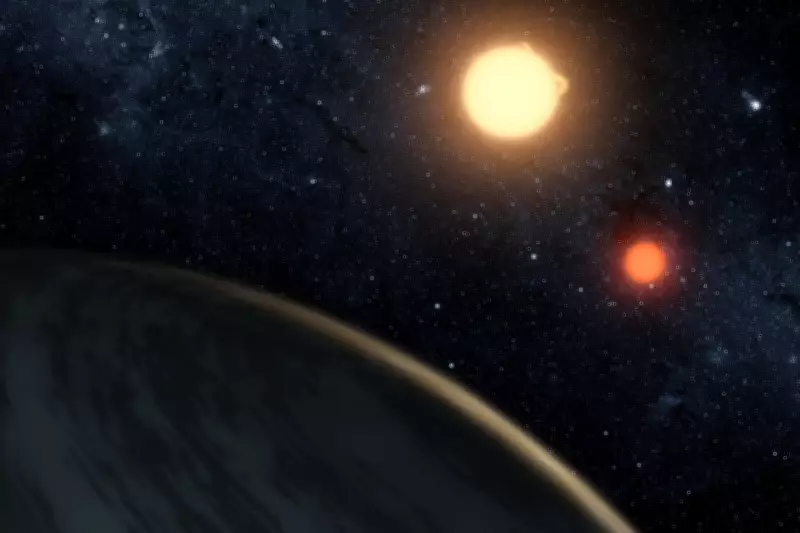
A new satellite survey has uncovered nearly 30 unusual planets that orbit two stars instead of one, reminiscent of Tatooine, the fictional home of Luke Skywalker in Star Wars. These so-called circumbinary planets were once considered the stuff of fantasy, with only 18 confirmed before this discovery, compared to over 6,000 known planets orbiting single stars.
New Method Yields 27 Candidates
Using data from NASA's TESS space telescope, scientists have identified 27 potential circumbinary planets in a single sweep, employing a novel technique. The method monitors changes in binary star orbits over time, tracking variations in their eclipse schedules that may indicate the gravitational influence of a third body—likely a planet.
"Most of our current knowledge on planets is biased, based on how we've looked for them. We've mostly found the easiest ones to detect," said Margo Thorton, a PhD candidate at the University of New South Wales and lead author of the study published in the Monthly Notices of the Royal Astronomical Society. "This new method could help us uncover a large population of hidden planets, especially those that don't line up perfectly from our line of sight. It could help reveal what the true population of planets in our universe is."

Implications for Planet Population
The technique had previously been used to characterize binary star systems but not for large-scale planet searches. By analyzing eclipses—dips in starlight—scientists can infer the presence of orbiting planets. The team examined 1,590 binary star systems, finding that nearly 2 percent could host planets. "That implies there could potentially be thousands, or tens of thousands, of possible planets to be found," said astronomer Ben Montet from UNSW.
The 27 candidates await confirmation through future observations. They range in size from Neptune-mass to up to ten times the mass of Jupiter. "I'm excited about the potential for how many planets we could find with this method," Montet added. "With this method so far, we have 27 strong planet candidates in environments completely unlike our own solar system."
These discoveries not only expand the known population of circumbinary planets but also offer a glimpse into planetary systems vastly different from our own, potentially reshaping our understanding of planet formation and diversity across the galaxy.






