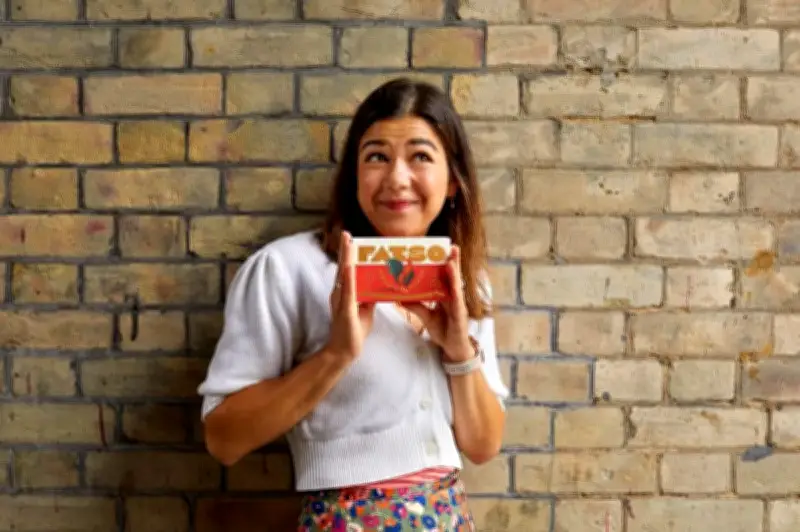
Fatso, the dark chocolate brand co-founded by Ella McKay, is on target for £1 million sales this year, having navigated the cocoa price spike by raising prices rather than shrinking its bars. The brand, launched in October 2022, is now stocked in Waitrose and Whole Foods, alongside online sales and independent shops, cafés and hotels.
The business began during lockdown, when McKay and friends lamented the state of the chocolate aisle. “Milk chocolate got to have all the fun. Dark chocolate was stuck being the sensible, serious one,” she says. “So we made the dark chocolate we actually wanted to eat.” That idea—adding “big chunks, big flavours, and the nostalgic combinations you'd normally find in ice cream, biscuits and puddings” to chocolate—has grown into a confectionery business facing a cocoa industry in crisis.
Navigating the cocoa crisis
The cocoa industry is under pressure from climate change, disease, ageing trees and years of underinvestment in West Africa, where most of the world's cocoa is grown, plus rising energy, transport and packaging costs. McKay, who previously worked at business accelerator Hutch Ventures and had no cocoa experience, says, “We've all got used to paying very little for something that's complex to grow and relies on some of the poorest farmers in the world. The recent price spike just stopped the system hiding the true cost.”
Fatso's dark chocolate comes from Luker Chocolate in Colombia. “There's a whole industry there,” McKay explains. “The cocoa is grown, fermented and made into chocolate in the same country. Shipping beans to Europe to be made into chocolate is how cocoa gets turned into a cheap commodity, and how most of the value ends up a long way from the people growing it. Keeping it at origin keeps more of it where it belongs, and meant we were never short on supply.”
Quality over quantity
While popular treats like Cadbury's Dairy Milk and Terry's Chocolate Orange have engaged in “shrinkflation”—smaller bars for the same or higher prices—Fatso has raised prices to keep chunky bars. “When we launched in 2022, our bar was £5.95. It's now £7.50 in Waitrose. That's never a decision we take lightly, but that money hasn't gone into our margin, which is no bigger than it was in 2022. Our farmers are guaranteed 90% of the global market price for cocoa, so when prices went up, they benefited. I've heard brilliant stories from them: visiting grandchildren who'd moved away, reinvesting in their farms, buying more land. That's who's on the other end of a chocolate bar.”
McKay takes a bold line on quality over quantity, even when it comes to sales. “I'd rather someone buys Fatso less often because it costs more, than more often because we've compromised what's inside.” As the business scales, Fatso is “getting more operationally sophisticated,” she explains, improving company systems, increasing production runs, and expanding into more stores. When it comes to operational levers, McKay asks: “Can we make enough chocolate? Can we make it at the quality we expect? Can we get it where it needs to go? Where are the bottlenecks? And do the economics of the business work?”
Founder to CEO transition
McKay acknowledges the challenges of switching from founder to CEO, saying she is not there yet but is trying to step away from daily commercial decisions to steer the business's direction, product pipeline and retailer relationships. This year, she completed Goldman Sachs' 10,000 Small Businesses UK programme, “which forced me to work on the business rather than in it and build a three-year growth plan”, and hired a part-time assistant. “The first task was clearing my 14,000 unread emails - not my finest statistic,” says McKay. “When you're the founder, everyone looks to you. But if every decision still has to go through you, you haven't built a bigger business. You've just built yourself a bigger job.”