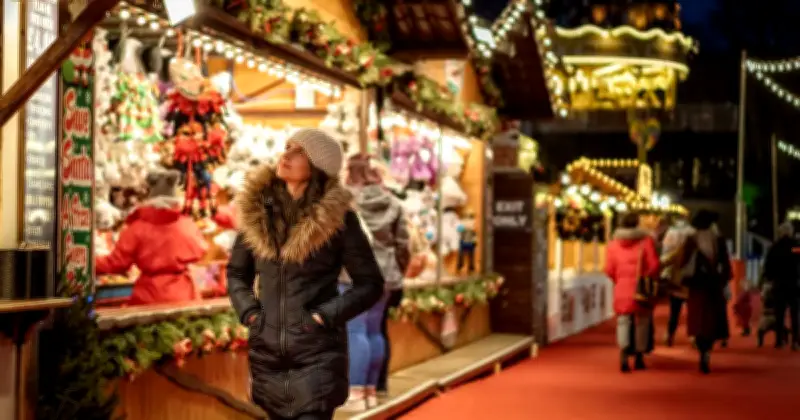
Local Christmas markets in Fowey, Boldmere and Kimberley have been cancelled ahead of the festive season due to rising operational costs and tightening regulatory requirements, with organisers warning that smaller events face an uncertain future.
The Fowey Christmas Market in Cornwall, scheduled for December 4 to December 6, was cancelled after a decade of running, with organisers Live Events South West citing severe financial and operational challenges. Boldmere Christmas Market in Sutton Coldfield has been cancelled for the second year running after the local town council reportedly voted to refuse funding for the event, which costs roughly £24,000 to run. Kimberley Christmas Market in Nottinghamshire has also been axed, with the local council citing escalating security fees and a shrinking pool of volunteers.
Martyn's Law Adds to Pressures
Joe Harrison, CEO of the National Market Traders Federation, said major markets in cities such as London, Manchester and Birmingham will survive, but smaller, localised events face increasing pressure. "These markets are worlds apart from some of the larger Christmas markets," he said. "I can see why these closures have come about."
Harrison pointed to Martyn's Law, enacted as the Terrorism (Protection of Premises) Act 2025, which requires publicly accessed events to better prepare for potential terrorist attacks. The legislation is named in tribute to Martyn Hett, one of the 22 people killed in the 2017 Manchester Arena bombing. "This is all born out of what happened at the Ariana Grande concert and people driving trucks through markets in Germany," he explained. "It's horrendous the times we're living in. Unfortunately, safety equals more expense and the money isn't there at the minute."
Tiered Requirements and Rising Costs
Martyn's Law applies to publicly accessible premises with a capacity of 200 or more. The standard tier, covering events with a capacity of 200 to 799 people, requires organisers to establish clear evacuation routes, train staff, and set up communication plans for visitors. The enhanced tier, for events with a capacity of 800 or more, requires a formal risk assessment and robust security measures, including bag search policies, CCTV monitoring, and vehicle checkpoints.
"It is substantially more expensive due to the things you have to have in place," Harrison said. "Some of the smaller Christmas markets can get equally as busy as the big ones, like Stratford-upon-Avon which was previously a four-day event and is now held over two weekends." He added that many local authorities are cash-strapped and taking decisions to spend only on essential services, making markets unviable.
Vendors Face Hidden Charges
Smaller craft and food vendors are also being hit by hidden costs, such as mandatory card-only payment rules where organisers take between 10% and 30% commission on all sales. Some are forced to pay separate expenses such as electricity, Wi-Fi, waste removal and upfront damage bonds. Harrison noted that the lifting of the minimum wage has made staffing expensive, and fuel prices remain high.
Harrison urged councils to consider alternative means to ensure markets have a long-term future, including merging with other markets to split costs. "We are now working to develop market regional partnerships," he explained. "We've established one in Greater Manchester, which has been going for around 12 months, and we've established one in the West Midlands where a group of councils come together to share the costs and promote the region and not just the individual market."
Events like those in Fowey, Boldmere and Kimberley benefit local businesses by increasing footfall over the Christmas period, with visitors often staying to eat in restaurants, drink in pubs, or stay in local hotels. "The markets do feed more into the town than just the traders on the market selling their goods," Harrison said. "Bringing people together can't be a bad thing, can it?"