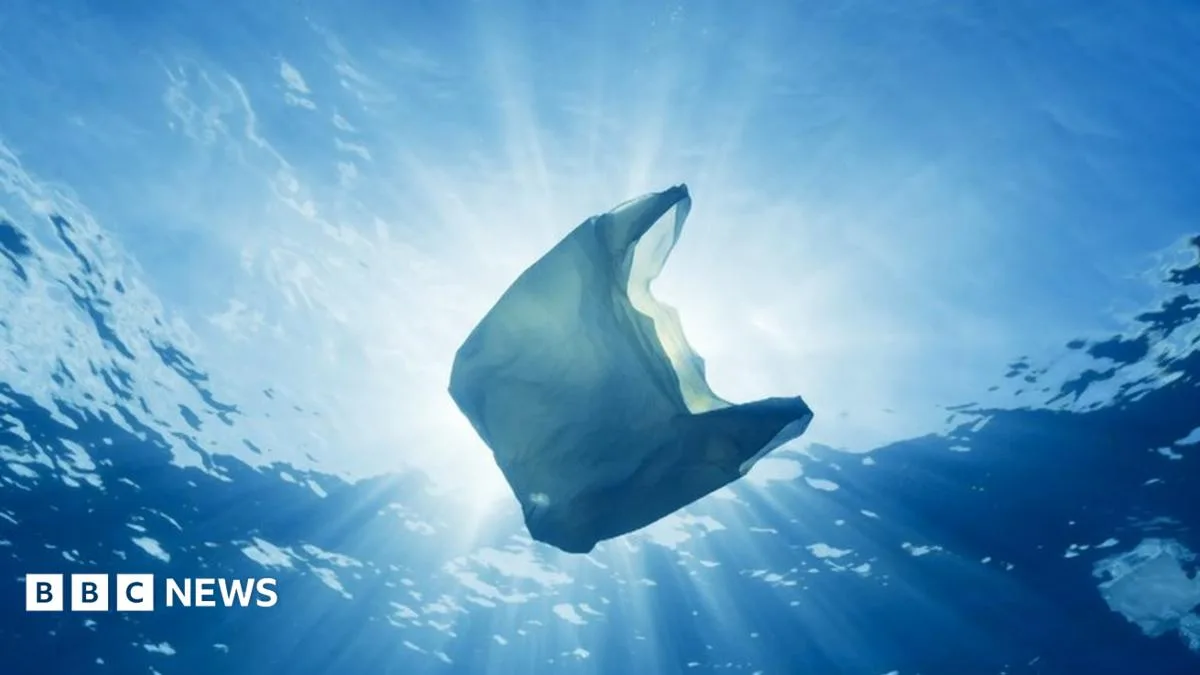
Plastic waste is "one of the great environmental scourges of our time", according to Prime Minister Theresa May, who has pledged to ban all avoidable plastic waste in the UK by 2042. Supermarkets have been urged to introduce "plastic-free" aisles and consider charges on single-use plastic items.
Major retailers in England still sold 2.1 billion single-use plastic bags in the last financial year, despite the 5p charge. Greenpeace UK has criticised the government's plan as "vague aspirations", calling instead for concrete measures such as bottle deposit return schemes and a "latte levy" on disposable coffee cups.
Among the ten biggest supermarkets, Tesco aims to make all its packaging recyclable or compostable by 2025 and halve packaging weight compared to 2007. It has removed polystyrene from fish packaging and replaced two-layer plastic trays with single-layer ones, saving 92 tonnes of plastic. Sainsbury's targets a 50% packaging reduction by 2020 and has removed plastic cotton buds, while redesigning milk bottles to save 580 tonnes of plastic annually.
Asda has cut packaging weight by 27% since 2007 and saved 82 tonnes of plastic by lightening its own-brand water bottles. Morrisons recycles carrier bags, uses returnable bins for fish products, and has banned microbeads and plastic cotton buds in its own-brand cosmetics. Aldi has achieved an 11% reduction in packaging between 2012 and 2015 and recycles all its cardboard and plastic.
Co-Op has replaced polystyrene pizza discs with cardboard, saving 200 tonnes of plastic, and supports a deposit return scheme. Waitrose has thinned salad bags, reduced smoked salmon packaging by 50%, and switched to biodegradable cotton buds, saving 21 tonnes of plastic. It also introduced a sandwich wrapper with separable plastic and cardboard for easier recycling.