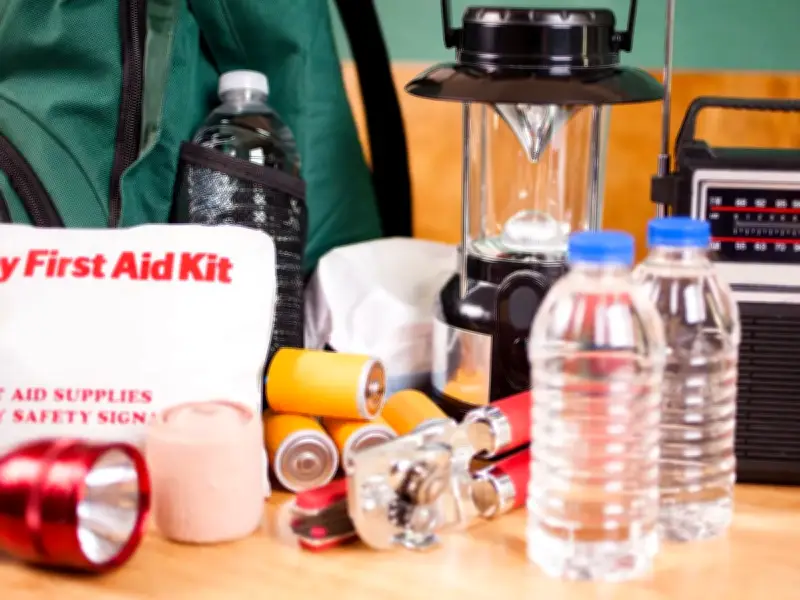
Major UK retailers have reported a rise in sales of tinned food, radios and other essentials after the government called for households to stock up in case of an emergency.
Households are being urged to make sure they have up to three days' worth of key supplies to see them through in the event of a crisis, such as essential services being disrupted by severe weather or cyber attacks. The items advised as part of the new "Be Ready" campaign include bottled water, non-perishable food, a battery or wind-up FM radio to receive updates during outages, and cash in case electronic payments are disrupted.
Retailers report sharp sales increases
Figures obtained by BBC Newsnight show supermarket chain Iceland reported a 40% increase in sales of tinned products over the weekend, following the government announcement. Robert Dyas radio sales jumped 160% compared with last week, while Maplin sales were up 92% for radios, 284% for torches and 106% for power banks.
Some supermarkets also appear to have temporarily run out of some items. Tesco currently lists its own-brand 2l bottles of water as out of stock on its website, though more expensive branded versions are still available. Tesco also has a two-item limit in place for larger quantities of its own-brand water.
Officials respond to stockpiling advice
A spokesperson for Iceland told BBC Newsnight: "It's clear consumers have listened to the Government's message as we have seen a 40% increase in sales of tinned products over the weekend and strong sales of bottled water too. Our supplies of these products remain healthy."
Defence Secretary Wes Streeting told the programme: "It's encouraging that people are taking practical steps to be ready. Having a few everyday essentials at home, from tinned food to torches, helps households prepare for disruption, whether that's flooding, power cuts or burst pipes. We can all play our part in making Britain more resilient."
Prime Minister Andy Burnham defended the stockpiling advice, saying that "unexpected events" are becoming more common. His comments came after parts of the UK were battered by storms last week and websites were taken down after AI uncovered security issues with widely used programming language, PHP. PHP is used by almost 70% of websites, according to cybersecurity firm Cloudflare.
Mr Burnham said: "We're having the conversation with people about being better prepared because we're living in a world where unexpected events seem to be becoming more and more common. Obviously, weather events, and we're in a situation today where the UK is facing storms and obviously, we feel for the people without power in Cornwall right now. It is just having those supplies in the house to get you through those moments. So we are having that conversation about resilience."