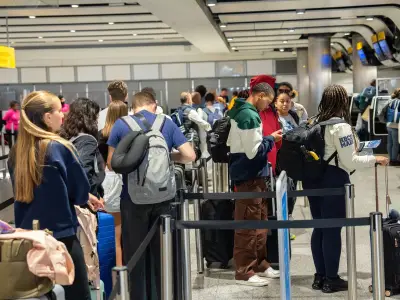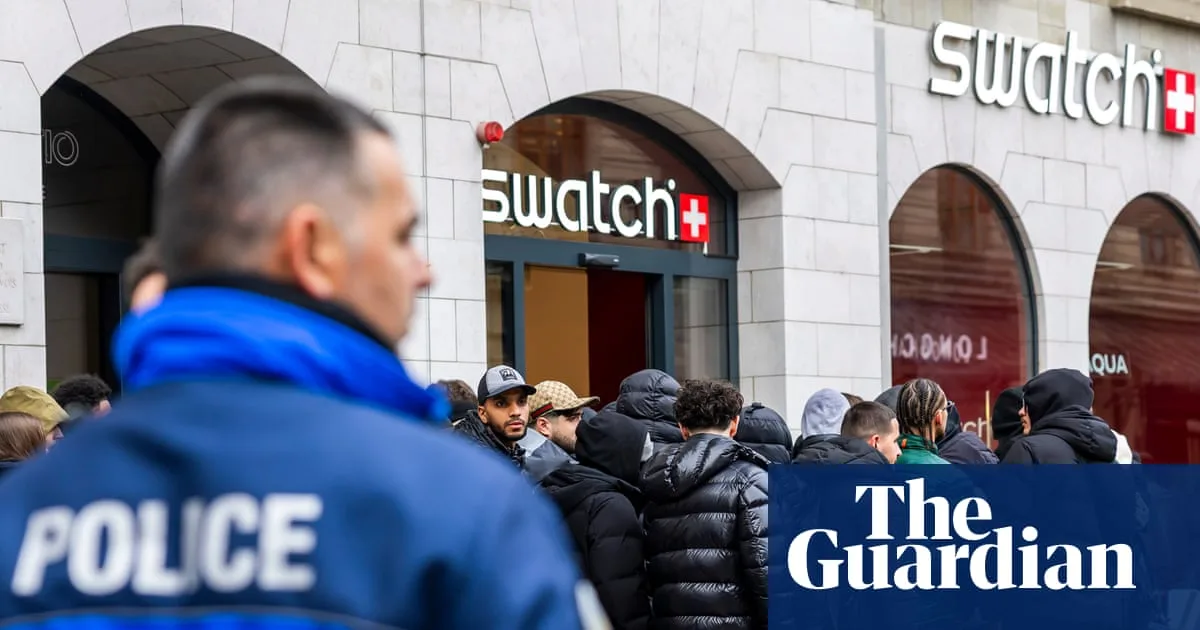
Swatch shut its stores in the UK and several cities across Europe and the US over the weekend after the launch of a limited-edition watch sparked chaos. Shoppers queued overnight—and in some cases for days—to buy the Royal Pop timepieces, created in collaboration with luxury watchmaker Audemars Piguet.
Police were called to stores in Manchester, Cardiff, Birmingham, Liverpool and Sheffield. A dispersal order was issued in Birmingham, a 25-year-old man was arrested in Cardiff, and police dogs were deployed at London's Battersea Power Station and Westfield shopping centres. Footage showed people forcing their way past security in Battersea, and a fight broke out at Manchester's Trafford Centre.
In Paris, police fired teargas to control a crowd of about 300 outside a Swatch shop, where a metal shutter and two security gates were damaged. In Milan, a fight erupted at opening time, and in the Netherlands, police intervened at a shopping centre near The Hague after hundreds flocked to the store. Swatch stores in Amsterdam and Utrecht also remained closed.

In New York, pushing and shoving occurred at the Times Square store. John McIntosh, who had queued since Wednesday, planned to resell the watch—priced at about $400 (£300)—at a huge mark-up. On Sunday, UK sellers listed the watches on eBay for up to £3,000. Another buyer, Mac, sold one for $4,000 after paying $400 retail. Benny, 30, paid $2,400 for a watch, calling it “a steal” compared to typical Audemars Piguet prices above £15,000.
Swatch later urged customers not to “rush” to stores, stating the Royal Pop collection “will remain available for several months.” The company added that queues of more than 50 people cannot be accepted and sales may be paused for safety.