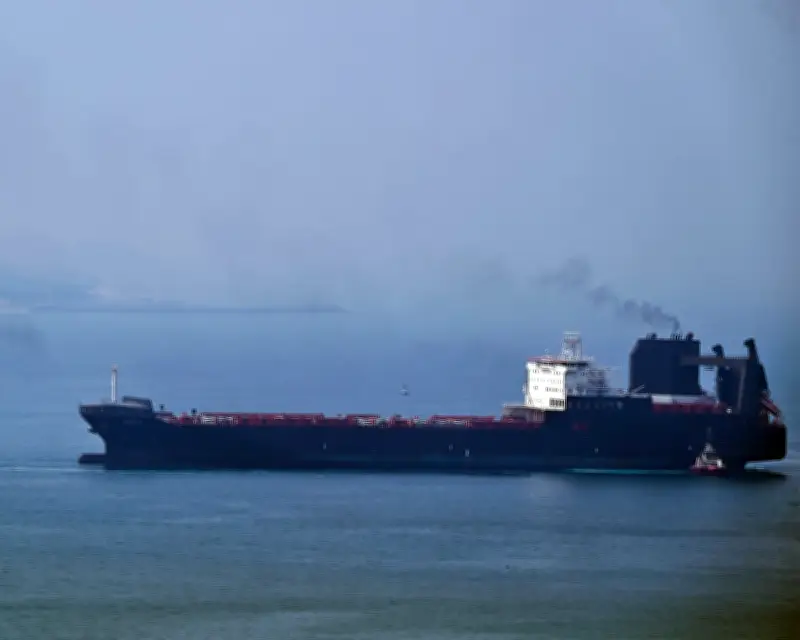
The price of oil has breached the $95 a barrel mark for the first time in six weeks as the escalating Middle East conflict threatens further disruption to global supplies.
The benchmark oil price rose sharply on Wednesday as renewed US-Iran aggression over the strait of Hormuz was compounded by Houthi threats to target vessels carrying Saudi oil through the Bab el-Mandeb strait.
Price Surge and Context
Brent crude peaked at $126 a barrel in April during the conflict but had eased to as low as $71 at the start of July. The price has shot up again as the war has reignited in recent days, reaching $95.24 on Wednesday before easing to $94.40 by lunchtime, up more than 3% on the previous day.

The price increase followed an 11th night of strikes on Iran, including on aircraft hangars and drone storage sites, despite diplomatic efforts to salvage an interim ceasefire deal. Donald Trump said strikes would intensify in a war that has so far cost the US $37.5bn (£28bn).
Supply Disruption and Market Impact
The jump in crude prices this month has marked the fastest increase since the US-Israeli attacks on Tehran first disrupted flows of Gulf exports via Hormuz in March.
It also threatens to put the market on track for oil prices of $120 a barrel by the end of the year unless exports via Hormuz restart, according to analysts at Goldman Sachs.
The head of the world’s energy watchdog, Fatih Birol, said on Tuesday that global oil markets had so far benefited from “cushioning factors” but there was no room for complacency amid the escalation in hostilities.
Cushioning Factors
The factors included the release of about 400m barrels of emergency oil and oil products held by IEA members and the efforts of Saudi Arabia and the United Arab Emirates to continue exporting crude via alternative routes.
In addition, oil-producing countries in Europe and the Americas have increased their exports, while oil-hungry countries including China, the world’s biggest importer, have cut their purchases from the global oil market.
These factors have helped to keep oil prices from reaching the highs first feared at the start of the conflict, which led to what the IEA has described as the greatest ever supply disruption to the market.
The slowdown in oil buying has meant many of the world’s refineries have cut their production, leading to supply concerns for fuels and chemicals. Even as Gulf crude exports increased during the ill-fated US-Iran ceasefire, the production of road fuels has remained weak, according to Birol.
“Refinery activity and product supplies have not picked up as much as crude deliveries, meaning that markets for refined oil products, including diesel and gasoline, are considerably tighter than those for crude,” he said.
Gas Supply and Winter Concerns
While an increase in gas exports from the US and Canada helped to offset about 70% of the lost Gulf gas supply via the strait of Hormuz, availability is expected to remain tight in the run-up to winter as European buyers attempt to refill depleted gas storage facilities, Birol said.
He added that a “resolution to the ongoing conflict that includes a full and unconditional reopening of the strait of Hormuz” was essential to avoid “a further deterioration in global energy security”.
Industry and Political Developments
Norway’s state oil company, Equinor, said on Wednesday that its profits had almost doubled to $11.5bn in the three months to the end of June as the jump in oil and gas prices caused by the war against Iran boosted earnings.
Trump threatened on Wednesday to destroy a bridge or power plant each time Iran shoots at a ship in the strait of Hormuz.
With negotiations largely stalled, both sides have sought leverage by targeting civilian infrastructure. Iran has responded to US attacks by targeting energy infrastructure and desalination plants that provide drinking water in neighbouring Gulf countries.
International law generally prohibits such attacks unless the infrastructure is being used for military purposes. The UN secretary general, António Guterres, described them as unacceptable on Tuesday.