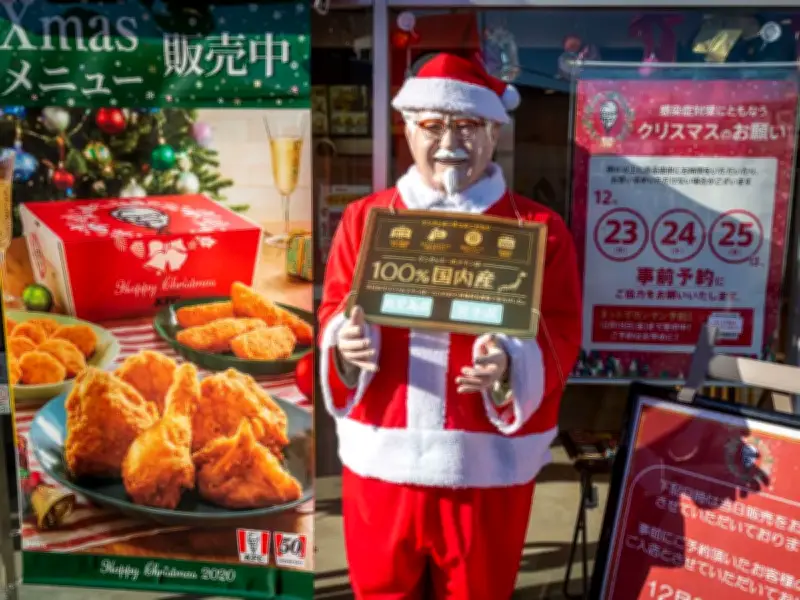
Japan has become known for an unexpected Christmas tradition: families across the country tuck into KFC's festive chicken meals, with 3.6 million buckets of chicken purchased during the season, according to the BBC. While Brits reserve their turkeys, Japanese families reserve their buckets of popcorn chicken, with many ordering weeks ahead. Those who fail to order in advance can expect to wait for hours.
A Custom Born from a 1974 Marketing Campaign
The custom began with a 1974 marketing campaign, "Kurisumasu ni wa Kentakkii", or "Kentucky for Christmas". With Christmas largely a secular celebration in Japan, the campaign helped create a ritual that has lasted for more than five decades, and Christmas Eve remains one of the chain's busiest days.
The Christmas period accounts for a whopping third of KFC's entire annual revenue in Japan. Festive orders can generate up to 10 times normal daily sales.
The Origin of the Party Barrel
KFC Japan spokeswoman Motoichi Nakatani said it began with Takeshi Okawara, the manager of the first KFC in Japan. In 1970, the idea came to Okawara in a dream: a "party barrel" to be sold on Christmas. Party barrels come with fried chicken, usually eight pieces of original recipe chicken, a savoury side dish and a holiday treat like tiramisu or chocolate ganache.
Okawara had overheard a couple in his store talk about how they missed having turkey for Christmas. He thought fried chicken could be the next best thing and began marketing his Party Barrel as a way to celebrate the holiday. Others say his idea came from delivering KFC to kindergarten students dressed as Santa, and seeing how well it was received, he decided to make it a permanent, all-ages tradition.
A Symbol of Family Reunion
"My kids, they think it's natural," says Ando, a 40-year-old sports marketer, of the tradition. "It's kind of a symbol of family reunion," Ando says. "It's not about the chicken. It's about getting the family together, and then there just happens to be chicken as part of it."
Joonas Rokka, associate professor of marketing at Emlyon Business School in France, studied the KFC Christmas in Japan as a model promotions campaign. "It filled a void," Rokka says. "There was no tradition of Christmas in Japan, and so KFC came in and said, this is what you should do on Christmas."
In Japan, just 1% of the population is Christian, so Christmas isn't an official holiday. Families will not be spending all day slaving over a stove and washing dishes. However, Japan is well aware Christmas is happening, so why not acknowledge the day in its own way?
"This is another sign of globalisation, where consumer rituals spread to other countries and often get translated in different ways," Rokka says. "It's not abnormal now to have an Ikea store everywhere in the world. This KFC for Christmas is just taking our consumerism and turning it into a holiday."