
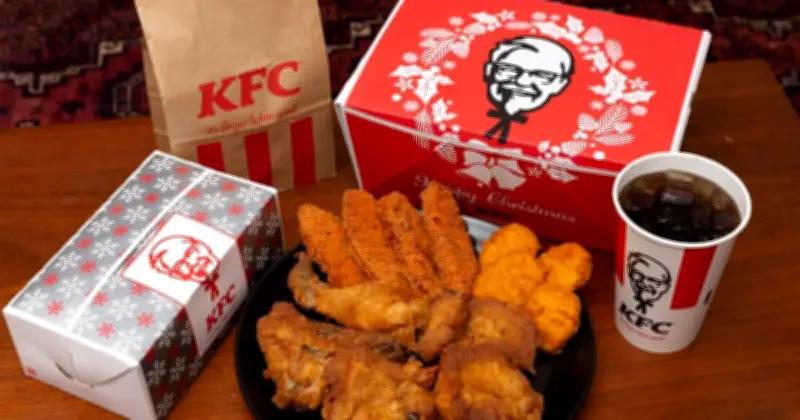
Japan swaps turkey and sprouts for 3.6 million KFC meals every Christmas, a tradition that began with a 1974 marketing campaign and now sees families placing orders weeks in advance.
While Brits reserve their turkeys, millions of Japanese families book their buckets of popcorn chicken ahead of the festive period. Those who forget to order face hours-long queues, as the tradition has become a staple of the season.
Origins of the Kentucky for Christmas Campaign
The custom dates back to a 1974 marketing campaign, "Kurisumasu ni wa Kentakkii", or "Kentucky for Christmas". With Christmas predominantly a secular occasion in Japan, the campaign helped establish a ritual that has endured for more than five decades, and Christmas Eve remains one of the chain's most hectic days.
The idea came to Takeshi Okawara, manager of the first KFC in Japan, in a dream in 1970. He conceived a "party barrel" to be marketed at Christmas, after overhearing a couple in his restaurant discuss how they longed for turkey at Christmas. Okawara believed fried chicken could serve as the ideal alternative and began promoting his Party Barrel as a way to mark the occasion.
A Symbol of Family Reunion
Party barrels include fried chicken, typically eight pieces of original recipe chicken, a savoury side dish and a festive dessert like tiramisu or chocolate ganache. Okawara, who was Harvard-educated, climbed swiftly through the organisation and held the position of president and CEO of Kentucky Fried Chicken Japan from 1984 to 2002.
"My kids, they think it's natural," says Ando, a 40-year-old sports marketer, of the tradition. "It's kind of a symbol of family reunion," Ando says. "It's not about the chicken. It's about getting the family together, and then there just happens to be chicken as part of it."
Impact on Sales and Global Consumerism
The Christmas period accounts for a third of KFC's entire annual revenue in Japan, with festive orders generating up to 10 times typical daily sales. In Japan, merely 1% of the population is Christian, so Christmas is not an official holiday, meaning families do not spend the day cooking and cleaning.
Joonas Rokka, associate professor of marketing at Emlyon Business School in France, examined the KFC Christmas in Japan as an exemplary promotional initiative. "It filled a void," Rokka says. "There was no tradition of Christmas in Japan, and so KFC came in and said, this is what you should do on Christmas."
"This is another sign of globalisation, where consumer rituals spread to other countries and often get translated in different ways," Rokka adds. "It's not abnormal now to have an Ikea store everywhere in the world. This KFC for Christmas is just taking our consumerism and turning it into a holiday."




