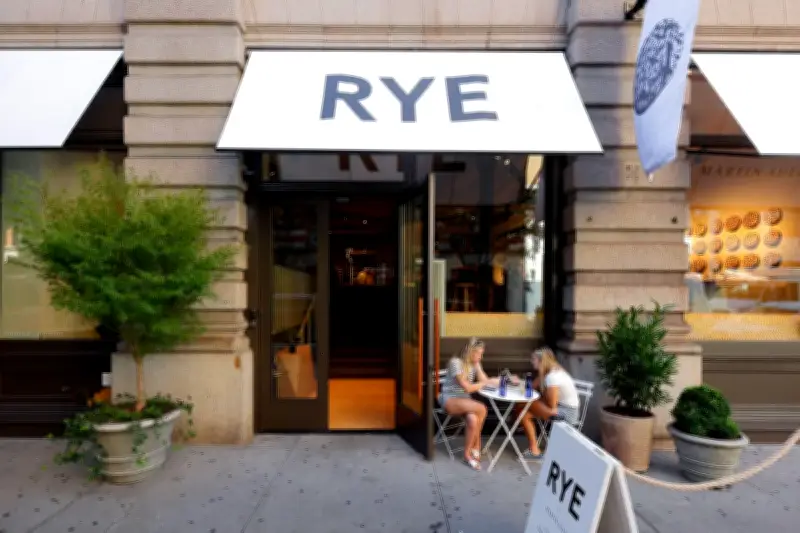
A 3.3lb loaf of 100% rye sourdough bread is selling for $60 at Rye, the first US outpost of Austrian bakery Martin Auer in SoHo, and has become New York City's latest viral hit and status symbol. Made with just water, flour, salt and time, the bread has attracted the kind of attention once reserved for rainbow bagels, cronuts and skyscraper milkshakes.
What's Behind the Price?
For Rye's owners, the price reflects much more than a list of ingredients. The loaf is unusually large and is sold whole for $60, by the half for $30 or by the quarter for $15. There's also the expense of operating in lower Manhattan, importing organic rye flour from Austria and producing the bread on site.
There's also a very technical process. "You need to ferment the rye sourdough," co-owner Tim Auer told People. "You need to feed it every day. That takes about 24 hours before you can use it again. Then you need to make the dough, ferment the dough of the bread, shave the bread, ferment the dough again, bake it, and then you have to let it rest."
Rye is not presenting its bread as a basic grocery staple but as craft, a tradition and even a legacy, as it was Tim Auer's great-grandfather who began the business. That distinction matters, especially in New York, where consumers routinely pay premium prices for food not simply because they're hungry, but because they're curious.
Supporters and Skeptics Weigh In
Gadi Peleg, founder of Breads Bakery, is among the $60 loaf's defenders. He attended Rye's opening, met the minds behind it and tasted the bread. "It's amazing," Peleg said. "Martin is a rye genius, and I love what he's doing."
Peleg cautions against focusing on just the $60 figure without accounting for context. The loaf is enormous compared to others on sale, and customers have the option to buy smaller portions. A quarter loaf, Peleg said, could be comparable in size to a standard loaf elsewhere. He also sees a bigger benefit in Rye's viral success: more attention for a style of bread he has spent years championing. "I'm so thrilled that somebody else is now talking about rye in New York," Peleg said. "It's awesome."
However, several New York culinary professionals questioned whether the price can be justified by production costs alone. Dimitri Viaud, executive chef at Mille-Feuille Bakery, said his bakery also uses lengthy fermentation methods for its sourdough, including roughly 24 hours of fermentation, yet sells a roughly 2lb loaf for about $12. "Bread is supposed to be a popular product," Viaud said, one that is accessible to everyone. He sees the $60 loaf as selling not so much the bread itself as the novelty of purchasing it. "They sell more of the experience behind this bread," he said.
His colleague Nicolas Buchot, executive sous-chef at Mille-Feuille, visited Rye and came away impressed by the space itself. The bakery, he said, was "gorgeous", with striking displays and the bread he tasted was "great". "It looks like luxury," Buchot said, comparing the "golden" presentation to a high-end fashion store. But despite the obvious quality, he's not sure it represents a sustainable model.
A Conversation Piece or a Sustainable Model?
Rick Camac, executive director of industry relations at the Institute of Culinary Education, sees the phenomenon through the lens of consumer psychology. To him, viral luxury foods often function more as something to talk about than something to eat. "It's a conversation piece," Camac said. "To some degree, people think that it's bragging rights."
Camac emphasized that he's not one to shy away from paying a tidy sum for a high quality meal. "I'm out to dinner four nights a week in New York City. A cheap night out is $250. I'm not afraid of spending money on food, but I'm pretty sure even I wouldn't spend $60 on a loaf of bread."
The luxury comparison seems particularly apt. Most people, even in NYC, don't walk around wearing Dior or Balenciaga. But if even a handful of people are willing to pay $2,500 for a pair of pants, then that will be more than enough to justify the existence of luxury brands. Rye seems to be working on a similar philosophy.
In 2004, writer Patrick J McGinnis coined the term "Fomo" which stands for "fear of missing out". On social media, participation is visible. Buying the loaf gives a consumer content to share. Not buying it can feel, however irrationally, like missing a moment in history.
Peleg has confidence that Rye's appeal goes deeper than a social media stunt. Martin Auer, he noted, has been baking for years and has already demonstrated the ability to sustain a business. He's not any ordinary viral sensation, but an established, renowned chef.
But the NYC food scene is a tough market, and getting tougher. Buchot, whose bakery has been operating in the city for 15 years, questioned whether a concept centered so heavily on one signature product can remain sustainable over time without evolving. Viaud made a similar distinction between a neighborhood bakery, where customers can return for everyday purchases, and a shop people may visit once for a novelty.
That may be the real test for Rye. Not whether enough people are willing to pay $60 for bread, but if enough of those people are willing to come back. For what it's worth, reviews of the lavish rye sourdough bread appear overwhelmingly positive. But that's not surprising all things considered, and it doesn't necessarily justify the exorbitant cost. Food & Wine put it most succinctly: "This bread is good, but it's not that good."
But as any follower of the Fomo philosophy will ask you: can you really believe that without trying it yourself?