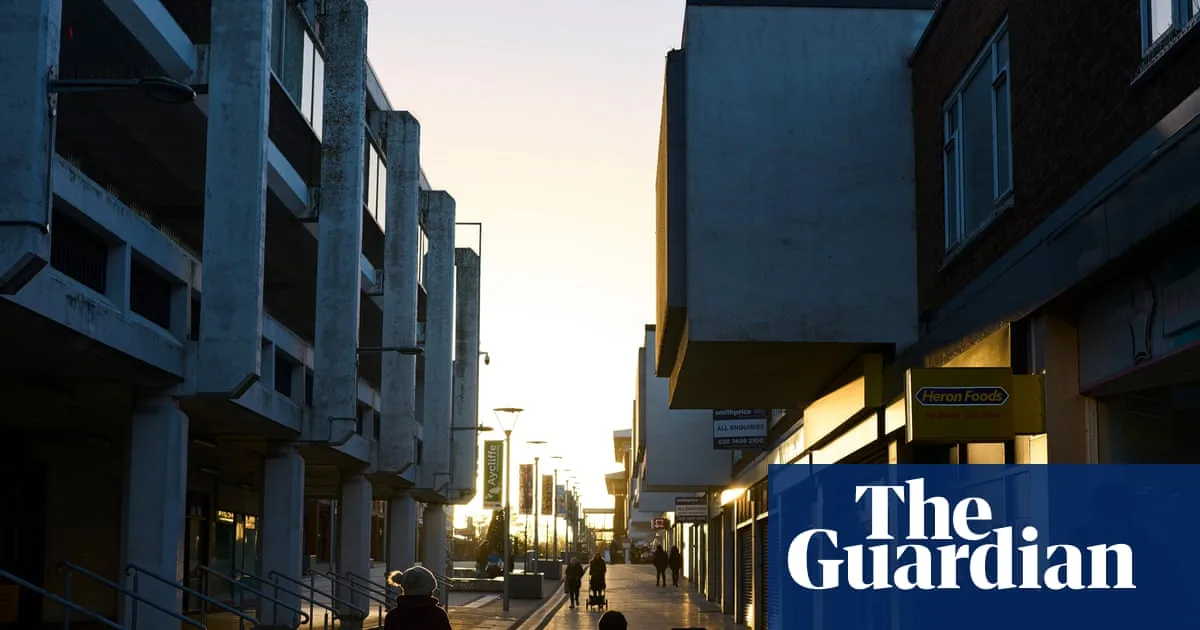
Retail accounts for just 5% of the UK economy, but its visibility gives it an outsize influence on public perception. Up and down Britain, boarded-up shops have become a common sight, with banks and department stores replaced by vape shops, barbers and bookmakers. Shoplifting is at a record high, local services have been cut, and public frustration is mounting.
Politically, high street decline is perfect campaign fodder for Nigel Farage’s Reform UK. Research shows support for Reform is higher in places with the biggest rise in persistent high street vacancy rates. Across the UK in 2024, almost 13,000 shops – about 37 a day – closed permanently. Closures have been most pronounced in the north of England, the Midlands and deprived coastal towns, where Reform ran Labour closest at the general election.
In-depth polling by YouGov and researchers at Faster Horses shows 62% of voters considering backing Reform think their local area is in decline. “It’s just soul destroying to watch your local area turn to shit,” one focus group participant said. For many, this decay reflects the country at large, with Britain having “gone to the dogs” despite promises from successive Tory and Labour governments to turn things around.
Analysis by University of Warwick professor Thiemo Fetzer shows that places with the highest rates of shop closures in England and Wales are more likely to back rightwing populist parties. “It has channelled people’s anger at the structural change around them. They see and feel their community around them eroding. That for me is one of the main drivers of populism,” Fetzer said. He noted a non-linear tipping point where decline cascades into oblivion, particularly concentrated in midsize towns.
Some of the decline is self-inflicted: almost half of Britons do not visit their high street at least once a week, citing a lack of interesting shops and too many empty ones. Deeper reasons include the internet’s transformation of retail, with online spending rising from less than 3% of total sales in 2006 to more than 25%. Retailers also face weaker consumer demand amid the cost of living crisis, elevated inflation, interest rates, tax increases, and a disadvantage from the business rates system. Underinvestment in transport, policing, healthcare and social services has also contributed to the decline.