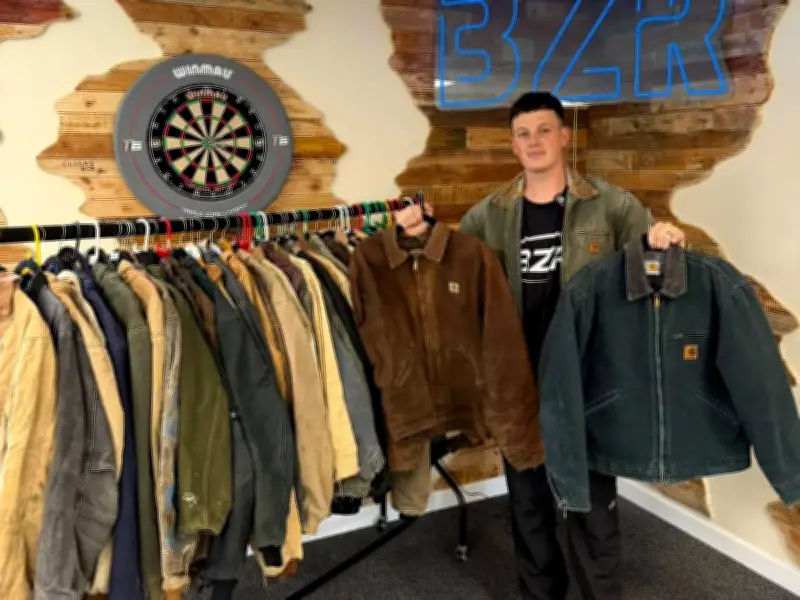
An ex-soldier who makes up to £40,000 a month selling “tatty” vintage clothes with holes in has said being able to give his son “a childhood (he) didn’t have” is “worth more than anything”.
Connor Stone, 31, joined the British Army in 2019 and began reselling hard-to-find items, including hair clippers, weights and outdoor heaters, during the Covid-19 pandemic. He gradually began selling clothes from his “own wardrobe” too, making a “few hundred” pounds a month, before leaving the army in 2024 for a “fresh start” after he and his wife Lauren, 32, suffered seven miscarriages while struggling to conceive.
From DHL to full-time reselling
Connor, who lives in Nottingham, took a job in logistics at DHL while continuing to resell, eventually joining Whatnot, a live-shopping marketplace, and began to sell items in seconds. Within six months, he said he was making in a week what he earned in a month at DHL, prompting him to quit his job and pursue reselling full-time.
He now sells around 300 items a day, hosts five livestreams a week and works with suppliers across the globe, while he and Lauren welcomed their son Alfie, now 11 months, in October 2025. Connor is now looking forward to taking Alfie to Disneyland for his first birthday with his earnings and hopes to grow the business even further.
Research and specialisation
Connor said: “To the normal eye, some of my vintage Carhartt jackets look tatty with holes in and people would stay away from it, but I do research and find out when it was made. The ones with holes in them sell for £2,000 or £1,000 – people prefer them to the newer-looking ones, even than something new with tags.
“Some of them look battered, but they sell for so much. Being able to come out of having a tough time struggling to conceive and now provide and give my son a childhood I didn’t have, that’s worth more than anything I could ever do. Because of my job being flexible, I’ll be there for the big milestones, without having to worry about taking annual leave.”
Connor joined the British Army in 2019, becoming a movement controller in the Royal Logistic Corps the following year. Day-to-day, he said he was often “crawling in mud somewhere” or brushing up on “the latest laws”.
From side hustle to business
During the Covid-19 pandemic in 2020, while living in barracks, Connor decided he “wanted some extra cash”. So he began buying “everything everyone wanted”, but “could not get hold of”, including outdoor heaters, hair clippers and weights, selling them for a profit.
He said: “I’ve always been into side hustling – I used to sell chewing gum when I was in school, so I think it had always been in the back of my mind. I would go on Argos and as soon as I saw something come back in stock I was buying it, reserving it, and that’s where the snowball started rolling, really. I was selling on all different platforms and in person to other soldiers in camp and friends and family.”
He gradually began selling more of his “own wardrobe” and was making a “few hundred” pounds a month, which he put towards his car payments, food shops and a holiday fund.
Fresh start after leaving the army
Around the same time, Connor and his wife Lauren were “actively trying” for a baby, but suffered “bad news after bad news”, including seven miscarriages. In 2024, Connor left the army wanting a “fresh start” and the couple initially planned to travel the world together after feeling “so fed up”.
However, they needed to keep themselves afloat, so while Lauren continued working as a special educational needs teacher, Connor took a job in logistics at DHL. He continued reselling items online and began using live shopping marketplace Whatnot, under the username @BZRclothing.
During a livestream on Whatnot, the seller sets a starting price for an item, and buyers place bids in real time while the countdown runs, usually within 10 to 30 seconds. At the time, he spent his days off scouring car boot sales and charity shops for stock before selling it during livestreams.
He said: “I’d buy anything that was cheap, and I would look out for the brands we all know, like North Face… and I just got the bug for it. Then I started using apps, where you can scan the item and it’ll tell you where it was last sold, what it’s worth, what it’s worth new, and I just learned on the job. It was like a big scavenger hunt to find gold.”
One of his most memorable purchases was a £4 Stone Island jacket, which he sold for £140. He also bought football shirts for “a few quid” and sold them for more than £20 each.
Leaving his job
Six months in, Connor said he was making more from reselling than his day job, which paid him “just over” £2,000 a month. He said he was making that amount in a single week through reselling, prompting him to leave DHL and commit to the business full-time.
His home soon became even more “invaded” with stock as he livestreamed from his living room almost every day. He moved into an office space in February 2025 and, around the same time, Connor and Lauren found out she was pregnant, welcoming their son Alfie in October 2025.
Connor said that because his job is so “flexible”, he has been able to attend baby classes with Alfie and Lauren, while Lauren will be a stay-at-home mum for the foreseeable future. He said the “only downside” is that it can be “quite a lonely gig”, but once he is livestreaming, it feels like he is part of a “community”.
Lauren may also eventually join him to help as Alfie gets older. Day-to-day, Connor juggles orders, livestreams and sources stock from suppliers across Europe, the Middle East and Pakistan.
£30,000 bulk order
He said he sells around 300 items a day and hosts five livestreams a week, while his largest bulk order has cost £30,000 and contained tens of thousands of items, including vintage jackets and shirts. Typically, he said he spends around £5,000 on European stock at a time, receiving some 3,500 items.
He said: “It can be pretty all over the place at the minute with all of the war situations – it affects me getting some of the stock, so it’s a constant battle to try and build relationships with suppliers. If one falls through, I get on the phone to another wholesale supplier, saying I need a delivery by a certain time.”
Connor said he has also managed to “specialise” in selling vintage clothes, including Carhartt – an American workwear brand – building up several global wholesaler connections.
He explained: “I get really nerdy about it, and find vintage ones, or rare editions of their jackets. I’ve got ones in red, teal and seafoam blue, and they all go for three figures.”
He said 2000s-style clothing also sells particularly well, including women’s jeans, hoodies, jumpers and jackets. Connor now makes between £20,000 and £40,000 a month in turnover and is looking forward to using his earnings to take Alfie to Disneyland for his first birthday. Looking ahead, he hopes to grow the business further and eventually hire additional staff.
He said: “I’d love to be stinking rich and have a yacht and stuff, but that’s way out of reach… as long as my bills are paid, there’s food on the table and I can look after my family, that’s all I care about.”