

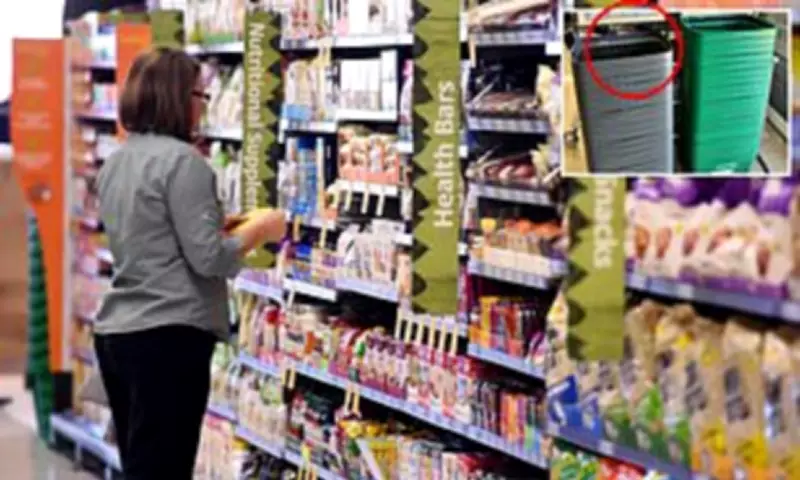
A subtle yet impactful modification observed within a grocery store has ignited a surge of commendation, with customers hailing it as 'genius' and advocating for widespread adoption by major supermarket chains.
Innovative Basket System Gains Viral Acclaim
WholeLife, a pharmacy and health foods retailer, has implemented a colour-coded shopping basket initiative designed to discreetly indicate a shopper's preference for assistance or solitude. An image shared on Reddit this week depicted two baskets positioned adjacently in a Brisbane outlet: a grey variant labelled 'I am happy to shop on my own' and a green one stating 'I would like assistance'.
'I just think it's neat,' the original poster remarked. 'My Millennial brain heaved a sigh of relief when I walked in and saw these. I now wish every single store had this system.'

Addressing Common Retail Frustrations
The concept resonated profoundly and rapidly, with Australians applauding the clever convenience and the nuanced shift in how retail environments cater to diverse needs, moods, and personalities. For many, it alleviates a familiar irritation: the awkward interplay between staff and patrons in-store.
'I have never been offered assistance in a supermarket,' one individual confessed, while another quipped they would probably 'miss the sign completely and then wonder why [they were] being pestered'.
Observers noted that such a system could actually bolster staff confidence in approaching customers, eliminating the uncertainty surrounding who desires help and who does not.
'I'd think a system like this might make them more likely to approach you if you opted for a green basket rather than having to guess if you're confused,' a user commented.
Enhancing Accessibility and Reducing Overwhelm
Beyond mere convenience, numerous Australians expressed that the idea taps into a deeper significance, particularly for shoppers who find conventional retail settings overwhelming. One commenter elaborated that grocery stores can constitute an intense sensory ordeal, especially when navigating them solo.
'I wish more grocery stores had this - not just expensive organic ones because I can't afford to shop there. Sometimes it's a lot… bright lights, shiny floors, loud music,' they wrote.
For those lacking support, the capacity to signal 'I need help' without actively seeking out an employee was described as both beneficial and empowering.
'That's so kind,' another added. 'This is so clever,' echoed a fellow shopper.
Practical Considerations and Broader Implications
Concurrently, some raised pragmatic concerns, including accessibility issues. One shopper pointed out that colour-coded mechanisms may prove ineffective for individuals with colour blindness, underscoring the necessity for inclusive design that transcends aesthetic considerations alone.
Nevertheless, the overwhelmingly favourable reaction indicates a wider transformation in how Australians perceive daily experiences and the minor adjustments that can render them more humane.
In an epoch where self-checkouts, staff shortages, and escalating expenses have reconfigured the retail panorama, the straightforward act of requesting aid—or opting against it—has grown increasingly complex.
Major chains such as Woolworths Group and Coles Group have progressively emphasised efficiency and automation, yet consumers assert that instances like this underscore what is frequently absent: personalised, considerate customer engagement.






