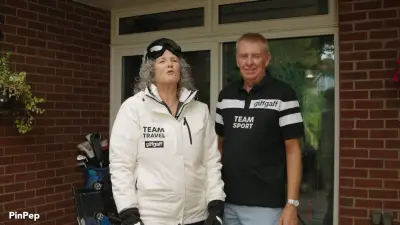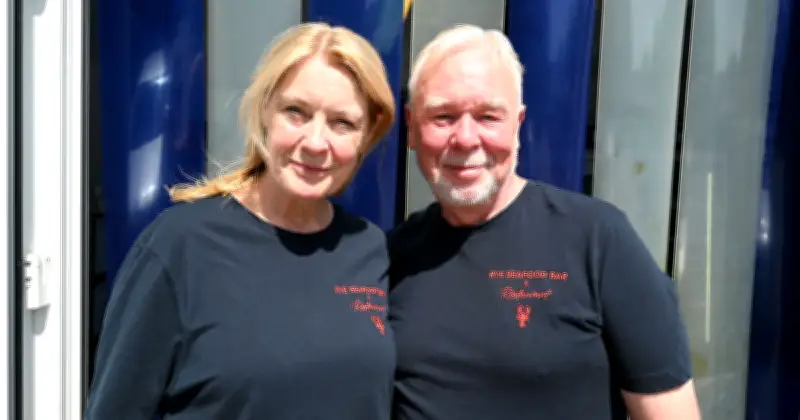
Louise Chapman was on furlough when she arrived in Rye during the Covid pandemic to clean an office. Within a month, the 55-year-old former IT journalist from London had set up a fish export business in the same town. Louise and her husband, Keith, who has over 35 years of experience in the fishing industry, initially commuted between London and Rye every day, driving a van full of fresh fish.
From export hub to local market
"We'd be on the motorways at four o'clock in the morning with vans full of fish that we're picking up from all the harbours across the Southeast," she told the Express. The couple were exporting catches from small boats to France and Belgium, as well as Spain, Italy, Portugal and other European countries.
After visiting Spain and seeing how fish was sold directly from harbours there, they were inspired to open a fish market in Rye. Each day, fresh fish is landed just behind the shop by local boats working from Rye Harbour and along the Sussex and Kent coastline.

Rapid growth and community roots
Louise said: "We opened the shop about five years ago and that did bloody well. It was me working there with my kids and my friends who would come and help me, and it started to take off quite quickly." What followed was a series of successful openings - first, a buzzing Seafood Bar and later even an indoor restaurant.
Today, the business employs approximately 20 people and has become part of the local community. Louise even runs an educational programme for around 150 to 200 schoolchildren each year. "We teach how to fillet fish, we teach how to cook fish, and we teach them about the sustainability, which is lovely," she said.
Brexit as a business opportunity
One would think starting a fishing business in the middle of a pandemic, with Brexit rules also kicking in, would be a non-starter. However, what became a huge headache for fishermen presented a business opportunity for the entrepreneurial couple.
Britain's departure from the EU made selling fish into European markets considerably more complicated, with exporters facing customs and border requirements, or documents such as export health certificates. For small fishing boats without the staff or infrastructure to deal with the new bureaucracy, the changes were particularly complex.
Louise said: "Brexit was difficult and it's been hard for the fishermen, but for us it was a huge opportunity. With all the changes, it was impossible for the fishermen to do it themselves. The paperwork was amazing, it was an immense amount of work. So I built a hub here for exporting, and I could export for all the fishermen and make sure that without this, they wouldn't be able to keep fishing."
Access to overseas markets still matters because smaller fish, such as small soles, can be difficult to sell domestically. "Here, unless you're in a high-end restaurant where they'll sell it as a starter, it's just not saleable, so that keeps them fishing and enables us to give them more back as well, because we're finding new markets for them," Louise explained.
Facing rising costs and looking ahead
Today, however, the owners are trying to keep most of the catch within Britain. According to Louise, apart from whelks, which are sent mainly to South Korea, almost all of the fish has been kept in the UK in recent months. For example, the business supplies local restaurants and sells to Billingsgate Market.
But like many independent businesses, the fish market has faced rising costs, including business rates, National Insurance, the minimum wage and energy bills. "Our costs have escalated massively," Louise said, adding that the business spends more than £50,000 a year solely on electricity. Despite the pressure, the company has not made redundancies. "In fact, we've constantly been increasing our jobs, which is good."
Louise believes the business has survived because it does what its customers want. "We're not and never will be fine dining white tablecloths," she said. Instead, the focus is on affordable, fresh seafood, with fish coming directly from boats and no service charge added to customers' bills.

The newly opened indoor restaurant will allow the family to operate throughout the winter, with Louise already booking weddings and eyeing up plans to open an adjacent event space. For Louise, there is no looking back. "I think Rye is an amazing place," she said. "All the other local businesses are incredibly generous. They all want to work together and support each other. I don't think I'll ever go anywhere else. I love it."