Over the last 20 years, Britain's high streets have seen a series of significant retail failures that have fundamentally transformed town centres as we once recognised them. Cherished brands including Woolworths, Debenhams, Barratts Shoes, and Blockbuster have all vanished from our shopping streets, along with numerous other treasured household names.
A substantial element of this narrative concerns how quickly consumer habits have moved towards online shopping. As dominant players such as Amazon strengthened their market position, many traditional physical retailers started finding it difficult to compete on price and convenience.
We examine 10 iconic British chains that have closed their doors permanently, reports the Express.

BHS and Woolworths
Entering administration on April 25, 2016, BHS's downfall was triggered by £1.3million in debts, including £571million in pension liabilities, which placed around 11,000 jobs at risk. BHS had a presence on the British high street for 88 years before its closure, having been founded in 1928.
Once a staple of every British high street, Woolworths shut its doors between December 2008 and January 2009. The chain collapsed during the financial crisis, after years of struggling with competition from supermarkets and emerging online retailers. More than 27,000 jobs were lost when its 807 branches disappeared.
C&A and Beales
In 2000, iconic clothing retailer C&A announced plans to withdraw entirely from the UK, resulting in the loss of around 4,800 jobs and the closure of 109 stores nationwide. The decision came as C&A faced mounting pressure from strong mid-market competitors such as Next and Gap, who rapidly gained ground with fresher styles and stronger brand appeal.
C&A’s last remaining UK outlets in Hounslow, west London and Bradford ceased trading in May 2001, marking the end of an era for a brand that had been part of British retail since the 1920s. Founded by Dutch brothers Clemens and August Brenninkmeijer, C&A had built a reputation for affordable family fashion but struggled to adapt as consumer tastes evolved and expectations rose.
The Poole (Dorset) branch, final remnant of a 144-year-old chain, closed at the end of May this year. Executives blamed rising National Insurance and wage costs foisted by budget measures for making the store "unviable".
Mothercare and Barratts
Once a trusted name for parents, Mothercare left the UK high street in 2020. The company had struggled for years against supermarkets and online rivals offering cheaper baby goods. Its departure marked the end of a brand that had been synonymous with parenting since the 1960s. In autumn 2020, Mothercare announced Boots UK Limited as its exclusive UK franchise partner. The brand's products are sold in over 400 larger Boots stores across the UK and online.
Founded in 1903, Barratts was a familiar name on the high street for decades. However, the shoe chain entered administration several times before finally collapsing in November 2013. The boots specialist entered administration for the third time in five years on November 11, 2013, after 110 years of trading. More than 200 stores closed after the company failed to compete with cheaper rivals and fast-fashion brands.
Laura Ashley and Debenhams
Laura Ashley was a household name in the past, thanks to its vintage-inspired homeware and fashion, which were popular with Brits. However, the long-standing retailer went into administration in 2020, just as the COVID-19 pandemic hit. The stylish brand closed its 150 stores almost overnight, after a long struggle. It all started with the loss of 40 stores in 2018 and a costly expansion into tea rooms and hotel rooms, which further added to its financial troubles.
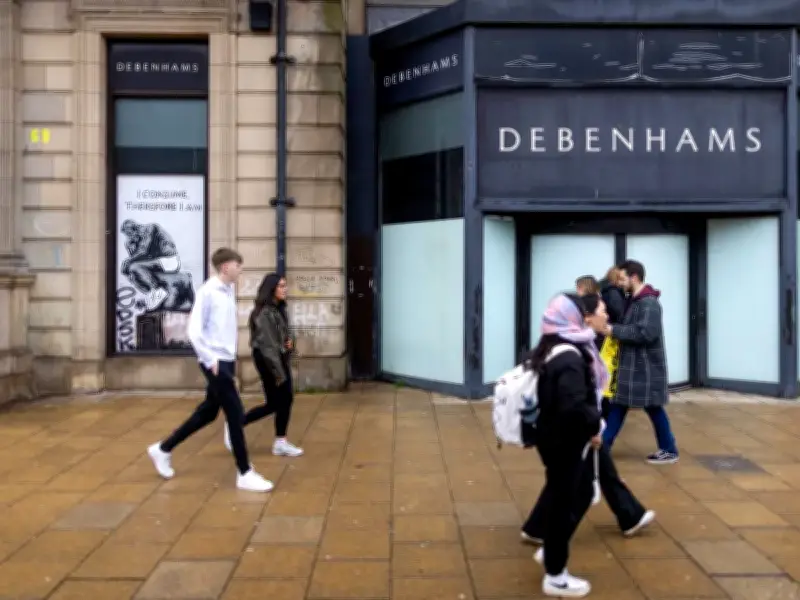
Debenhams, founded in 1778, was hard hit by the COVID-19 pandemic and entered administration for a second time in April 2020. The business collapse was partly caused by the administration of Arcadia Group, the largest operator of concessions in Debenhams stores. All remaining Debenhams stores closed permanently on May 15, 2021, following several rounds of closures in the preceding months. Fashion giant Boohoo acquired the brand in January 2021 in a £55million deal that only covered the retailer's name and website.

Comet and Toys 'R' Us
Comet, once one of the UK's biggest electrical retailers, collapsed into administration in November 2012 after years of heavy losses. Shoppers increasingly turned to cheaper online rivals like Amazon and stronger competitors such as Currys and Argos. Despite being sold for just £2 in 2011 in a last-ditch rescue attempt, the turnaround failed and by December that year, almost all of its 236 stores had closed, resulting in the loss of around 6,600 jobs.
With its vast warehouses bursting at the seams with goodies and shelves stacked high with toys, Toys 'R' Us was a pivotal part of growing up in the UK. That was until the 2010s, when online competition led to its collapse in 2017, resulting in the closure of all 100 of its UK stores. In 2022, Toys ‘R’ Us unexpectedly made a comeback by opening nine new stores across the UK. Since then, it has announced a further 30 new locations. However, the new Toys ‘R’ Us stores aren’t quite the same as the chain that once dominated warehouses and retail parks: they’re operated as franchises within WHSmith branches, allowing shoppers to try out toys before ordering them online.