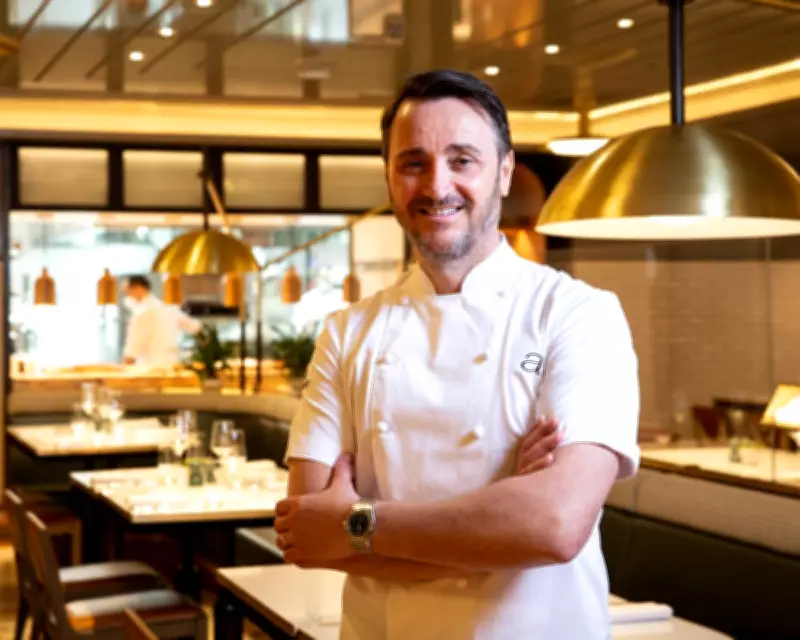
Jason Atherton, a Michelin-starred chef, has revealed that he is opening restaurants abroad to subsidise his UK venues, citing high taxes and a struggling hospitality sector. The chef, who now operates establishments in Dubai, St Moritz, and most recently Tuscany, stated that the UK's 20% VAT rate makes it 'tough' for restaurants to survive.
A Global Strategy for Survival
Atherton, 54, is currently in Forte dei Marmi on the Tuscan coast, preparing to launch his latest restaurant, Maria's, located in the Principessa hotel. He explained that he finds it easier to generate profits in countries with more favourable policies towards the hospitality industry. 'I am trying to sustain our business by opening abroad. We are opening one new restaurant in the UK but we are very cautious – we are certainly not gung ho like we were five or six years ago,' Atherton said from the kitchen at Maria's.
The chef believes that 'restaurants will not survive' if high taxes persist. 'If we didn't have a global brand we would find it tough because the UK is tough,' he added. 'I have restaurants that are losing money. We are not asking for handouts, we are asking for a fair chance to stay alive.'

Tax Burden on UK Hospitality
The UK hospitality industry is grappling with challenging economic conditions. Business rates increased this year as Covid-era reliefs expired, and UKHospitality estimates that the average restaurant will face an additional £32,000 in tax. VAT, a consumption tax on most goods and services, stands at 20% for UK restaurants, one of the highest rates in Europe. The European average for restaurant VAT is around 12%, while Italy applies a 10% rate for food sold in restaurants. Furthermore, the UK government has raised employer national insurance contributions for lower-paid employees, increasing the tax burden for every hire.
'All I know is that the tax on hospitality in the UK is the highest in Europe. Ireland VAT is 9% we are 20%, hospitality in Ireland is booming,' Atherton remarked.
Kate Nicholls, chair of UKHospitality, echoed these concerns, stating that it is harder to run a restaurant in the UK than elsewhere in Europe. 'The UK has one of the highest rates of VAT for hospitality in Europe, which puts our restaurants at a significant disadvantage to their competitors across the continent.'
Atherton's Culinary Journey
Atherton has earned five Michelin stars throughout his career for his various restaurants. His Mayfair venue, Row on 5, received a star just seven weeks after opening and was awarded two stars the following year. He initially worked with Gordon Ramsay, launching the Maze restaurant, before establishing his own venues such as Pollen Street Social and Berners Tavern.
Now, Atherton is enjoying his time in Italy, collaborating with executive chef Giorgio Cicero. 'It is quite a personal project to me because we've been coming for 12 years as a family. I am having a lot of fun learning about Italian food,' he said. When asked if he is nervous about serving pasta to Italians as a Brit, he replied, 'I am a chef restaurateur who has been around the chopping block multiple times. Giorgio, who has worked with me for eight years, is now back to his homeland and together, with me, he has written a menu.'
Keeping Prices Affordable
Despite rising costs and tight margins in the UK, Atherton is committed to offering affordable options. He has made a point of serving pints of beer for under £5, after seeing a news report that a pint in London costs over £7. 'I thought is that right? I looked at the margins and decided to knock our pint down so people can come and have a pint. We also didn't put the prices up at Row when we got two stars, they are the same as when we had one star.'
At his Chelsea restaurant Three Darlings, the average lunchtime spend is £30. Atherton emphasised the importance of dining out as a social activity: 'The thing I look forward to the most is taking my family out for lunch or dinner on my one day off on a Sunday. It is one of the most enjoyable things you can do as a human. I think if we lose that or a part of it in the UK it is devastating on every level. If that becomes a massive luxury that's terrible.'