
The UK Government has confirmed that the current Triple Lock will remain until April 2030, after which an "adjusted Triple Lock" will be introduced for annual State Pension increases. Under the new system, payments will rise each year by whichever is higher out of inflation or 2.5 per cent, with an additional increase made if necessary to maintain the State Pension's value relative to average earnings.
The Department for Work and Pensions (DWP) said this means the State Pension is expected to rise in line with average earnings over time, rather than earnings growth automatically being one of three figures compared every year. The UK Government gave the example of the State Pension being worth around one-third of average earnings by 2030/31, with payments rising as average earnings increase to maintain that relationship.
How the new system will work
Maike Currie, VP Personal Finance at PensionBee, described the change as the Triple Lock becoming a "double lock", because earnings will disappear from the annual calculation. However, she said further detail was needed about the mechanism the UK Government will use to maintain the State Pension's value relative to earnings.
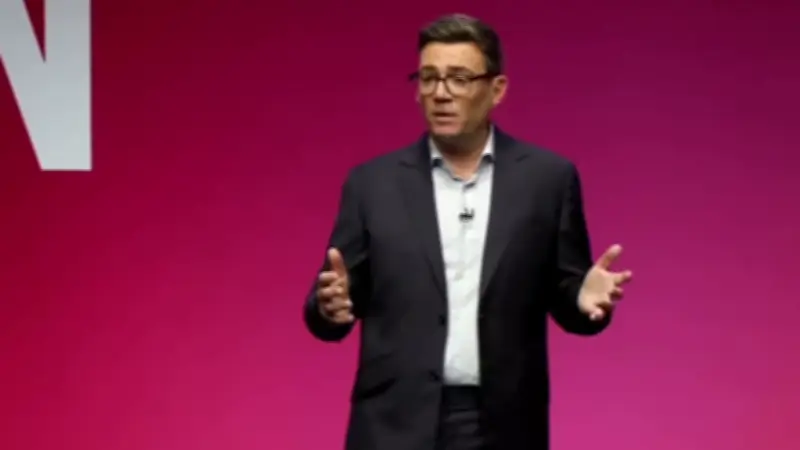
Ms Currie said: “Burnham says the State Pension will retain its value relative to earnings over the longer term, but without official earnings figures in the annual uprating formula, we need to understand how that commitment will work in practice.” She added that with inflation above the Bank of England’s 2% target and vulnerable to external shocks such as higher energy and oil prices, an inflation-linked double lock could still prove expensive if no cap or control mechanism is in place.
Potential impact on spending and pensioners
DWP's own analysis compares projected State Pension expenditure under the adjusted Triple Lock with the amount it estimates would be spent if the current system continued. It estimates the new system could reduce annual State Pension spending by around £15 billion in 2039/40 and £50 billion by 2049/50 in nominal terms. In 2025/26 prices, the corresponding savings are estimated at £11 billion and £30 billion.
This does not mean existing State Pension payments will be cut. Instead, future payments overall are projected to cost the Government less than they would if the existing Triple Lock continued. DWP also cautions that the figures are long-term estimates rather than forecasts, depending on assumptions about future earnings, inflation, State Pension caseloads, mortality, migration and individual entitlements.
The charity Independent Age has called for safeguards to ensure people on low incomes are protected when the system changes. Joanna Elson CBE, Chief Executive at Independent Age, said: “It was extremely welcome to hear the Prime Minister talk about what older people living on a low income are going through. Too often they are left out of the conversation, yet 1.7 million people over State Pension age are currently living in poverty, and another one million teeter dangerously on the edge.”
She added: “Before a double lock is implemented, we need to know that the UK Government has fully considered, and put in place protection for, older people on low incomes. Any changes that are made to the State Pension must ensure no current or future pensioners on a low income lose out.” Ms Elson also called for a public take-up strategy to increase the number of eligible older people receiving support including Pension Credit and Housing Benefit.
Why the Triple Lock is changing
Savings from the changes will be used to help fund the UK Government's planned National Care Service. The service is due to be established during the next Parliament and will provide free personal care for older people based on need rather than their ability to pay. It will be introduced in phases, with its scope increasing as savings from the adjusted Triple Lock grow and workforce and provider capacity is built up.
UK Government figures show around three in four adults over 65 are expected to need care and support later in life, while one in seven could face costs of more than £100,000. Ms Currie said: “This is ultimately a trade-off: pensioners giving up the protection of the earnings element of the triple lock in return for greater protection from potentially catastrophic care costs.”
There is no immediate change for pensioners. The existing Triple Lock will remain throughout this Parliament, with the UK Government estimating it will increase the State Pension by more than £2,000 over the period. The UK Government intends to legislate for the new system during this Parliament before it takes effect in April 2030.




