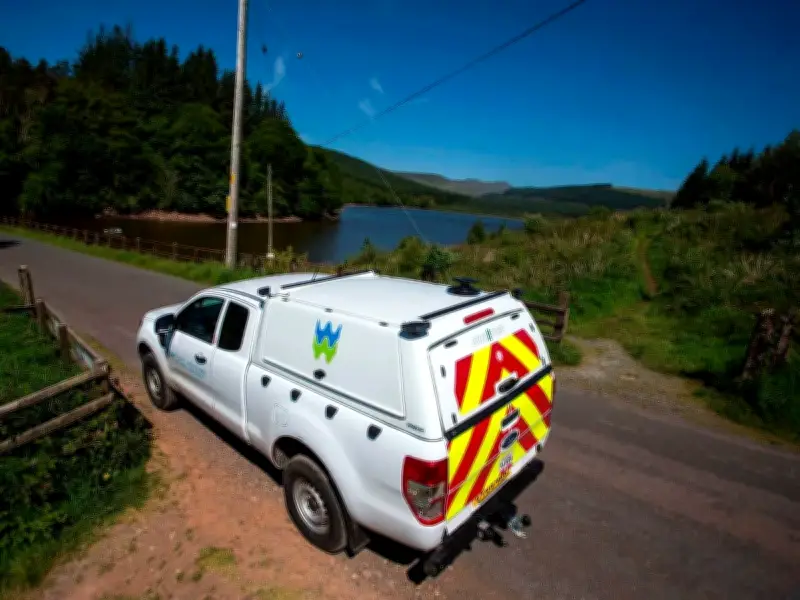
Water regulator Ofwat has raised concerns about Welsh Water's ability to finance planned major investments while maintaining financial resilience. The assessment, contained in Ofwat's latest annual monitoring financial report, covers the year ending 31 March 2026 and evaluates the financial resilience of water companies in England and Wales.
Concerns over funding of £4bn investment plan
Welsh Water is planning to spend £4bn on capital investment in the five years to March 2030 to address flooding, river water quality, pollution incidents and sewage discharges into rivers. Unlike other water companies, Welsh Water has no external shareholders and relies almost solely on bond markets to fund its capital investment projects under the latest five-year assessed management plan period (AMP8) 2025-30.
Ofwat has moved Welsh Water from the standard category to the elevated concern category for financial resilience, citing concerns about its ability to secure finance efficiently over the medium and long term while delivering its investment programme.
Weakening credit profile and rising debt
The report states: "Net debt and financing costs continue to increase, whilst ongoing operational challenges, delivery of the wastewater enforcement undertakings, and a substantial investment programme present significant execution risks."
The company's credit profile has weakened, with ratings falling from A minus in 2024 to Baa1 currently. Rating agencies have highlighted concerns about the limited flexibility of Welsh Water's capital structure as it seeks to deliver an operational turnaround alongside significant investment and environmental obligations.
The report adds: "Continued ODI (outcome delivery incentives) under performance, together with environmental and customer service challenges, creates uncertainty around future financial performance and continues to weigh on external credit assessments."
Monitoring increased
Ofwat said: "Welsh Water is entering the most capital-intensive period in its history, with over £4bn of expenditure still to be delivered by 2030. Given its existing capital structure and increasing financing costs, there remains uncertainty over how this programme can be funded efficiently while maintaining financial resilience. We therefore consider it is appropriate to move Dwr Cymru into elevated concern and increase our monitoring of the company."
Three water companies - Thames, South East and Southern - sit in the more serious "action required" category. Hafren Dyfrdwy, the North Wales water and sewerage company, has remained in the standard category, with the regulator having no specific concerns about its financial resilience.
Ofwat said that while Welsh Water's financial metrics have broadly strengthened since last year's report, the improvement had been driven predominantly by higher allowed returns rather than sustained operational improvements.
Company response and financial position
A Welsh Water spokesman said: "We recognise Ofwat's decision to move Dwr Cymru to elevated concern in their recent monitoring financial resilience report. We also recognise the pressures identified by Ofwat and the importance of delivering our investment programme alongside sustained improvements in operational and environmental performance. Our £4.2bn programme for 2025–30 is the largest in our history, with investment expected to increase in the second half of the period. Our focus is on delivering that programme effectively and efficiently, maintaining a strong and resilient financial position, and achieving the improvements customers and the environment rightly expect."
At the end of March this year, the company had a regulated capital value of £8.4bn with regulatory gearing (borrowing) of 60.5%. As at 30 September, it had £4.2bn of bonds outstanding and a further £900m in loans, with an average bond maturity of around 11 years. The company said its regulatory gearing is amongst the lowest in the sector and below Ofwat's 70% level, above which gearing is considered inconsistent with long-term financial resilience.
Rating agency Fitch has maintained a stable outlook for Welsh Water, with its secured debt remaining at minus A. Fitch said in its latest report: "We forecast comfortable headroom in Dwr's net debt/regulated asset value against our negative sensitivity of 70%, with net debt/RCV increasing to about 63% by end-AMP8 (2030). The headroom is supported by the parent company, Glas Cymru Holdings Cyfyngedig, maintaining a non-dividend policy."
On investment commitments, Fitch added: "Dwr has reprofiled its forecast capex (capital expenditure), with a significant back-loading towards end-AMP8. Back-loaded delivery may improve efficiency through greater design maturity or better-targeted expenditure, but it increases execution risk. Failure to deliver the capex programme in full may result in funding clawbacks through the price control deliverables mechanism, where unspent allowances are returned to customers. In addition, lower investment in the network may worsen asset health and operational performance, resulting in higher ODI penalties and/or fines over the remainder of AMP8. However, our current rating case foresees that the company will accelerate investments in the second half of the regulatory period, ultimately delivering the capex plan."
Last year, Ofwat ranked Welsh Water in the lowest category (lagging behind) in its water company performance report for 2024-25, based on 12 measures where in seven, including leakage, supply interruptions, drinking water quality and treatment work compliance, it was marked as poorer than performance commitment levels. This year's report will be published shortly.