Two nuclear industry companies have been fined a combined £140,000 after safety failures led to a container of radioactive uranium powder falling from a forklift truck and rupturing. Urenco ChemPlants Limited and Babcock Critical Services Limited were sentenced at South Sefton Magistrates' Court following a prosecution brought by the Office for Nuclear Regulation (ONR).
Incident at Tails Management Facility
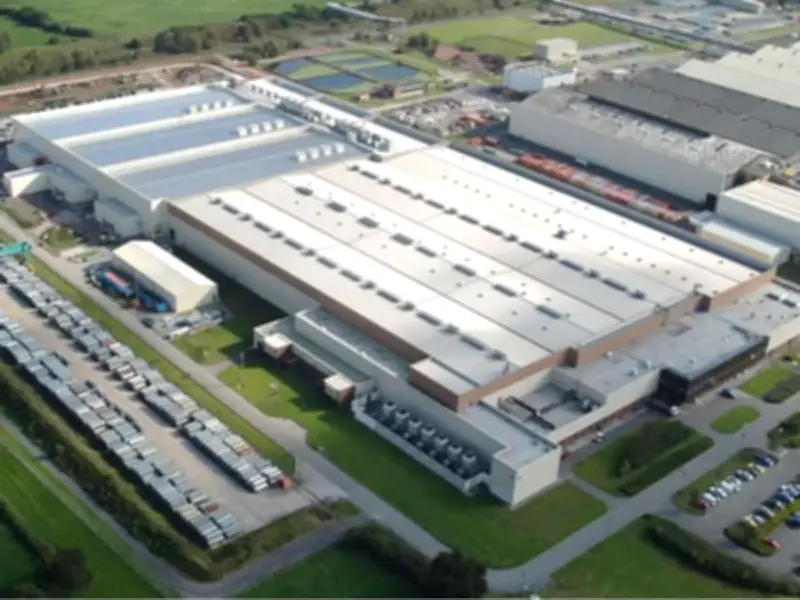
The incident happened on February 5, 2024, at Urenco's Capenhurst site, near Ellesmere Port, inside the Tails Management Facility, operated by Urenco ChemPlants Limited. Workers at the facility process a by-product of uranium enrichment, packing the resulting powder into large steel containers weighing at least 11 tonnes when full, before they are placed into long-term storage.
During the incident, a forklift truck driver was moving one of the containers when he mistakenly tilted the forks forward instead of lowering them. The container slid off, struck a metal guard rail and split open, releasing at least 3.3kg of uranium powder into the facility.
Radiological surveys later identified widespread, low-level contamination across the room. The incident also exposed workers to potential danger. A banksman had been checking underneath full containers for radiological contamination and could have been seriously injured had the container fallen while he was carrying out the task.
No injuries but safety failings found
The uranium powder, known as triuranium octoxide, is a hazardous radioactive material. Exposure through inhalation, ingestion or absorption through the eyes can potentially cause serious long-term health effects. No one was injured in the incident, and tests on the two workers closest to the spill found no evidence of internal radiation exposure. The ONR also confirmed there was no risk to the public or the environment.
However, the regulator said the absence of harm was largely down to good fortune rather than effective safety management.
An ONR investigation found Urenco ChemPlants Limited had failed to adequately assess and manage workplace risks, with shortcomings in both the Tails Management Facility and the operation of the forklift truck contributing to the incident. The company had also allowed working practices that required employees to stand close to moving forklift trucks, despite this being a recognised industrial safety risk.
Investigators further found the company did not have dedicated kits to deal with uranium powder spills, so employees had to improvise and gather items themselves including a vacuum cleaner, bags and wipes.
Emergency response failings
Babcock Critical Services Limited provides the site's emergency response service, including fire, medical and security teams. ONR found multiple basic failings on their part, including the company having no radiation risk assessment in place for its work at Capenhurst, having no registration for radiological work, not consulting or appointing a radiation protection adviser, and having no radiation protection supervisors; all of which are legal requirements.
Emergency responders had inadequate training for an incident at the facility and did not have the right equipment to seal the damaged container. Two of Babcock Critical Services Limited's employees had not been issued with personal radiation monitoring devices, despite being expected to attend incidents involving radiation on site.
Safety improvements introduced
Both companies cooperated with ONR's enquiries and have since made significant improvements in safety procedures following the incident. Urenco ChemPlants Limited has introduced a three-metre exclusion zone around forklift trucks, removing the need for workers to stand close to the vehicles. Employees are also no longer required to check underneath full containers for radiological contamination.
Forklift operators have received training in the use of a safety lock device, while a dedicated emergency store has been established to provide equipment for dealing with uranium powder spills. Babcock Critical Services Limited has completed new risk assessments, appointed a radiation protection adviser and radiation protection supervisors, and improved staff training and equipment. It has also introduced procedures to ensure all emergency responders are issued with personal radiation monitoring devices before each shift.
Fines and court ruling
Both companies were prosecuted under Section 2 of the Health and Safety at Work etc. Act 1974, which requires employers to ensure, so far as is reasonably practicable, the health, safety and welfare of their employees. Urenco ChemPlants Limited admitted failing to protect employees from risks associated with the transportation of DV70 containers, while Babcock Critical Services Limited pleaded guilty to failing to protect employees from risks arising during emergency response work at the Capenhurst site.
At sentencing, Urenco ChemPlants Limited was fined £50,000, while Babcock Critical Services Limited received a £90,000 fine. The companies were also ordered to pay prosecution costs of £16,304.85 and £15,481.66 respectively.
District Judge James Clarke ruled that Babcock's offences fell within the high culpability category, while Urenco's were assessed as medium culpability. Both offences were placed in harm category Level A, Category 3, reflecting a low risk of death.
Following the hearing, Tom Eagleton, ONR's Head of Safety Regulation for Decommissioning, Fuel and Waste sites, said the incident could have had much more serious consequences. He said: "Responsibility for safety lies with those who create and control the hazards, and both companies fell short of the basic standards we expect, from risk assessment to training and equipment."
"Some of those shortfalls had gone unaddressed for a long time. A key lesson from this case is that dutyholders must give equal consideration to conventional health and safety risks and radiological hazards and ensure their risk assessments remain under review as new operational experience and evidence become available."
"Where we find serious failings, we will act, and we will prosecute where it is appropriate to do so. Both companies have now made improvements, and it is vital that they, and the wider nuclear industry, learn from what happened. Protecting workers and the public is always our priority, and as an independent regulator we will continue to hold dutyholders to account so that robust standards are maintained."