
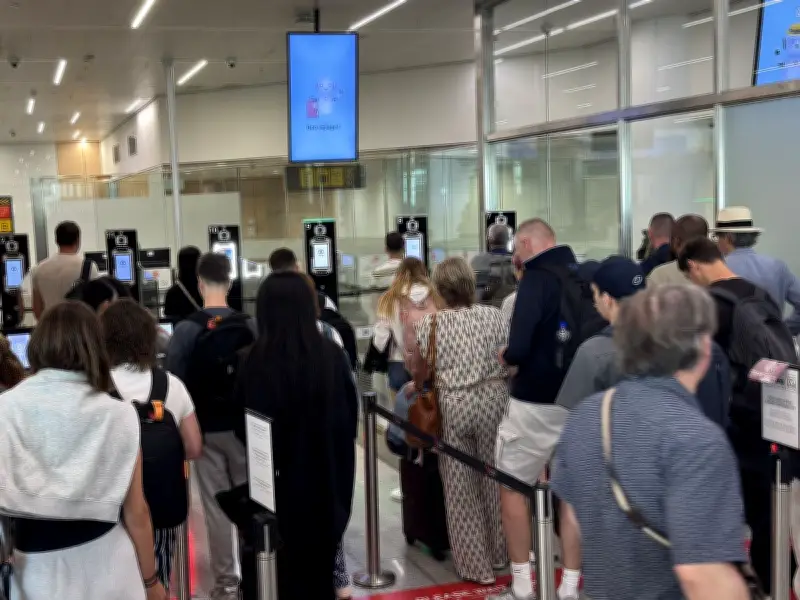
European airlines and airports have published an open letter to European Commission President Ursula von der Leyen, calling for the temporary suspension of the Entry/Exit System (EES) during July and August. The letter warns of 'serious operational consequences' and urges 'immediate intervention' as the peak summer travel season approaches.
EES rollout causes hours-long delays
The EES, which officially launched on April 10 across Schengen area border points, requires travellers from non-EU countries such as the UK to register their fingerprints and facial images on first use. Since its introduction, reports have emerged of queues lasting up to five hours, with some passengers missing flights. The open letter, published on July 1, states that the system is causing 'unsustainable pressure' on border authorities, airports, and airlines.
Call for temporary suspension and future flexibility
The travel companies request that the suspension be adopted 'without delay' for July and August, and that 'operational flexibility' be established from September to allow authorities to suspend procedures under clearly defined exceptional circumstances. They argue that the measure is crucial whenever 'passenger volumes exceed the operational capacity for border control facilities'.
Critical point reached
The letter describes the disruption as having reached a 'critical point', noting that delays are 'affecting millions of passengers' and causing increased flight delays, missed connections, and added pressure on frontline staff. Some member states have already found relief by using a temporary flexibility measure that allows suspending the biometric system during peak periods, which is permitted until early September.
Pre-registration and staffing needed
Airlines and airports believe the suspension should remain in place until challenges are 'fully resolved', including the introduction of a pre-registration application across all countries, sufficient staff at border points, fully reliable and stable EES procedures, and full functioning of self-service kiosks and automated gates. While they acknowledge the importance of the system, they state that it is failing to meet its fundamental objective of facilitating efficient border crossings.
The European Commission has previously stated that the EES 'has been a success', but the letter from the travel industry paints a different picture, emphasising that success cannot be measured solely by technical deployment but must also consider operational effectiveness.




