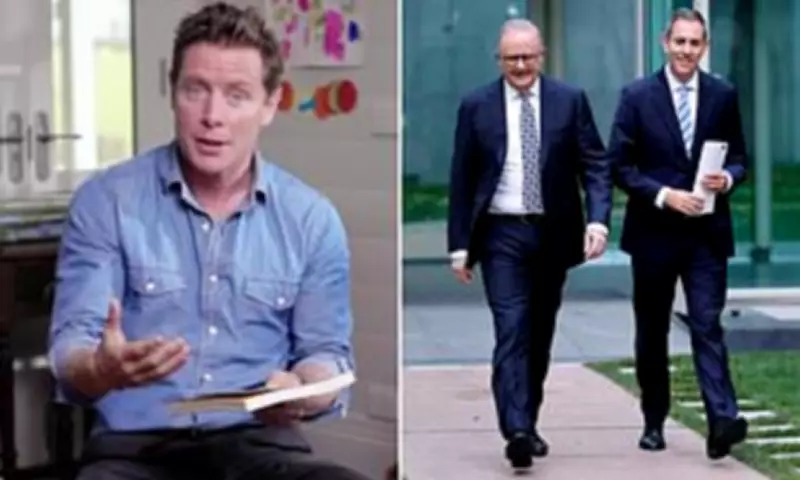
Financial guru Scott Pape has offered a contrarian perspective on Australia's recent Capital Gains Tax (CGT) changes, which have stirred political controversy for the Albanese government. A frustrated reader named Brian wrote to Pape's column, published on Sunday, complaining about the adjustments introduced in the Federal Budget on May 12. Brian criticized the government as 'incompetent' and described the Budget as 'another giant Labor tax grab.'
Reader's Outrage Over Tax Changes
'People in the top 10 per cent of income earners pay more than half the taxes. Half!' Brian wrote. 'Now Albo wants to be a 47 per cent silent partner in every small business in the country. Why would anyone bother?' This claim originates from a viral meme started by RealBase founder Frank Greeff, which oversimplified the rule and suggested all entrepreneurs would face the highest tax rate when selling their businesses.
The Budget change eliminates a 50 per cent discount on Capital Gains Tax from July 2027. Instead, capital gains will be taxed at a minimum of 30 per cent after indexation, likely resulting in higher taxes on sold assets.

Pape's Response and Reality Check
While acknowledging that 'this is the highest-taxing Australian government since World War Two,' Pape challenged the 'new business partner' joke. He noted that many small businesses would not be severely impacted by the CGT change. Pape recognized that Brian had 'a lot of very big feelings' and was among many Aussie taxpayers whose 'outrage meter seems to be stuck at eleven.'
'Brian's '47 per cent silent partner' line was funny on social media the first 700 times. Now it's just annoying. And it's wrong,' Pape wrote. 'The small business CGT concession regime allows the vast majority of small business owners to halve or completely eliminate the capital gains tax they pay when they sell.' He warned against using the tax rate as a reason not to back oneself, urging readers not to let a meme discourage them.
Bigger Picture and Comparisons
Instead of focusing on losses in the Budget, Pape encouraged Brian and other Australians to consider the broader context. 'If you spend enough time on social media - or listen to Brian - you may start to think that Australia is the highest-taxed nation on Earth. Actually, we're in the middle of the pack, but with a standard of living in the top handful of countries on the planet,' he wrote. 'And what about the top 10 per cent of taxpayers that Brian is so upset for? We'll be fine. After all, we're the wealthiest people in the country. Living in one of the wealthiest countries in the world. At the richest time in human history. Life is good, Brian, especially when you log off.'
Business Leaders' Concerns
Some business leaders have warned that the measures could drive talent and funding offshore, as the existing 50 per cent capital gains discount is replaced by a minimum 30 per cent tax rate. Opposition housing spokesman Andrew Bragg even suggested increasing the discount to stimulate investment. 'We should be looking to cut taxes,' he told Sky News on Sunday. 'There are heaps of ways you could play around with (capital gains tax) to actually incentivise more investment.'
UNSW chief societal economist Richard Holden argued that the plans would create Australia's first-ever 'productivity tax,' where productive firms pay more than their less-efficient peers. 'Two identical businesses, delivering the exact same service, one highly productive, the other unproductive, will now face vastly different effective capital gains tax rates,' he said in a post-budget analysis.