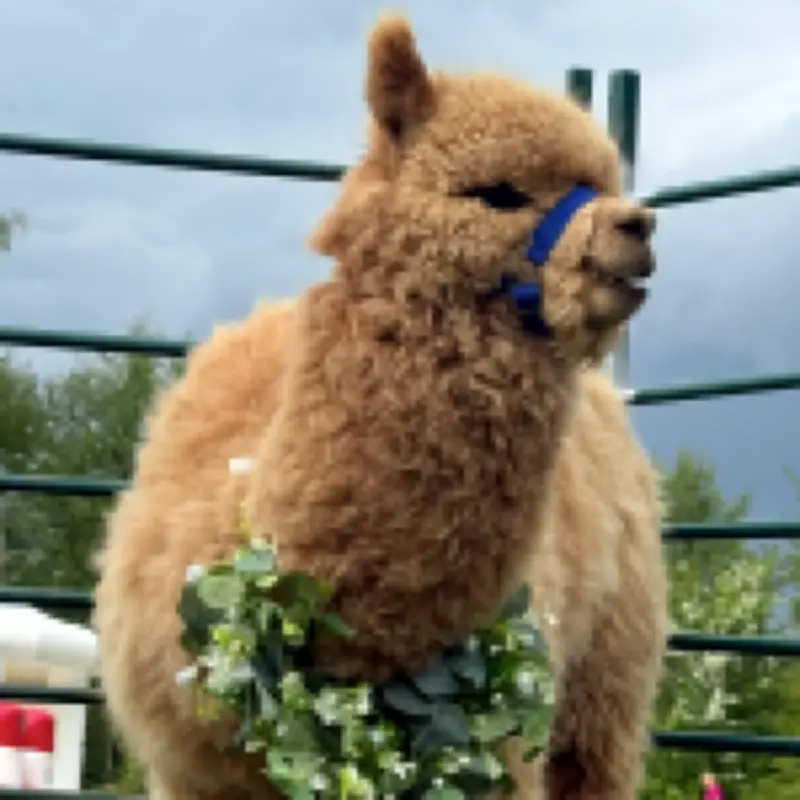
A non-profit alpaca farm that rescues neglected animals has been denied planning consent because it does not generate enough profit. Alpaca Acres, a 10-acre estate in Great Tey near Colchester, Essex, is now at risk of closure after the local authority ruled that the business does not make enough money for the owner to live there.
Dawn Goulding, 55, moved to the site in 2017 but faces the prospect of being evicted “any day” after Colchester City Council deemed her business insufficiently profitable for her to reside on the land. Goulding suffered a life-changing leg injury in 2020 but continues to manage the farm, which she has since developed into a petting zoo where children can visit and touch the animals.
Sanctuary for abused animals
The farm is home to more than 100 alpacas, goats and pigs, and also serves as a sanctuary for other abused animals, including donkeys that were beaten and starved. With help from her family, the farm provides support for people in care homes and women's refuges, and collaborates with several charities including Help for Heroes, running recovery programmes for army soldiers. This year, the farm won the best family attraction at the Muddy Stilettos lifestyle awards.
Goulding told Metro: “I don't earn a penny. I still some weeks struggle from one week to the next because I find it very hard to turn a rescue down. If it means us being on beans and toast or that animal losing its life the animal comes in. We all plod along. We all work so hard. You just never know what life's going to throw at you from one day to the next.”
Planning rules and council response
Strict rules require those looking to live on land used for agricultural purposes to demonstrate financial viability. Goulding insists she is making ends meet and, despite receiving no external funding, is able to look after her livestock, with the farm receiving five-star ratings for its animal welfare standards. Just weeks before sending her an eviction notice, Colchester council showcased the farm on its social media channels as an example of why it had won an RSPCA gold award for its commitment to animals.
Goulding was given a year to leave her land in October 2025, after which she took down her home and asked for permission to live in a caravan, without which she says she cannot look after the animals that need round-the-clock care, especially given that alpacas do not have a fixed birthing season. She now faces a potential Magistrates Court hearing, as the council continues to insist her profit needed to be 20 per cent of her takings to grant permission to live there.
Community interest and next steps
For Goulding, the farm, which operates as a Community Interest Company (CIC), is not about money but supporting the local community. “Everything that we earn goes back into the work that we do,” she said. “It almost feels a bit like with some of these people who make these decisions, they sit in their little offices, you're just an application form on their desk. You're just a number.”
She added: “I could be living off of the state. I'm not. I fought through everything to be up there working. I stopped 100 plus animals from going into welfare places which would have had to happen if I had just given up.” While Goulding is unable to get permission for a caravan, permission has been granted for 150 homes just up the road from her farm.
Colchester City Council said it had reviewed Goulding's application but officers deemed that the business did not meet all the requirements for a home on site, including “financial viability and long-term sustainability,” while acknowledging there was “genuine agricultural enterprise” in the farm. A spokesperson said: “The council recognises that this is a matter of significant personal importance to those involved. However, planning decisions can only be based on material planning considerations and must be taken in accordance with the relevant planning policies and the evidence submitted as part of the application. The council's role in determining a planning application is separate from its responsibilities in relation to animal welfare licensing. Recognition of standards of animal welfare through schemes such as the PawPrints Awards does not override planning policy requirements or predetermine the outcome of planning applications. Applicants are entitled to submit revised proposals should they wish to do so, and any future application would be considered on its own merits against the relevant planning policies and the evidence provided at that time.”