
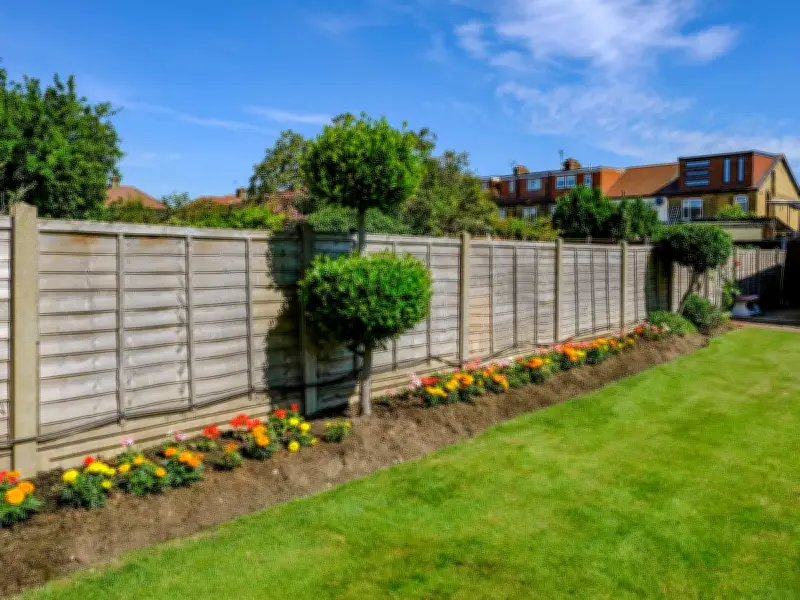
Fences generally last for many years, but severe weather can leave them damaged or broken beyond repair, often requiring full replacement at substantial cost. This situation frequently sparks disputes between neighbours over who is responsible for covering the expense.
According to experts at Jacksons Fencing, there are methods to identify which side of the garden fence each party owns. The first step is to check who owns the "good side" of the fence. While not definitive, it can provide guidance.
Checking the fence rails
The experts said: "Typically, you can guess who owns a fence by seeing where the rails are, with the fence typically facing away from their property so that their neighbour gets the 'good side' of the fence." They added: "This is the most secure way of facing fencing, so there are no rails for anyone to use to climb into your garden." This pattern is then repeated with the neighbour on the other side, so each home has both a "good" and "bad" fence side.
However, there is no legal requirement that your neighbour must receive the good side, so both sides may appear identical. In such cases, it is advisable to examine legal documentation to establish property boundaries and ownership.
Consulting title plans and the Land Registry
The experts said: "Contrary to popular belief, there is not a designated side of the fence to each property. The only way to know for certain who owns that side of the fence is to consult the Title Plan or the Land Registry." In these documents, the "T" mark indicates who the boundary belongs to and therefore who is responsible for its upkeep. If the "T" mark appears on both sides forming an "H", the fence is jointly owned, meaning both neighbours share responsibility. This is referred to as a "party wall" or "party fence".
Walls constructed on the boundary between two properties fall under the Party Wall Act, but standard garden fences are not covered by this legislation. In some cases, the boundary recorded in the documents may be outdated or inaccurate, especially if it has been modified since the documents were created or if neighbours have been occupying your land inadvertently.
What to do if the boundary is disputed
If you believe the boundary is inaccurate, it is advisable to consult the Land Registry to establish responsibility. The experts added: "Frustratingly, there is no way to make your neighbour repair their fence, even if it is rotting and making your garden look unsightly." They noted that you can hire a disputes expert, but this will go down as an official dispute and must be declared when selling your house. The only way around it is to install your own fence within your boundary right next to it.




