
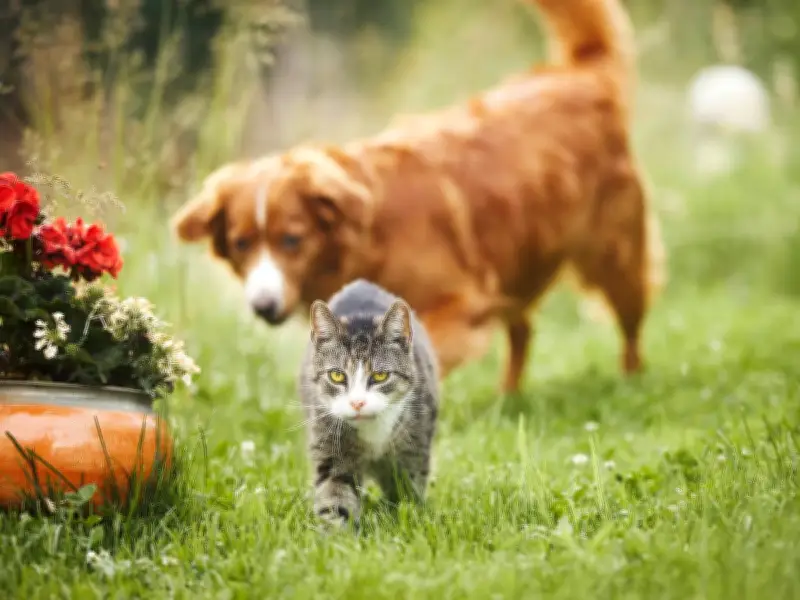
Keeping a garden presentable takes work, especially in summer when more time is spent outdoors. Finding that a neighbour's pet keeps leaving waste on your lawn is frustrating, and while animals cannot understand that it is inappropriate, the occasional accident may be excusable. When it becomes a recurring problem, legal experts recommend a clear approach.
The rules for cats and dogs differ
Jack Malnick, Founder and Managing Director at Sell House Fast, explained: "When it comes to cats, the law is different compared to dogs. Cats are not covered by any specific legislation that requires owners to keep them confined, unlike dogs, which are subject to rules under the Dangerous Dogs Act 1991."
He added: "This means cat owners are generally not legally responsible if their cat wanders into a neighbour's garden or enters another property, as long as the cat is not causing structural damage or health issues. However, cat owners do have a "legal duty of care" to make sure their pets' welfare needs are met. This includes allowing cats to display normal behaviours, such as exploring and roaming."
The guidance from Malnick, which matched that of the other experts, is to talk to the neighbour before escalating. "If a neighbour's cat or dog is causing problems, the best first step is usually to have a calm conversation with your neighbour. They may not even realise there is an issue, and talking it through can help both sides find a simple solution and avoid rising tensions," he said.
Dog owners have greater responsibility
According to David Gammill, dog owners have greater responsibility and face increased liability. "Dogs are treated differently because their owners are expected to keep them under control. If a dog leaves waste in a public or shared area covered by local rules, the person responsible for the dog will usually need to clean it up. If they fail to do this, the council may issue a fine."
"Communal gardens, shared courtyards, and paths may be covered by council, housing association, or building rules. If dog waste is regularly left in one of these spaces, you can report it to the council, landlord, housing association, or property manager."
"If a neighbour's dog repeatedly enters your private garden, the situation may involve trespass or nuisance. If the dog damages your grass, plants, fence, or other property, you may also be able to ask the owner to pay for the damage."
Experts recommend evidence and mediation first
Rather than confronting the neighbour aggressively, the majority of experts advise collecting evidence first. Benson Varghese, a Board Certified Criminal Lawyer, said: "The first thing that homeowners suffering from a long-lasting problem should do is to keep a journal of the situation with pictures or video evidence."
"Having an evident example of the ongoing problem will be much more effective compared to a one-off case. Usually, before any legal action is taken, mediation is the preferable way to settle a dispute, as it often proves to be quicker and cheaper."
If conversations do not solve the problem, sending a letter is the next step. Everett Lupton from Slaughter & Lupton said this creates a record demonstrating that the owner was informed about the situation. He added: "If the pet causes clear damage, the homeowner may ask the owner to cover the cost. A civil claim may also be possible when there is strong evidence and a specific financial loss."
The local authority may then investigate whether local regulations are being violated. But the experts agreed that legal action should be a final measure, and trying to resolve matters amicably first is worthwhile.
How to keep cats and dogs out of your garden
Peter Thum-Bonanno, Co-Founder and CTO of GetAgent, suggested motion-activated sprinklers, citrus peel and proprietary cat repellent granules, which are ‘all legal and widely used’.
"Securing boundaries where possible, checking for gaps in fencing or hedging, removes the point of entry entirely. These are not legal remedies but they solve the practical problem quickly while any formal process runs its course," he added.




