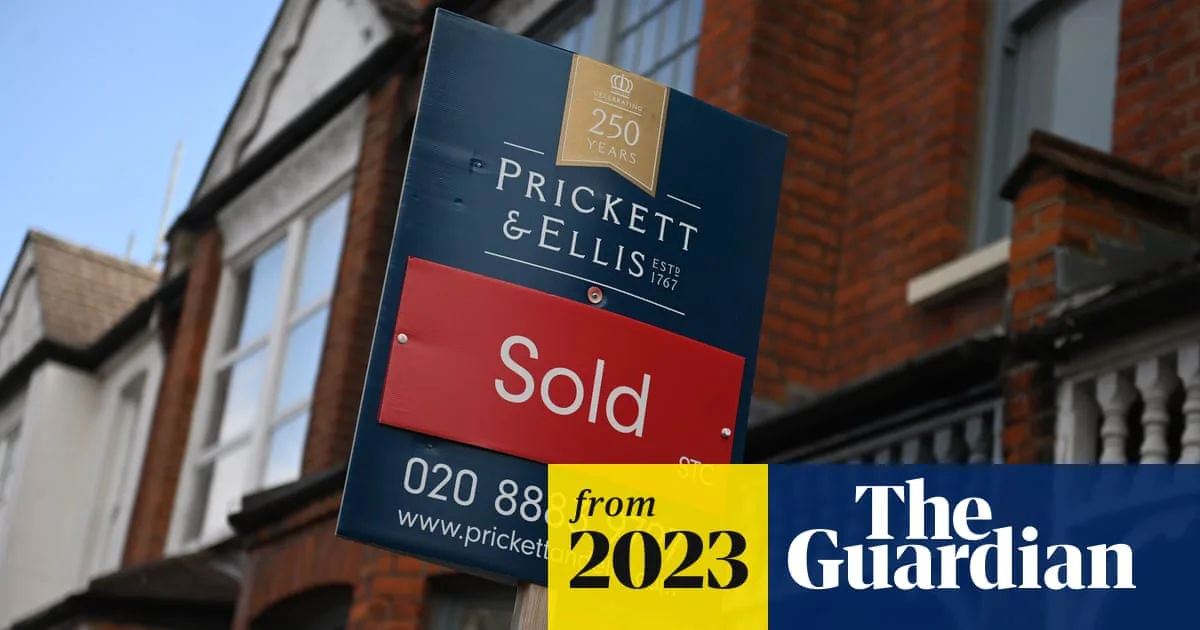
UK House Prices Rise £3,000 in March as Spring Market Begins

UK House Prices Climb £3,000 in March as Spring Selling Season Commences

The average asking price for a home in Britain increased by approximately £3,000 during March, according to the latest data from property website Rightmove. This rise indicates a steady housing market despite ongoing global economic uncertainties and recent mortgage rate turbulence.

Modest Growth Reflects Seasonal Trends

Across the United Kingdom, the average price tag on a newly listed property reached £371,042 in March. This represents a monthly increase of 0.8%, or £3,023, which Rightmove describes as typical for this time of year as the spring selling season gets underway.

The pace of price growth remains modest, aligning with the twenty-year average observed by Rightmove but falling below the more rapid increases witnessed over the past two years. Colleen Babcock, a property expert at Rightmove, characterised the start of this year's spring market as "steady rather than strong."

Regional Variations and Property Type Differences

Significant regional disparities are evident in the housing market. The North West of England is leading annual price growth with a 2.6% increase, while London has experienced a 2.1% annual decline. Generally, the lower-priced regions of Northern England, Scotland, and Wales are demonstrating stronger annual growth compared to the more expensive southern areas of England.

Property type also influences price movements. Smaller homes with two bedrooms or fewer have seen slight annual price decreases, potentially creating opportunities for deposit-ready first-time buyers this spring. Meanwhile, middle-market properties have experienced price increases, and "top of the ladder" homes have remained broadly unchanged in value.

Mortgage Market Volatility and Economic Concerns

The housing market continues to navigate mortgage rate turbulence, with Britain's largest lenders and many smaller institutions increasing their rates as swap rates have risen. Financial information website Moneyfacts reported last week that mortgages have been disappearing from the market at the fastest pace since the 2022 mini-budget, with some average rates exceeding 5%.

By the end of last week, at least 530 homeowner mortgage deals had vanished from the market since March 9. Matt Smith, a mortgage expert at Rightmove, noted that lenders have adjusted their fixed-rate mortgage pricing "to reflect the Bank of England base rate remaining flat for longer."

Market Activity and Inventory Levels

Despite geopolitical uncertainty and mortgage rate increases, market activity in March appears stable. The number of sales being agreed is only 2% behind the strong market seen this time last year and 5% ahead of 2024 levels.

Buyers currently enjoy considerable choice, with the number of homes for sale at its highest level in over a decade. Ms. Babcock emphasised that in such a market, "being not only competitive on price, but competitive from the outset when setting an asking price for your home is critical." She warned that relying on later price reductions is a less effective strategy when buyers are price-sensitive and have numerous alternatives.

Industry Perspectives and Broader Context

Jeremy Leaf, a north London estate agent, observed that despite worries about geopolitical uncertainty increasing upward pressure on inflation and mortgage payments, his offices have seen no price reductions or withdrawals from agreed sales except for property-related reasons. He noted that most buyers are adopting a "wait and see" stance regarding the conflict's impact.

Nathan Emerson, chief executive of Propertymark, reported that consumers are generally in a stronger position to purchase property than a year ago, citing successive base rate cuts and falling inflation. He highlighted an encouraging start to the year with resilience in property listings and viewings.

Longer-Term Housing Cost Trends

Rightmove's report coincides with analysis from property firm Savills estimating that UK housing costs reached £226 billion in 2025. This represents an £8 billion increase over the past year and a £66 billion rise over five years. Lucian Cook, head of residential research at Savills, explained that higher mortgage costs have primarily affected households coming off longer-term fixed-rate deals, while rental growth has returned to more normal levels.

Meanwhile, Hamptons estimated that if the private rented sector had continued growing at pre-2016 rates, there could be approximately 2.2 million more privately rented households across Britain. Aneisha Beveridge, head of research at Hamptons, noted that large stamp duty bills and a tightening regulatory environment for landlords have contributed to faster rent increases and reduced viability in the new-build apartment sector.

As the Bank of England prepares to announce its next base rate decision, many financial experts believe a cut is now less likely given current economic conditions. The housing market continues to demonstrate resilience, but uncertainty persists regarding how geopolitical developments might influence future activity and pricing.