
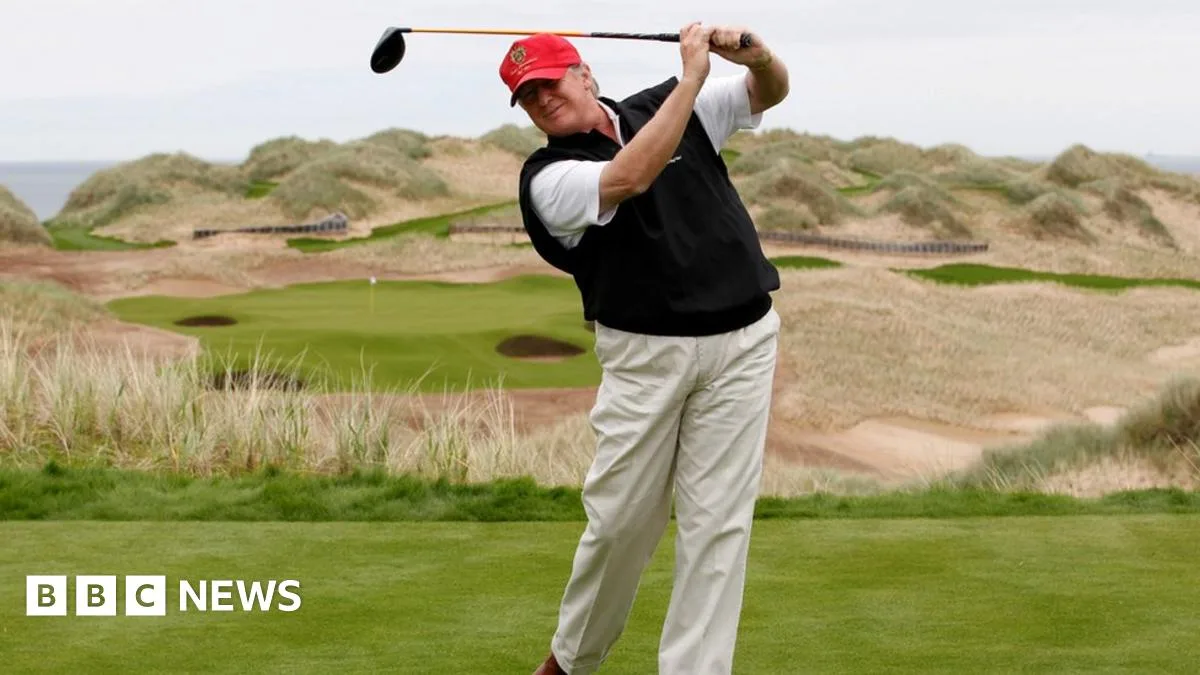
A New York judge has ruled that Donald Trump and his company are liable for the 'false valuation' of his golf course in Aberdeenshire, Scotland. The ruling is part of a civil case brought by New York Attorney General Letitia James, who accuses Trump, his two adult sons and the Trump Organization of misrepresenting his net worth and asset values between 2011 and 2021.
Justice Arthur Engoron found that financial statements submitted by the Trump Organization between 2014 and 2019 inflated the value of the Menie estate course by basing it on inaccurate planning permissions. The statements claimed the resort could develop 2,035 private residential homes, while Aberdeenshire Council had only granted outline permission for 500 homes and 50 leisure units in 2019.
The Attorney General argued that if the values reflected the actual planning permission, the resort would be worth £164.1m less than stated. Trump's lawyers disputed this, claiming the resort was undervalued, but the judge dismissed their arguments, concluding that the Attorney General had demonstrated liability for the false valuation.
Trump has denied the allegations, calling the case a political 'witch hunt'. His lawyers said the decision ignored 'basic legal, accounting and business principles'. The civil trial is due to begin next month, though Trump is seeking to delay it and has sued the judge. An appeals court is expected to rule on that lawsuit this week.
The Menie estate golf course opened in 2012, with original plans for a 450-room hotel, 950 holiday apartments, 36 golf villas and 500 houses, none of which have been built. A second golf course at the resort was recently approved despite environmental concerns.




