

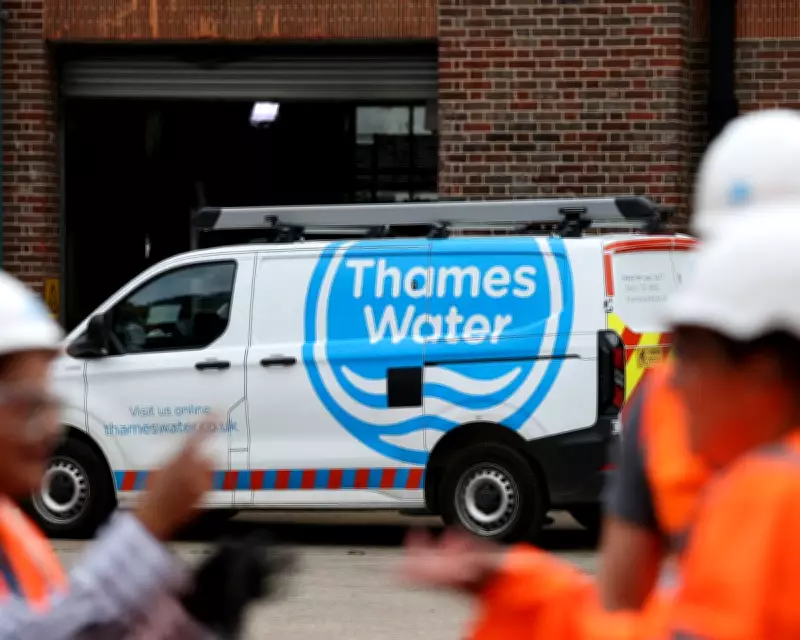
Thames Water Lenders Propose £10 Billion Rescue Plan to Avert Collapse
A consortium of private equity firms and investment groups has floated a new £10 billion rescue plan for Thames Water, aiming to stave off the troubled utility's financial collapse. The proposal involves injecting £3.35 billion in cash and raising £6.65 billion in debt, with the condition that the company avoids falling into a government-handled administration, effectively a temporary nationalisation.
Financial and Environmental Challenges
Britain's largest water company has been teetering on the brink of collapse for over two years, burdened by £17.6 billion in debt accumulated since privatisation. The company has been effectively controlled by its lenders, including US hedge funds Elliott Management and Silver Point Capital, since shareholders withdrew in 2024. Thames Water's environmental performance has been poor, with sewage leaks causing public outrage and resulting in hundreds of millions of pounds in fines. Last year, the Environment Agency ranked it as the worst water company in England due to peak sewage pollution levels.
Details of the Rescue Proposal
The rescue plan, put forward by lenders under the name London & Valley Water (L&VW), includes paying off all existing fines in full and making an upfront payment to cover future underperformance against Ofwat's targets. However, the company would still be subject to future fines for pollution and leaks from Ofwat and the Environment Agency. The proposal requires approval from Ofwat, the company's board, and other regulators, including the Drinking Water Inspectorate and Environment Secretary Emma Reynolds.

If approved, the plan would wipe out about 30% of Thames Water's existing debts to senior creditors, while junior "class B" creditors would be entirely wiped out. In exchange, Thames Water would continue operating as a private company. Additionally, the company would not pay dividends to investors until at least 2035, following an £18 million fine last year for breaking dividend rules despite poor service and environmental records.
Impact on Customers and Future Prospects
Bills for Thames Water's 16 million customers in south-east England are already set to rise steeply until 2030, but the rescue plan aims to hold them at that level rather than pushing them higher. The consortium has also promised that customers would receive a share of proceeds if Thames Water is sold for a significant profit in the future. This proposal follows a collapsed buyout attempt by US private equity firm KKR last June and comes after Thames Water narrowly avoided temporary government control in 2025 when it secured court approval for £3 billion in high-interest loans.
Regulatory and Public Scrutiny
Talks have dragged on for months, with Thames Water surviving by gradually tapping into emergency funding. The lender group includes traditional investors like Aberdeen and Insight Investment, alongside hedge funds. A spokesperson for L&VW stated that the plan emerged from constructive discussions with regulators and is designed to establish a route back to full compliance quickly, with clear accountability for reducing sewage spills. However, Thames Water cautioned that there is "no certainty" the plan will be accepted, and Ofwat is reviewing it carefully to assess benefits for customers and the environment.
The pollution scandal has regained attention recently, highlighted by the Channel 4 drama Dirty Business, which explores how private companies have contaminated Britain's waterways. This rescue deal represents the latest effort to avoid a special administration regime, emphasising the ongoing struggle to balance financial stability with environmental responsibility in the water industry.






