

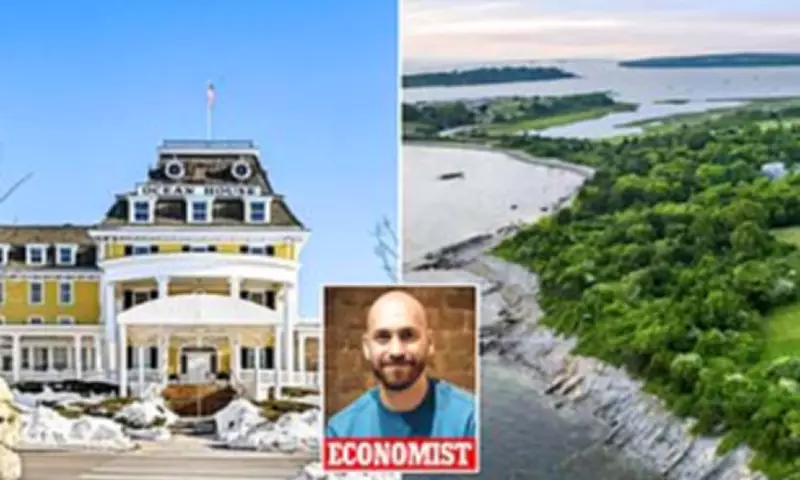
Rhode Island's Housing Market Reaches Breaking Point
America's smallest state is grappling with an enormous housing affordability crisis that has left all eight of its cities beyond the financial reach of typical American households. Despite its compact size, Rhode Island now boasts some of the nation's most prohibitive property prices, creating significant challenges for both prospective homeowners and renters throughout the Ocean State.
Staggering Income Requirements for Homeownership
The latest housing data reveals that a household needs an annual income of approximately $130,000 to afford a median single-family home with a standard 30-year fixed mortgage. This figure dramatically exceeds the national median household income of roughly $86,000, placing homeownership out of reach for most Rhode Island residents. Housing affordability is traditionally measured by whether housing costs consume no more than 30 percent of a household's income, a threshold now surpassed across the entire state.
Rental Market Equally Challenging
Renters face similarly daunting financial barriers, with households now requiring an income of about $60,000 to comfortably afford an average two-bedroom unit. This requirement substantially outpaces the typical renter salary of $48,343, creating significant financial strain for those unable to enter the property market. The rental affordability gap highlights how the housing crisis affects residents across all economic segments.

Most Expensive Areas and Market Drivers
New Shoreham, located on Block Island, ranks as Rhode Island's most expensive residential area, with median home prices hovering around $3.5 million. Other notably high-cost regions include Jamestown, Little Compton, and Newport, where premium coastal properties command extraordinary prices. According to Jake Krimmel, a senior economist at Realtor.com, the primary driver behind these eye-watering prices is a persistent and severe shortage of housing supply.
'Inventory remains critically low, both due to the mortgage rate lock-in effect and because of strong demand, often from out-of-state buyers,' Krimmel explained. 'In January 2026, there were on average just over 1,100 active listings across the entire state.'
Persistent Price Increases and Market Dynamics
Recent data indicates no signs of market cooling, with median list prices in Rhode Island rising for 21 consecutive months. By January 2026, prices had increased by 5.6 percent, reaching $540,000. Krimmel attributes this sustained upward trajectory to fundamental supply and demand imbalances that show little indication of improvement.
'When housing markets become unaffordable, it ultimately comes down to supply and demand,' he noted. 'In Rhode Island, there's very little supply coming from existing homes and almost no new construction to speak of. Demand has remained resilient enough—despite higher financing costs—to far outstrip the limited supply.'
Resident Experiences and Demographic Shifts
For many lifelong Rhode Islanders, escalating property prices have forced difficult decisions about relocation. Jon Perroni, a 30-year-old who grew up in Bristol but moved to New York for career opportunities, observed the housing market's transformation throughout his twenties.
'Having grown up in Rhode Island, I know many people struggling with the current housing market,' Perroni said. 'From my perspective, it seems like the previous generation could purchase homes at the age my generation is now. This situation has led many young individuals like me to explore housing markets outside Rhode Island.'
Perroni noted that Rhode Island salaries often lag behind those in neighboring states while housing costs continue to climb, creating an unsustainable financial equation for younger residents. The influx of high-profile buyers, including celebrities like Taylor Swift who purchased an $18 million Westerly mansion in 2013, has further intensified competition and driven prices upward.

Geographic Constraints and Development Limitations
Rhode Island's physical limitations as America's smallest state naturally restrict available land for development. Compounding this challenge, zoning restrictions significantly reduce opportunities for new construction, particularly in desirable coastal areas. These factors combine to create a perfect storm of limited supply amid sustained demand.
Potential Solutions and Future Outlook
Despite the grim current landscape, some experts see potential for improvement through political and policy interventions. Chris Lewis, head of research at financial advice site FinanceBuzz, points to growing political momentum aimed at addressing housing affordability.
'We're hopeful there will be improvement in the coming years,' Lewis said. 'There has been a much stronger political push to lower housing costs in Rhode Island, including new initiatives aimed at increasing building permits and encouraging new construction. However, it's unclear how quickly those efforts will meaningfully impact the market.'
For residents determined to remain in Rhode Island, Lewis suggests considering inland areas rather than premium coastal locations. According to Zillow data, median home prices in Kent and Providence counties are 30 percent lower or more than in Newport and Washington counties, where average prices approach $700,000.
Lewis concluded: 'Rhode Island is beautiful, with a rich history. It's easy to understand why demand remains so high.' This enduring appeal, combined with structural supply constraints, suggests the state's housing affordability challenges will likely persist in the near term, requiring sustained policy attention and market adjustments to create more accessible housing options for all residents.





