Reverse Feature Walls: The Subtle Design Shift Creating Immersive Interiors
If you have spent any time scrolling through décor inspiration recently, you will know we remain firmly in the era of bold, immersive interiors. From colour drenching to statement ceilings, homeowners are becoming increasingly adventurous – and rooms are significantly better for it. However, one technique is quietly gaining traction for its ability to create atmosphere, depth, and a more considered sense of balance. Meet reverse feature walls – the design insider's latest evolution.
To help decode this emerging trend, we spoke with Lauren Kavanagh, Art Director at Hovia, who explains why this subtle rethink of a familiar concept can completely transform how a space looks and feels.
What Exactly Is a Reverse Feature Wall?
We have all heard of a traditional feature wall – a single bold surface designed to anchor a room – but reverse feature walls take the concept in a more immersive direction.

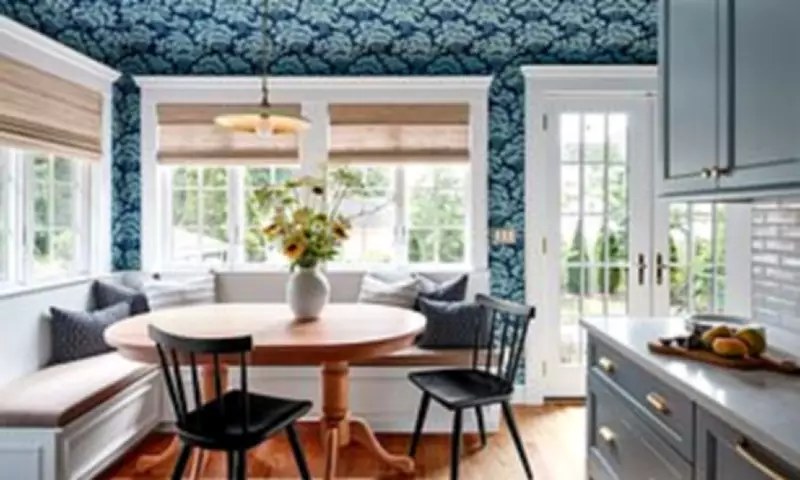
'A traditional feature wall is about creating a focal point with one statement wall in a room, often behind a sofa or headboard, that draws the eye with a bold colour or design choice,' explains Kavanagh. 'A reverse feature wall flips that entirely. Instead, the three surrounding walls are wallpapered or finished in a rich, decorative way, and the feature wall is left plain or painted in a complementary tone.'
The result is a space that feels more cohesive and intentional. 'It may seem counterintuitive, but the effect is immersive without feeling overwhelming,' she adds. This approach reflects a broader shift in how we are decorating our homes today.
'The colour-drenching trend has become very popular, with homeowners becoming bolder and more intentional with their colour choices,' says Kavanagh. 'Reverse feature walls are another evolution of this trend, in which rather than spotlighting one wall, homeowners do the opposite.'
What Are the Key Benefits of Reverse Feature Walls?
If you love the enveloping feel of colour drenching, reverse feature walls offer a similar sense of immersion with a more balanced finish.
'A feature wall is still somewhat popular, but the reverse makes a home feel a lot more modern,' says Kavanagh. 'Single feature walls are a shortcut that gives a room some personality and can evoke a feeling, but, by contrast, reverse feature walls wrap a room in design, creating an instant atmosphere. The difference between the two is that one is a room that has a moment, and the other is a room that has a mood.'
'One of the most surprising benefits is what it does to the perception of space,' she adds. 'When almost the whole room carries a pattern or colour, and one wall is left light and open, it can actually make a room feel longer and more expansive. Light bounces off the plain wall and floods back into the space.'
The impact is not just visual – it is atmospheric, too. 'In terms of atmosphere, it creates a real sense of comfort. You are surrounded by design rather than looking at it from a distance, which makes a room feel much more intentional.'
When Are Reverse Feature Walls Not a Good Idea?
As effective as this technique can be, Kavanagh notes that it will not suit every space. Rooms with numerous architectural interruptions can be particularly challenging.
'It also does not work as well in rooms with lots of doors and windows breaking up the walls, as you lose that sense of continuity which makes the room feel enveloping,' she explains.
Overly bold pattern choices can also work against the look. 'The biggest mistake is choosing a pattern that is too busy or high-contrast on three walls. This can tip the design from immersively cosy into utterly chaotic.'
How Do You Get Reverse Feature Walls Right?
Achieving the correct balance is key to making the look feel intentional rather than overwhelming.
'The key is making sure to find the right balance. Firstly, this is best used in one or a maximum of two rooms in the whole home. The effect is not the same if you are going to do it across your whole house,' Kavanagh advises.

Colour cohesion plays a crucial role, too. 'If you are going bold with your main pattern, then your choice for the feature wall should be pulled directly from the wallpaper, either a background colour or a mid-tone from within the print. This ties the room together without the plain wall looking like an afterthought.'
Placement can make all the difference. 'The feature wall you choose is usually best as the one with the most natural light, or the wall you see when you enter a room, so it draws you in rather than stopping you in your tracks.'
Any Common Mistakes to Avoid?
As with any design technique, restraint is essential. 'The technique works best with design choices that have a clear background tone, like a classic trailing botanical or a soft textural print, rather than something overly graphic or geometric,' Kavanagh advises.
Keeping the overall scheme cohesive – and not overcomplicating the look – will ensure the space feels calm, considered, and intentionally styled.